Featured Post

Visit arvindagarwal2.blogspot.com for posts from 2017 to 2019

Thursday, September 19, 2019

Corporate tax rates SLASHED for domestic cos & new domestic manufacturing cos
==================================================
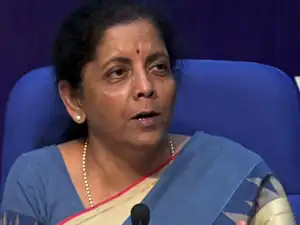
Income Tax rates for all domestic companies have been slashed from 30% to 22% (or from 35% to 25.17% including surcharges and cess). Any domestic companies will have an option to pay income tax at the rate of 22% if they give up their exemptions or incentives -- and these companies will not be required to pay MAT, said the Union Finance Minister. 

Changes in the Income Tax Act and Finance Act will be made effective through an ordinance. "The total revenue foregone for the reduction in corporate tax and other changes is Rs 145,000 crore per year," she said.

1. Manufacturing companies registered after Oct 1 to get option to pay 15% tax. Effective tax rate for new manufacturing firms to be 17.01% inclusive of surcharge & tax.

2. From 2019-2020 or Current FY, Corporation tax on any domestic company shall be 22% provided they don't avail exemptions of any kind. Effective tax rate will now be 25.17, including surcharge and cess.

  • 3. MAT will be reduced from 18% to 15%.
  •  
  • 4. Companies will now be permitted to use their 2% CSR on incubation, IITs, NITs, and national laboratories. 

5. Higher surcharge on individuals will not apply on capital gains arising from sale of securities including derivatives held by FPIs. No tax on buyback of shares on listed companies for deals announced before July 5, 2019.

Wednesday, September 18, 2019

Indian Railways working to boost Indian Economy


IR will be principally helping Indian businesses while IR strives to become more cost-efficient, so it can regain profitability and pay back its investments.
====================================
Despite the massive step up in new capital expenditure by the NDA govt, freight and passenger businesses have not taken off. For example non-suburban passenger numbers have fallen in the current year. Rather than worrying about this, Govt and Indian Railways are intending to invest a colossal Rs 50 lakh crore in the next 12 years!! The revenues to service this huge sum would far exceed the current total revenues of Rs 200,000+ crore.

As a Govt of India enterprise of national importance, the Indian Railways is now concerned more than ever about public utility and good service. As per this announcement, Indian Railway has taken an enlightened view of reducing freight charges to boost the Indian economy. Indeed, giving up profitability for the larger national interest is what IR has been doing for a while. For example, in NDA govt between 2014-19, coal and foodgrain railway routes were rationalised (or optimised) by a series of measures like liberalising coal contracts and regional procurement of foodgrains. In other words, Govt had shortened the freight revenue-earning routes of two important commodities.

Railway freight charges are high by global standards. This initiative, along with many others, will lower freight rates and bring greater competitiveness to Indian industry. Besides if everything goes well, IR's investment will help more freight to move faster, on schedule and along more routes. IR will surely attract new freight business but it will have to make prior commitments in higher line capacities and new wagons.

1. Railways has built up spare freight capacities
2. Railways has tested concepts like auto wagons and double-stack dwarf containers
3. Railways is eager to speed up all traffic, even if it means using two locomotives
4. Railways is creating dedicated freight routes via Dedicated Freight Corridors, port-rail connectivity and doubling/ tripling
5. Through private freight terminals it will have created last-mile connectivity, and provided links to multi-modal hubs, inland container ports, out-of-city logistic parks, private ports, etc.
6.  In the next 5 years, Railways will achieve higher efficiencies through network-wide electrification and advanced signalling, full gauge conversion, removal of speed breaks, development of shortened streamlined routes, corporatization of workshops, digitisation and automation.
7.  Railways will encourage increased private operations for better cost-efficiency, superior customer utility and higher returns on IR assets.

Indian healthcare sector is expected to grow threefold by 2022
The healthcare sector is likely to generate four crore jobs in India by next year and grow at a CAGR of 22 per cent during 2016-2022, according to Govt minister of Chemicals and Fertilizers. It will reach $372b in 2022 from $110b in 2016. Not only patient care and drugs, even the Indian medical devices market is expected to grow, to $50 billion by 2025.

Currently, India ranks among the top 20 medical devices market in the world and is the fourth largest medical devices market in Asia after Japan, China, and South Korea. However, even after being one of the largest exporters of pharmaceuticals in the world, India ranks 145 among 195 countries in terms of quality and accessibility of healthcare, which leaves the country with a lot of scope for improvement.

India’s healthcare industry has been one of the country’s largest economic sectors, with regard to both employment and revenue as half of the global demand for various vaccines is fulfilled by the Indian pharmaceutical industry. To further increase the scale of industry, the government has kept a window open for 100 per cent FDI approval through automatic route in greenfield projects, where the foreign investors are allowed to set up a completely new operational facility.

However, FDI in the sector contracted 74 percent on-year, from $1,010 million in 2017-18 to a meagre $266 million in 2018-19, according to the Department for Promotion of Industry and Internal Trade. The fall in the participation of foreign investors is worrisome as the expansion of the healthcare industry in India not only benefits the specific sector, but the patients from abroad also contribute to the overall revenue of the country since India is one of the favourite destinations for medical tourism. To promote it further, the government has relaxed the visa norms for medical tourists in July this year.

Treatment and hospitals in India are one of the most efficient and cost-effective, with the presence of expert doctors and well-equipped diagnostics nursing services, according to the Ministry of Chemicals and Fertilizers. This is one of the major reasons why patients across the world choose India for their treatment. However, to foster growth out of it, Sadanand Gowda said that currently, India is dependent on imports of medical devices but Indian medical device manufacturers have now taken a lead and are producing high-quality devices4 crore new jobs by next year in Indian healthcare