SEATS to look out for
================
Trivandrum (Kerala) - going to BJP has strong Hindu vs minority consolidation. Strong voting of Nairs is seen everywhere and interestingly Ezhava too. Sitting MP has anti-incumbency.
https://twitter.com/savvyasaachi/status/1122183860110815232
Jodhpur (Rajasthan) - Congress CM Gehlot, along with most senior Congress leaders are camped there to support Gehlot's son.
Amethi (UP) - Rahul Gandhi has spent 4 full days in Amethi. He has nominated a second safe seat in Kerala. BJP president says Amethi is in play and is a strong target for them.
Kannauj (UP) - Akhilesh Yadav is camping in Kanauj, has cancelled all other rallies. Akhilesh Yadav, former CM & SP boss is supporting his wife Dimple Yadav.
https://twitter.com/arvind_barmer/status/1122191183998926848
Ghazipur (East UP) - Amidst a probable sweeping of Purvanchal UP by BJP+, Union minister Manoj Sinha, known for his development work, is in a very tough contest where the arithmetic favours the combined opposition.
https://twitter.com/Ash_Rokzz23/status/1129423034257772549
Begusarai (Bihar) - Kanhaiya Kumar, the big hope of CPI, is giving a tough fight to Union Minister and Hinduvita proponent Giriraj Singh of BJP. Will he be able to defeat NDA and revive the CPI?
https://thewire.in/politics/why-kanhaiya-kumar-may-have-the-edge-in-begusarai
Mumbai South (Maharashtra) - In Mumbai South, one of six Mumbai seats, it is a tough fight with an edge to Shiv Sena's Arvind Sawant against the dynast Milind Deora of Congress
https://twitter.com/MandarSawant184/status/1122430929715097600
Barmer (Rajasthan) - Perhaps the only Rajasthan seat in contention, not with BJP. It is a close contest due to Rajput Congress candidate. Turnout favours BJP.
Munger (Bihar) - Perhaps the most keenly contested seat in Bihar. Voter intimidation risk is high: Congress' Neelam Devi, wife of Anant Singh (most feared 'bahubali' of these parts), is against Lallan of JDU who was using Anant as hired heavy for 10 years and then parted ways. HERE
Sunday, April 28, 2019

Why non-voters may be key to Verdict 2019
==================================
Contrary to the chatter, the decline in turnout rates in the first 2 phases did not hold in the next phase. In fact, the 3rd phase saw the highest-ever turnout in states such as Gujarat, Kerala and Karnataka, all of which have completed their voting. Experts feel the turnout in 2019 will be high and match levels of 2014. The writer speculates on which party it favours.
The upsurge in voting in 2014 had favoured the upper caste-class matrix and led to huge victory margins for the NDA. The poor and Muslims turned out less in comparison. The chart (see below) from 2014 dataset shows what this meant. NDA won 67 out of the 70 seats (96%) where the voter turnout increased by over 15%. It won 125 out of 145 seats (86%) where turnout increased btw 10-15%; and won 125 out of 267 seats (46%) where turnout increased by up to 10%. In contrast, NDA fared poorly at 34% strike rate in the remaining 81 seats.
An interesting pre-poll survey in March 2019 (by Lokniti-CSDS) indicates that voters who are most likely to turn out are strongly inclined to vote for NDA. And, while Modi backers are enthusiastic about voting, others like Muslims, Scheduled Castes and Scheduled Tribes are less likely to turn out this time. The writer believes the reason is that cadre-based parties like BJP and DMK are geared up to bringing out their supporters, and poorly organised parties like Congress are not. There are other reasons not mentioned in the article such as different levels of satisfaction or dissatisfaction with governance, political vision and credibility to deliver, positive sentiment created by the alliances during the election campaign, etc.
BJP leaders talk of a pro-incumbency feel in the country. More precisely, the LS 2019 election is seeing a positive momentum backed by stronger voting intentions for NDA (ie active pro-incumbency) and a negative momentum and lower voting intentions for the opposition (ie passive anti-incumbency). Pollsters are describing a stronger presence of this phenomenon (eg. lower Muslim voting, lower voting from opposition strongholds) and BJP is also blooming in other geographies. In the circumstances, a much higher seat tally can be expected for NDA for 2019 Lok Sabha!!
April 28th, 2019

Contrary to the chatter, the decline in turnout rates in the first 2 phases did not hold in the next phase. In fact, the 3rd phase saw the highest-ever turnout in states such as Gujarat, Kerala and Karnataka, all of which have completed their voting. Experts feel the turnout in 2019 will be high and match levels of 2014. The writer speculates on which party it favours.
The upsurge in voting in 2014 had favoured the upper caste-class matrix and led to huge victory margins for the NDA. The poor and Muslims turned out less in comparison. The chart (see below) from 2014 dataset shows what this meant. NDA won 67 out of the 70 seats (96%) where the voter turnout increased by over 15%. It won 125 out of 145 seats (86%) where turnout increased btw 10-15%; and won 125 out of 267 seats (46%) where turnout increased by up to 10%. In contrast, NDA fared poorly at 34% strike rate in the remaining 81 seats.
An interesting pre-poll survey in March 2019 (by Lokniti-CSDS) indicates that voters who are most likely to turn out are strongly inclined to vote for NDA. And, while Modi backers are enthusiastic about voting, others like Muslims, Scheduled Castes and Scheduled Tribes are less likely to turn out this time. The writer believes the reason is that cadre-based parties like BJP and DMK are geared up to bringing out their supporters, and poorly organised parties like Congress are not. There are other reasons not mentioned in the article such as different levels of satisfaction or dissatisfaction with governance, political vision and credibility to deliver, positive sentiment created by the alliances during the election campaign, etc.
BJP leaders talk of a pro-incumbency feel in the country. More precisely, the LS 2019 election is seeing a positive momentum backed by stronger voting intentions for NDA (ie active pro-incumbency) and a negative momentum and lower voting intentions for the opposition (ie passive anti-incumbency). Pollsters are describing a stronger presence of this phenomenon (eg. lower Muslim voting, lower voting from opposition strongholds) and BJP is also blooming in other geographies. In the circumstances, a much higher seat tally can be expected for NDA for 2019 Lok Sabha!!
April 28th, 2019

Lok Sabha Election Nearing Its Day Of Destiny
Came April 2019 and Indian elections have entered the fiercest phase. Do or die may be an apt description, as stakes are of the highest import. On the result lies the continuing redemption of the country with an unwavering leadership, or a relapse into a paralytic past of only five years ago. Arranged on the sides are a disciplined party with a leader of world-acclaim and an inchoate group of formations with no acknowledged leader. The latter struts about like a headless chicken with only personal aspirations on display. With little time left, a victory for Modi and the BJP awaits only the confirmation!
In this uneven contest, Prime Minister Modi is well ahead and has adequately established his ascendancy. Ever since election fever started, fear is writ on the collective faces of Congress and its cohorts. Some sixty years ago Nehru said, “Elections bring out the worst in us”. What a tragic irony, that Congress leader in Nehru genealogy, spearheads in the muck-raking and brings out the very worst in Indian politics. As of now, like the last time, BJP's tally is in 3 digits and is closing in towards 300 plus seats, while Congress has barely in 2 digits and is falling below 90!
What are the high stakes? Jawaharlal Nehru, the first Prime Minister of India was a leader of unimpeachable integrity. His intellect, of the highest calibre, was made for the vision to modernise India. He brought forth generations of bureaucrats and technocrats to move the country forward. In Foreign Affairs, he had none to compare with. Leaders who followed him were not a match to his calibre nor spotless in character. A leader who steered through long-delayed economic reforms in the early nineties was Prime Minister Narasimha Rao. He was ably advised by the Finance Minister Dr Manmohan Singh. India saw a sea change that enabled Vajpayee to build a new India.
Entrance of Modi
These highlights apart, the intervening years were lacklustre in development and in securing foreign esteem. The most debilitating canker that afflicted the country after Nehru was the spread of corruption, consequent to the unfailing loss of personal standards and patriotism. Corruption had clawed its way down until it filled every pore of public life. The last five years of the UPA saw policy paralysis followed by coma in administration, foreign affairs and national growth. The polity lost its vitality and its will to fight. A sense of despair and forlornness became all-pervasive. Modi ridiculed the senselessness and questioned the thinking: When an enemy comes into your house and beats you up, instead of hitting back and sending him away, why did you run to America, weep and beg that country to do what you should have done yourself?
The Modi Surge
At that juncture, Modi came as a tonic to the prevailing mood—a restorative to the demoralized India of 2014. He changed the mindset and gave it a sense of purpose. The state of vibrancy that he had in his own remarkable mind, he imparted to the polity. He and his lieutenants built up a cadre of leaders who imbued it with fresh dynamism. He became not domineering but primus inter pares, leading not by edicts but by himself being spotless. The first casualty was corruption. High-end swindles were shown the exit path. Other changes of no less consequence are the range of development initiatives that are transforming the face of India.
Modi roadshow on April 25th, 2019 at Varanasi
Before the approaching election juggernaut, the opposition is in disarray. As Congress becomes increasingly aware of un-winnability of the contest, it has taken to making fake pronouncements. Its leader lost face when the Chief Justice told him where to stand. A few of the PM aspirants in the opposition are yet to descend to firm ground. Some have taken refuge in the supposed failings of electric voting machines (EVMs). Yet others refuse to acknowledge the direction of the strong gusts.
Changing Allegiances in States
Odisha has begun the rout of Biju Janata Dal (BJD) and welcomed the advent of BJP. BJD took 20 of the 21 seats in 2014. Now it stands at around 5. As is West Bengal, which is on the verge of putting Trinamool Congress on the back burner. The latter won 37 seats out of 42 at the last election and may get 19 this time. Uttar Pradesh which gave 73 to NDA last time may drop to 60 this time. BJP and the NDA are opening their account in the South. Tamil Nadu gave 2 seats earlier and may lavish the NDA with 18 seats. Telugu Desam Party of Chandrababu Naidu is getting routed by YRC in Andhra Pradesh and may rejoin with NDA post-polls. Telangana is fully in the grasp of the incumbent CM, which means it will go nowhere unless it supports NDA in a post-poll alliance. In Karnataka, NDA will have the same number of seats and in Kerala, BJP will establish a toehold with a seat or two for the very first time. Communists, masters at piggybacking on others, will dwindle from 3 states to a single state, with 6 in Kerala. It is clear that the South together with East India will more than compensate for the minor loss in UP brought about by the highly contrived coalition, along with a small correction to BJP's tally that may happen in the rest of the country.
Concluding Remarks
Rather astutely, two days ago Modi crafted a new lexicon in the political vocabulary– “Pro-Incumbency Wave”. Modi indeed is the most immersed in the information flow of the election. He has surrounded himself also with the best of talent to dispense the advice dispassionately. To name a few – Arun Jaitley, Piyush Goyal, Nitin Gadkari, Nirmala Sitharaman and Gurumurthy; and not to forget is the benignly ruthless Amit Shah for party matters, who is said to use GPS for monitoring work. The result – confidence about victory is so certain, swearing in details are being readied, and new plans are being mapped out: a 100 day plan is for the immediate term, a 3 year plan to mark the 75th anniversary of independence, a 5 year plan for the second term ending in 2024, and a 10 year plan for a stunning $10 trillion economy by 2030.
As I write today, there are still 20 days left for the surge to culminate into a wave by May 2019.
April 27th, 2019
S. Sivathasan – Advance and Retreat
Came April 2019 and Indian elections have entered the fiercest phase. Do or die may be an apt description, as stakes are of the highest import. On the result lies the continuing redemption of the country with an unwavering leadership, or a relapse into a paralytic past of only five years ago. Arranged on the sides are a disciplined party with a leader of world-acclaim and an inchoate group of formations with no acknowledged leader. The latter struts about like a headless chicken with only personal aspirations on display. With little time left, a victory for Modi and the BJP awaits only the confirmation!
In this uneven contest, Prime Minister Modi is well ahead and has adequately established his ascendancy. Ever since election fever started, fear is writ on the collective faces of Congress and its cohorts. Some sixty years ago Nehru said, “Elections bring out the worst in us”. What a tragic irony, that Congress leader in Nehru genealogy, spearheads in the muck-raking and brings out the very worst in Indian politics. As of now, like the last time, BJP's tally is in 3 digits and is closing in towards 300 plus seats, while Congress has barely in 2 digits and is falling below 90!
What are the high stakes? Jawaharlal Nehru, the first Prime Minister of India was a leader of unimpeachable integrity. His intellect, of the highest calibre, was made for the vision to modernise India. He brought forth generations of bureaucrats and technocrats to move the country forward. In Foreign Affairs, he had none to compare with. Leaders who followed him were not a match to his calibre nor spotless in character. A leader who steered through long-delayed economic reforms in the early nineties was Prime Minister Narasimha Rao. He was ably advised by the Finance Minister Dr Manmohan Singh. India saw a sea change that enabled Vajpayee to build a new India.
Entrance of Modi
These highlights apart, the intervening years were lacklustre in development and in securing foreign esteem. The most debilitating canker that afflicted the country after Nehru was the spread of corruption, consequent to the unfailing loss of personal standards and patriotism. Corruption had clawed its way down until it filled every pore of public life. The last five years of the UPA saw policy paralysis followed by coma in administration, foreign affairs and national growth. The polity lost its vitality and its will to fight. A sense of despair and forlornness became all-pervasive. Modi ridiculed the senselessness and questioned the thinking: When an enemy comes into your house and beats you up, instead of hitting back and sending him away, why did you run to America, weep and beg that country to do what you should have done yourself?
The Modi Surge
At that juncture, Modi came as a tonic to the prevailing mood—a restorative to the demoralized India of 2014. He changed the mindset and gave it a sense of purpose. The state of vibrancy that he had in his own remarkable mind, he imparted to the polity. He and his lieutenants built up a cadre of leaders who imbued it with fresh dynamism. He became not domineering but primus inter pares, leading not by edicts but by himself being spotless. The first casualty was corruption. High-end swindles were shown the exit path. Other changes of no less consequence are the range of development initiatives that are transforming the face of India.
Modi roadshow on April 25th, 2019 at Varanasi
Before the approaching election juggernaut, the opposition is in disarray. As Congress becomes increasingly aware of un-winnability of the contest, it has taken to making fake pronouncements. Its leader lost face when the Chief Justice told him where to stand. A few of the PM aspirants in the opposition are yet to descend to firm ground. Some have taken refuge in the supposed failings of electric voting machines (EVMs). Yet others refuse to acknowledge the direction of the strong gusts.
Changing Allegiances in States
Odisha has begun the rout of Biju Janata Dal (BJD) and welcomed the advent of BJP. BJD took 20 of the 21 seats in 2014. Now it stands at around 5. As is West Bengal, which is on the verge of putting Trinamool Congress on the back burner. The latter won 37 seats out of 42 at the last election and may get 19 this time. Uttar Pradesh which gave 73 to NDA last time may drop to 60 this time. BJP and the NDA are opening their account in the South. Tamil Nadu gave 2 seats earlier and may lavish the NDA with 18 seats. Telugu Desam Party of Chandrababu Naidu is getting routed by YRC in Andhra Pradesh and may rejoin with NDA post-polls. Telangana is fully in the grasp of the incumbent CM, which means it will go nowhere unless it supports NDA in a post-poll alliance. In Karnataka, NDA will have the same number of seats and in Kerala, BJP will establish a toehold with a seat or two for the very first time. Communists, masters at piggybacking on others, will dwindle from 3 states to a single state, with 6 in Kerala. It is clear that the South together with East India will more than compensate for the minor loss in UP brought about by the highly contrived coalition, along with a small correction to BJP's tally that may happen in the rest of the country.
Concluding Remarks
Rather astutely, two days ago Modi crafted a new lexicon in the political vocabulary– “Pro-Incumbency Wave”. Modi indeed is the most immersed in the information flow of the election. He has surrounded himself also with the best of talent to dispense the advice dispassionately. To name a few – Arun Jaitley, Piyush Goyal, Nitin Gadkari, Nirmala Sitharaman and Gurumurthy; and not to forget is the benignly ruthless Amit Shah for party matters, who is said to use GPS for monitoring work. The result – confidence about victory is so certain, swearing in details are being readied, and new plans are being mapped out: a 100 day plan is for the immediate term, a 3 year plan to mark the 75th anniversary of independence, a 5 year plan for the second term ending in 2024, and a 10 year plan for a stunning $10 trillion economy by 2030.
As I write today, there are still 20 days left for the surge to culminate into a wave by May 2019.
April 27th, 2019
S. Sivathasan – Advance and Retreat
Post-election view from Congress and BJP sides
====================
The seat projection shown below is given by an optimistic Congress fan. It seems unbelievable, as of now, that Congress and its allies can get as many as 213 seats. Even then, to win a majority, they will need support from "Others" in Uttar Pradesh, West Bengal, and J&K. Total for this Grand Alliance is 303. A poor showing by Mahagatbhandan in UP (say down by 25 in the stated tally) will require bringing in other parties from Andhra Pradesh, Telangana, and Odisha. But these parties may prefer to bargain with the BJP combine. So a 25-30 seat loss can wreak havoc to the arithmetic of the Grand Alliance.
From BJP's point of view, where can Congress plus lose 100 seats to give BJP+ the slimmest of a majority? Direct bipolar contests with Congress are found in BJP heartlands in Madya Pradesh, Gujarat and Rajasthan; and North India, Jharkhand, Chhattisgarh, and North Karnataka. A repeat of LS 2014 can happen if Congress support erodes further. Strong BJP alliances will likely ward off Congress alliances in Maharashtra and Bihar, while BJP regional alliance in Tamil Nadu is fighting a rearguard battle and may emerge with a decent tally.
BJP's route to a majority will surely come from reducing the stated tallies of Mahagatbhandan in UP and TMC in West Bengal, where Congress can at best, be a spoiler for either side. Opinion polls in early April project the BJP combine at 280. It should be the low end of the projections as BJP support has been on the rise. A big upside is expected due to reports that voting for BJP in Western UP is holding up better than expectations. There is also lower turnout of Muslim voters and disunity in Mahagatbhandan, TMC support in North WB is haemorrhaging, and a Modi wave is present in Karnataka. Core BJP support is evident from a strong turnout in Gujarat and heavily supported rallies in Rajasthan. Experts are also predicting a major breakthrough in Odisha and a gain of one or more LS seats in Kerala.
Signs of opposition disarray are visible in many incidents. There is blatant ballot rigging and violence by TMC cadre in West Bengal. In Delhi, Congress has refused to ally with AAP party, perhaps because it is looking beyond LS elections and wanting to capture lost ground for 2020 assembly polls. TMC ruled WB state govt needs to go post-elections, and there are rumours that (seemly) unpopular state governments will topple if Congress suffers heavy defeats in Karnataka, Madhya Pradesh, and Rajasthan.
Dr. Praveen Patil: 25 Apr 2019
Massive meltdown for the opposition has begun everywhere. Karyakartas are abandoning posts, booth level infrastructure is vanishing, opposition leaders have stopped spending money. Sympathetic (to opposition) local reporters have gone into slumber! Just entering wave territory.
Our reading suggests that most of the opposition is stunned because they expected MGB in UP, TMC in Bengal and INC-JDS in Karnataka to perform well in the first 3 phases. Nobody (including us) expected BJP to crush the entire opposition so strongly in these 3 states.
https://twitter.com/5Forty3/status/1121338280207769600
2014 2019 Cong' BJP+ project'
proj' for BJP+ low - mid - high
313 178 280 302 335
=============================
BJP's Heartlands (341 seats) 297 (87%) 151 235 241 263
Madhya Pradesh + Gujarat + Rajasthan (80 seats) 78 (98%) 42 65 66 69
Uttar Pradesh (80 seats) 73 (91%) 20 40 45 55
Maharashtra + Bihar + Goa (90 seats) 75 (83%) 51 67 70 72
North India + Jhark + Chhat + Karn (20/ 28) (91 seats) 71 (78%) 38 60 60 67
Other regions (111 seats) 5 (4.5%) 15 31 43 51
Old Mysore (8/28) + Tamil Nadu + Pudu. (48 seats) 3 5 10 15 18
West Bengal + Odisha (63 seats) 2 10 21 28 33
Rest (91 seats) 11 12 17 18 21
Congress 44 150 84 72 53
April 26th, 2019
Congress fan's projection:
Opinion polls in early April 2019 Congress + BJP + Others
Congress = 84 133 280 130
=======================
BJP's Heartlands (341 seats) 68 232 41
Madhya Pradesh + Gujarat + Rajasthan (80 seats) 15 65 0
Uttar Pradesh (80 seats) 3 40 37
Maharashtra + Bihar + Goa (90 seats) 23 67 0
North India + Jhark + Chhat + Karn (20/ 28) (91 seats) 27 60 4
Other regions (111 seats) 41 31 39
Old Mysore Karn (8/28) + Tamil Nadu + Pudu. (48 seats)38 10 0
West Bengal + Odisha (63 seats) 3 21 39
Rest (91 seats) 24 17 50
====================
The seat projection shown below is given by an optimistic Congress fan. It seems unbelievable, as of now, that Congress and its allies can get as many as 213 seats. Even then, to win a majority, they will need support from "Others" in Uttar Pradesh, West Bengal, and J&K. Total for this Grand Alliance is 303. A poor showing by Mahagatbhandan in UP (say down by 25 in the stated tally) will require bringing in other parties from Andhra Pradesh, Telangana, and Odisha. But these parties may prefer to bargain with the BJP combine. So a 25-30 seat loss can wreak havoc to the arithmetic of the Grand Alliance.
From BJP's point of view, where can Congress plus lose 100 seats to give BJP+ the slimmest of a majority? Direct bipolar contests with Congress are found in BJP heartlands in Madya Pradesh, Gujarat and Rajasthan; and North India, Jharkhand, Chhattisgarh, and North Karnataka. A repeat of LS 2014 can happen if Congress support erodes further. Strong BJP alliances will likely ward off Congress alliances in Maharashtra and Bihar, while BJP regional alliance in Tamil Nadu is fighting a rearguard battle and may emerge with a decent tally.
BJP's route to a majority will surely come from reducing the stated tallies of Mahagatbhandan in UP and TMC in West Bengal, where Congress can at best, be a spoiler for either side. Opinion polls in early April project the BJP combine at 280. It should be the low end of the projections as BJP support has been on the rise. A big upside is expected due to reports that voting for BJP in Western UP is holding up better than expectations. There is also lower turnout of Muslim voters and disunity in Mahagatbhandan, TMC support in North WB is haemorrhaging, and a Modi wave is present in Karnataka. Core BJP support is evident from a strong turnout in Gujarat and heavily supported rallies in Rajasthan. Experts are also predicting a major breakthrough in Odisha and a gain of one or more LS seats in Kerala.
Signs of opposition disarray are visible in many incidents. There is blatant ballot rigging and violence by TMC cadre in West Bengal. In Delhi, Congress has refused to ally with AAP party, perhaps because it is looking beyond LS elections and wanting to capture lost ground for 2020 assembly polls. TMC ruled WB state govt needs to go post-elections, and there are rumours that (seemly) unpopular state governments will topple if Congress suffers heavy defeats in Karnataka, Madhya Pradesh, and Rajasthan.
Dr. Praveen Patil: 25 Apr 2019
Massive meltdown for the opposition has begun everywhere. Karyakartas are abandoning posts, booth level infrastructure is vanishing, opposition leaders have stopped spending money. Sympathetic (to opposition) local reporters have gone into slumber! Just entering wave territory.
Our reading suggests that most of the opposition is stunned because they expected MGB in UP, TMC in Bengal and INC-JDS in Karnataka to perform well in the first 3 phases. Nobody (including us) expected BJP to crush the entire opposition so strongly in these 3 states.
https://twitter.com/5Forty3/status/1121338280207769600
2014 2019 Cong' BJP+ project'
proj' for BJP+ low - mid - high
313 178 280 302 335
=============================
BJP's Heartlands (341 seats) 297 (87%) 151 235 241 263
Madhya Pradesh + Gujarat + Rajasthan (80 seats) 78 (98%) 42 65 66 69
Uttar Pradesh (80 seats) 73 (91%) 20 40 45 55
Maharashtra + Bihar + Goa (90 seats) 75 (83%) 51 67 70 72
North India + Jhark + Chhat + Karn (20/ 28) (91 seats) 71 (78%) 38 60 60 67
Other regions (111 seats) 5 (4.5%) 15 31 43 51
Old Mysore (8/28) + Tamil Nadu + Pudu. (48 seats) 3 5 10 15 18
West Bengal + Odisha (63 seats) 2 10 21 28 33
Rest (91 seats) 11 12 17 18 21
Congress 44 150 84 72 53
April 26th, 2019
Congress fan's projection:
Opinion polls in early April 2019 Congress + BJP + Others
Congress = 84 133 280 130
=======================
BJP's Heartlands (341 seats) 68 232 41
Madhya Pradesh + Gujarat + Rajasthan (80 seats) 15 65 0
Uttar Pradesh (80 seats) 3 40 37
Maharashtra + Bihar + Goa (90 seats) 23 67 0
North India + Jhark + Chhat + Karn (20/ 28) (91 seats) 27 60 4
Other regions (111 seats) 41 31 39
Old Mysore Karn (8/28) + Tamil Nadu + Pudu. (48 seats)38 10 0
West Bengal + Odisha (63 seats) 3 21 39
Rest (91 seats) 24 17 50
◙ Debunk Congress & Mainstream Media's propaganda of Hindu terror
◙ Highlight the torture of devout Hindus by a corrupt UPA govt
-------------------------------------------------------
BJP has put up Pragya Singh Thakur, a Hindu lady who was falsely accused in Malegaon blasts case, as a Lok Sabha candidate for Bhopal constituency. It is a calculated move to corner the Congress ahead of polling in BJP / Hindu heartlands of Madhya Pradesh, Gujarat, Rajasthan, Central & Eastern UP, Maharashtra, Bihar, North India, North Karnataka, Jharkhand and Chhattisgarh.
Pragya Singh Thakur was kept in jail for 10 years without even facing trial, where she was ruthlessly beaten up, tortured, humiliated and defamed as a terrorist. Other devout Hindus (like Lt Colonel Prasad Purohit) were picked up and given similar treatment. It was a time when Islamic terror backed by Pakistan's ISI and funded by China, Saudis & Western sponsors, was raging non-stop across India and had targetted Hindu places (eg temples) and large crowds in public places (eg railway station, hotels). Anger was only natural, but the response was muted. Congress was in government. It initiated a sinister and false narrative of "Hindu or Saffron terror" and prosecuted many Hindus to justify its purpose, of defaming Hindus and deflecting attention away from Islamic terror. The UPA governments did little to stop terrorist attacks and responded meekly or maliciously to attacks (see below). HERE
The criminal and extremely deplorable behaviour by the Congress politicians (& their minions) was later exposed in the courts and by first-hand accounts of officials and victims. Yet, knowing all this, the mainstream media (both domestic and foreign) has chosen to malign Pragya Singh Thakur and keep quiet on Congressi misdeeds!! It has also asked BJP to explain the choice of candidate.
PM Narendra Modi made a very clear statement of BJP's intent during TimeNow interview (see article). He said the fielding of Pragya Singh Thakur as the BJP candidate from Bhopal, was a symbolic answer to all those who labelled the rich Hindu civilization as “terrorist” and asserted that "the symbol will prove costly for the Congress". Clearly, PM Modi is mobilising public opinion against the Congress on this issue and in return, BJP will wreck the Congressi ecosystem if it sweeps the BJP / Hindu heartlands in the remaining phases.
PM Modi defends Sadhvi Pragya as she take on Digvijaya in Bhopal
The Myth of Hindu Terror: Insider Account of Ministry of Home Affairs (Book)
======================================
R V S Mani is former under-secretary, Ministry of Home Affairs.
The book gives a first-hand account from inside the Ministry of Home Affairs (MHA) and narrates among other things, on how commonplace political interference had become in matters of national security. Not much has been written on the challenging times faced by the internal security officials during UPA 1 and II governments— periods marked by serial blasts and terror attacks, including the notorious 26/11 Mumbai terror attack.
Mani was posted in one of the most crucial departments of MHA, the Internal Security (IS) division, from 2006 to 2010. He tried to focus on how MHA officials, under the direction of the then UPA political leaders, were forced to carry out orders that were morally wrong apart from being illegal.
Officials involved in internal security were pressurised to bend to illegal, immoral political orders that suited the interest of the political dispensation, which caused irreparable damage to the country, and eventually led to the 26/11 attack. Mani says it was “Hobson’s choice” where officers had a choice to save themselves or their country. It will be worthwhile to wait and see whether, or not, the scores of individuals who have been named by Mani, for not so flattering reasons will respond to his accusations.
Mani, who took five months to complete the book, has bared the plot in the initial pages, stating that “the so-called secular narrative attempted to be propagated between 2004-2013 had the potential to tear India’s social fabric to shreds”. The rest of the book is filled with anecdotes, as one would expect from someone who has worked among spooks. He has substantiated the central theme of the book by quoting and attesting official records and incidents, some of which are in the public domain and many of which are not.
Unlike members of his clan, Mani has named political personalities, IAS and IPS officers. He has either indicted them for their wrongdoings or appreciated them, such as former IB officer Rajendra Kumar, whom he has mentioned multiple times and credited him for destroying several ISI sleeper cells that were flourishing in the country.
The book has been divided into 14 chapters. In one chapter, titled “Seeding of Hindu terror”, he has shared several anecdotes to prove how the Congress-led UPA government had forced the MHA officials to manufacture a false narrative about the presence of “Hindu terror”. Mani mentions how he was summoned by the then Home Minister Shivraj Patil to his chamber and was asked to share information on terrorist attacks. At the time, two more individuals, who were identified as senior Congress leader Digvijaya Singh and former Maharashtra IPS officer Hemant Karkare, sat there seeking information from him, while Patil sat in his chair totally unconcerned about what was happening. According to Mani, both Singh and Karkare were unhappy with his information that “a particular religious group was in most of the terror attacks”. This was in June 2006 and according to him, it was during this time that the “first seed of the canard” that there existed Hindu terror was sown.
This promulgation of the theory of Hindu terror, according to the book, led to many knots among the various agencies that work under the MHA as agency people were asked to change the narrative from terror to Hindu terror. According to him, “At a time when we had the best team in the IS division, the attitude of the government in power and intent to cover every terror incident as ‘saffron’ and the ambivalence in acting against the real perpetrators of the terror attacks were making this country a cannon fodder for those with evil designs against India”.
Mani says the most challenging time came during the Mumbai attack as almost all the top officials of IS division were in Pakistan. According to Mani, this was all part of a design which has been explained in great details in the book. And with a less than adept Home Minister at the helm, which Mani has tried to prove by giving examples, the terrorists got crucial hours to “secure” themselves. In this chapter too he has named IAS officers, politicians and Bollywood personalities for playing a questionable role during and after the attack.
Behind the scenes account, during the attack and when the investigation started, are vividly mentioned in the book. It also talks about how credible inputs about an impending terror attack on Mumbai were not heeded due to intervention from “top political office” - as a result, the agency and officials got the blame for not stopping the attack.
A full chapter has been given to the happenings in MHA when P. Chidambaram became the Home Minister. Mani shares how the initial two DGs of NIA were picked without following any due process and how the NIA acted as the personal favourite of the Home Minister and “big brother” to other agencies. According to him, the NIA introduced a non-existent “Hindu terrorism” concept. “In every case assigned to NIA, they overlooked the first set of evidence and replaced it with the evidence supporting the Hindu terror narrative”.
It is worthwhile to mention here that senior officials with the NIA, with whom this correspondent used to interact during the UPA times, have admitted off the record that they had no evidence of any organised Hindu terror.
Perhaps, the most interesting part of the book is aptly titled “The whispering rooms”. In this chapter, Mani has included several incidents that will sound unbelievable at first but it will eventually sink in. Like how the CBI sat on requests by the Indian representative to the UN when he sought evidence against Dawood Ibrahim which only the CBI had since the “political quarters when P. Chidambaram was the Home Minister, were against providing any hardcore evidence against Dawood to the UN”.
He also writes about how an iconic property in Lutyens Delhi (which was 7, Race Course Road, the residence of the Prime Minister—Mani has chosen not to mention) was “sold” to an NRI. Perhaps a more interesting part of the chapter, which will leave the reader wishing that some more pages were devoted to it, is when Mani narrates incidents regarding how our intelligence agencies stopped several terror attacks. Many of these incidents have not come out in the public domain before.
He has also written about how there are set protocols, safeguards that the MHA carries out before any “surgical strike”. According to him, Mani received no such orders to implement these safeguards during 2006-2010, the time when UPA government says that it carried out surgical strikes. So did the UPA government actually carry out the strike? That is something the book leaves on the reader to decide.
On 20 July 2010, then prime minister Dr Manmohan Singh hosted a lunch in which US ambassador Timothy Roemer asked Congress president Rahul Gandhi about 'Lashkar-e-Taiba's activities in the region and its immediate threat to India'. Wikileaks cables reveal that Rahul Gandhi responded by saying that 'the bigger threat may be the growth of radicalised Hindu groups'.
It was not just a casual comment by a leader then considered the prime minister-in-waiting. By 2010, a lot of work—overseen by senior members of the United Progressive Alliance administration (UPA)—had gone into constructing the 'saffron/Hindu' terror myth. R V S Mani, former under-secretary in the Ministry of Home Affairs (MHA), in his new book ‘Hindu Terror’ (2018) takes the reader on a detailed tour of the processes and mechanisms through which the strongmen in the UPA government created this formidable narrative.
Hindu Terror and National Investigation Agency (NIA)
===================================
Extract: HERE ->
If anyone recapitulates the investigation history of NIA through 2009-2010, it was all about introducing a new nonexistent ‘Hindu Terrorism’ concept. In every case assigned to NIA—from the Samjhauta Express Blasts, Malegaon to Ajmer Sharif— they overlooked the first set of evidence and replaced it with evidence supporting the Hindu Terror narrative.
◙ Highlight the torture of devout Hindus by a corrupt UPA govt
-------------------------------------------------------
BJP has put up Pragya Singh Thakur, a Hindu lady who was falsely accused in Malegaon blasts case, as a Lok Sabha candidate for Bhopal constituency. It is a calculated move to corner the Congress ahead of polling in BJP / Hindu heartlands of Madhya Pradesh, Gujarat, Rajasthan, Central & Eastern UP, Maharashtra, Bihar, North India, North Karnataka, Jharkhand and Chhattisgarh.
Pragya Singh Thakur was kept in jail for 10 years without even facing trial, where she was ruthlessly beaten up, tortured, humiliated and defamed as a terrorist. Other devout Hindus (like Lt Colonel Prasad Purohit) were picked up and given similar treatment. It was a time when Islamic terror backed by Pakistan's ISI and funded by China, Saudis & Western sponsors, was raging non-stop across India and had targetted Hindu places (eg temples) and large crowds in public places (eg railway station, hotels). Anger was only natural, but the response was muted. Congress was in government. It initiated a sinister and false narrative of "Hindu or Saffron terror" and prosecuted many Hindus to justify its purpose, of defaming Hindus and deflecting attention away from Islamic terror. The UPA governments did little to stop terrorist attacks and responded meekly or maliciously to attacks (see below). HERE
PM Narendra Modi made a very clear statement of BJP's intent during TimeNow interview (see article). He said the fielding of Pragya Singh Thakur as the BJP candidate from Bhopal, was a symbolic answer to all those who labelled the rich Hindu civilization as “terrorist” and asserted that "the symbol will prove costly for the Congress". Clearly, PM Modi is mobilising public opinion against the Congress on this issue and in return, BJP will wreck the Congressi ecosystem if it sweeps the BJP / Hindu heartlands in the remaining phases.
PM Modi defends Sadhvi Pragya as she take on Digvijaya in Bhopal
| Prime Minister Narendra Modi and BJP's Lok Sabha candidate for Bhopal Pragya Singh Thakur. |
The Myth of Hindu Terror: Insider Account of Ministry of Home Affairs (Book)
======================================
R V S Mani is former under-secretary, Ministry of Home Affairs.
The book gives a first-hand account from inside the Ministry of Home Affairs (MHA) and narrates among other things, on how commonplace political interference had become in matters of national security. Not much has been written on the challenging times faced by the internal security officials during UPA 1 and II governments— periods marked by serial blasts and terror attacks, including the notorious 26/11 Mumbai terror attack.
Mani was posted in one of the most crucial departments of MHA, the Internal Security (IS) division, from 2006 to 2010. He tried to focus on how MHA officials, under the direction of the then UPA political leaders, were forced to carry out orders that were morally wrong apart from being illegal.
Officials involved in internal security were pressurised to bend to illegal, immoral political orders that suited the interest of the political dispensation, which caused irreparable damage to the country, and eventually led to the 26/11 attack. Mani says it was “Hobson’s choice” where officers had a choice to save themselves or their country. It will be worthwhile to wait and see whether, or not, the scores of individuals who have been named by Mani, for not so flattering reasons will respond to his accusations.
Mani, who took five months to complete the book, has bared the plot in the initial pages, stating that “the so-called secular narrative attempted to be propagated between 2004-2013 had the potential to tear India’s social fabric to shreds”. The rest of the book is filled with anecdotes, as one would expect from someone who has worked among spooks. He has substantiated the central theme of the book by quoting and attesting official records and incidents, some of which are in the public domain and many of which are not.
Unlike members of his clan, Mani has named political personalities, IAS and IPS officers. He has either indicted them for their wrongdoings or appreciated them, such as former IB officer Rajendra Kumar, whom he has mentioned multiple times and credited him for destroying several ISI sleeper cells that were flourishing in the country.
The book has been divided into 14 chapters. In one chapter, titled “Seeding of Hindu terror”, he has shared several anecdotes to prove how the Congress-led UPA government had forced the MHA officials to manufacture a false narrative about the presence of “Hindu terror”. Mani mentions how he was summoned by the then Home Minister Shivraj Patil to his chamber and was asked to share information on terrorist attacks. At the time, two more individuals, who were identified as senior Congress leader Digvijaya Singh and former Maharashtra IPS officer Hemant Karkare, sat there seeking information from him, while Patil sat in his chair totally unconcerned about what was happening. According to Mani, both Singh and Karkare were unhappy with his information that “a particular religious group was in most of the terror attacks”. This was in June 2006 and according to him, it was during this time that the “first seed of the canard” that there existed Hindu terror was sown.
This promulgation of the theory of Hindu terror, according to the book, led to many knots among the various agencies that work under the MHA as agency people were asked to change the narrative from terror to Hindu terror. According to him, “At a time when we had the best team in the IS division, the attitude of the government in power and intent to cover every terror incident as ‘saffron’ and the ambivalence in acting against the real perpetrators of the terror attacks were making this country a cannon fodder for those with evil designs against India”.
Mani says the most challenging time came during the Mumbai attack as almost all the top officials of IS division were in Pakistan. According to Mani, this was all part of a design which has been explained in great details in the book. And with a less than adept Home Minister at the helm, which Mani has tried to prove by giving examples, the terrorists got crucial hours to “secure” themselves. In this chapter too he has named IAS officers, politicians and Bollywood personalities for playing a questionable role during and after the attack.
Behind the scenes account, during the attack and when the investigation started, are vividly mentioned in the book. It also talks about how credible inputs about an impending terror attack on Mumbai were not heeded due to intervention from “top political office” - as a result, the agency and officials got the blame for not stopping the attack.
A full chapter has been given to the happenings in MHA when P. Chidambaram became the Home Minister. Mani shares how the initial two DGs of NIA were picked without following any due process and how the NIA acted as the personal favourite of the Home Minister and “big brother” to other agencies. According to him, the NIA introduced a non-existent “Hindu terrorism” concept. “In every case assigned to NIA, they overlooked the first set of evidence and replaced it with the evidence supporting the Hindu terror narrative”.
It is worthwhile to mention here that senior officials with the NIA, with whom this correspondent used to interact during the UPA times, have admitted off the record that they had no evidence of any organised Hindu terror.
Perhaps, the most interesting part of the book is aptly titled “The whispering rooms”. In this chapter, Mani has included several incidents that will sound unbelievable at first but it will eventually sink in. Like how the CBI sat on requests by the Indian representative to the UN when he sought evidence against Dawood Ibrahim which only the CBI had since the “political quarters when P. Chidambaram was the Home Minister, were against providing any hardcore evidence against Dawood to the UN”.
He also writes about how an iconic property in Lutyens Delhi (which was 7, Race Course Road, the residence of the Prime Minister—Mani has chosen not to mention) was “sold” to an NRI. Perhaps a more interesting part of the chapter, which will leave the reader wishing that some more pages were devoted to it, is when Mani narrates incidents regarding how our intelligence agencies stopped several terror attacks. Many of these incidents have not come out in the public domain before.
He has also written about how there are set protocols, safeguards that the MHA carries out before any “surgical strike”. According to him, Mani received no such orders to implement these safeguards during 2006-2010, the time when UPA government says that it carried out surgical strikes. So did the UPA government actually carry out the strike? That is something the book leaves on the reader to decide.
On 20 July 2010, then prime minister Dr Manmohan Singh hosted a lunch in which US ambassador Timothy Roemer asked Congress president Rahul Gandhi about 'Lashkar-e-Taiba's activities in the region and its immediate threat to India'. Wikileaks cables reveal that Rahul Gandhi responded by saying that 'the bigger threat may be the growth of radicalised Hindu groups'.
It was not just a casual comment by a leader then considered the prime minister-in-waiting. By 2010, a lot of work—overseen by senior members of the United Progressive Alliance administration (UPA)—had gone into constructing the 'saffron/Hindu' terror myth. R V S Mani, former under-secretary in the Ministry of Home Affairs (MHA), in his new book ‘Hindu Terror’ (2018) takes the reader on a detailed tour of the processes and mechanisms through which the strongmen in the UPA government created this formidable narrative.
Hindu Terror and National Investigation Agency (NIA)
===================================
Extract: HERE ->
If anyone recapitulates the investigation history of NIA through 2009-2010, it was all about introducing a new nonexistent ‘Hindu Terrorism’ concept. In every case assigned to NIA—from the Samjhauta Express Blasts, Malegaon to Ajmer Sharif— they overlooked the first set of evidence and replaced it with evidence supporting the Hindu Terror narrative.
The first major virgin case on which NIA claimed success is the case of some law & order disturbance between the participants in a rally on Diwali day in 2009, in which the Hindu Jagran Manch and Sanathan Sansthan [sic] were the participants. On 16.10.09, it was Diwali eve and a Narakasur effigy competition was held near the Shantadurga temple at Sancoale-Verna in Goa. The case report said, the accused persons and ‘other persons known and unknown’ conspired together to plant IEDs at the places of effigy competitions as they were against such competition and as part of their conspiracy, the above said group planted IEDs in a vehicle which was parked on the road near the Shantadurga temple on the night of 16.10.2009. Subsequently, the vehicle was located and the bomb was diffused by the Verna police station.
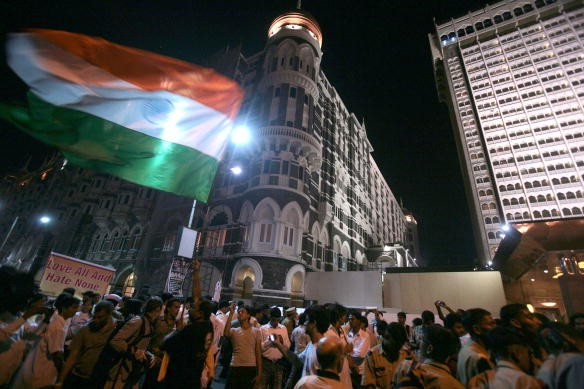
NIA termed it ‘a case of Hindu Terrorism’.
I have heard a lot of debates on national media channels and people speaking for and against the existence of any Hindu Terror. But many people do not know of the dots and those who know, fail to join the dots.
It was amply clear that under the garb of new initiatives, the new Home Minister had pulled wool over the nation’s eyes. They were not his initiatives. For example, a separate NIA-like mechanism had already been ordered by the apex court and the Administrative Reforms Commission in its VIIIth report titled ‘Combating Terrorism’ before Chidambaram’s tenure as Home Minister began. The federal agency—which he said was long due and endeared himself to the Supreme Court—the NIA was actually used by the new Home Minister as an instrument to propagate a narrative of Hindu Terror, Saffron Terror etc. The lack of transparency in the appointment of its first and second Directors General was very evident.
David Coleman Headley
At a distance of nearly a decade, the ‘evidence’ called ‘David Coleman Headley’ seems mythical. In popular memory, only the two differently coloured eyes remain. And we in India’s security establishments know that there are not only two versions of the Headley story but several and Internal Security certainly does not know which is closest to the truth.
The NIA played a vital part in the interrogation of the man known to international media and security establishments as David Coleman Headley (born as Daood Sayed Gilani in Washington).
A man called Tahawwur Hussain Rana was a Pakistani Canadian resident of Chicago, the USA who was an immigration service businessman and a former military physician. In 2011, he was convicted of providing support to the militant group Lashkar-e-Taiba and of allegedly plotting an attack on the Danish newspaper Jyllands-Posten. At the trial of Rana, an alleged co-conspirator, David Headley gave detailed information about the participation of Pakistan’s Directorate of Inter-Services Intelligence (ISI) in carrying out the 26/11 Mumbai attacks.
Headley was arrested at Chicago’s O’Hare International Airport while he was attempting to travel to Pakistan on 9 October 2009.
US authorities gave Indian investigators, ie, the then NIA, direct access to Headley. NIA was the investigating agency for terror cases in India. According to a report in the Economic Times, Meera Shankar, the then Indian ambassador to the US called on Union Home Minister P Chidambaram to discuss the agenda for his meeting (in September 2009) with the US Department of Homeland Security chief Janet Napolitano. She (Shankar) said: The Rana trial is going on and Headley is the key witness. The revelations coming out from the trial are shedding new light on the full details of the (26/11) conspiracy.
Since his guilty plea, Headley has cooperated with US and Indian authorities and given information about his associates. On 24 January 2013, a US federal court in Chicago sentenced Headley to 35 years in prison for his role in the Mumbai attacks.
The interrogation report of David Headley was submitted as a part of the ‘tour’ report of the investigating team, that is the NIA, then led by Inspector General Behara. The NIA submitted the ‘tour’ report to the Home Minister, P Chidambaram. The Home Minister’s office is reported to have excised portions of the Headley testimony to NIA.
From custody in the USA, Headley later deposed in ‘in camera’ proceeding in the Abu Jundal case in India.
During the online part of the trial in the Jundal case, Headley apparently said that Muzzamil Bhat (a key Kashmiri military asset of the LeT, according to the FBI) had told him that Muzzamil had played an important role in recruiting Ishrat Jahan and Pranesh Pillai alias Javed Mohammad Sheikh as fidayeen. According to Headley, Muzzamil also claimed that he had been instrumental in their being assigned the task of eliminating the then Chief Minister of Gujarat (Narendra Modi) and another prominent leader of Gujarat (Amit Shah). This part of the Headley testimony was soon available in the public domain.
A vital letter, which was found filed in one of the several litigations in the Jundal case, is the letter of Daniel Clegg, the then Legal Attache in the US Embassy in Delhi. He had expressly assured India of total cooperation of the US government in access to David Headley for questioning.
However, the then Indian government, including I recall, the then Home Minister Sushil Kumar Shinde (2012-2014), pedalled a public lie that the US government had been resisting any further access to David Headley. Often, NIA documentation was offered to the media as proof. Several years later, the then NIA, under the UPA regime, was accused of excising vital portions of the Headley testimony for tendering before the courts. However, the security establishment knew that the NIA had submitted a full ‘tour report’ containing the full Headley testimony to Home Minister Chidambaram.
A very pertinent point is to what extent was Headley’s interrogation excised? By admission, the references to Ishrat Jahan as ‘a botched mission’ has been revealed in the Abu Jundal trial.
Maybe, the portion defining film-maker Rahul Bhatt’s role in assisting David Headley in carrying out the recce of the Taj and Trident Hotels on 26 November 2008 too was excised for the courts. The nation wants to know how is it that a person who accompanies Headley on a recce—takes detailed rounds of Mumbai city—claims innocence, saying that he was not aware of what Headley was up to?
Also, why should Rahul’s father pedal influence and write to the Union Home Minister? Since the son was innocent and had no idea of what Headley, his companion, was up to, they could have consulted a lawyer, got a statement recorded with any judicial authority under relevant sections of the Criminal Procedure Code and got him exonerated in the public eye.
One more important aspect of Headley’s statement was the ‘Kasab tradeoff’. In the statement before the trial court in the Abu Jundal case, Headley had reportedly hinted that there were attempts to take hostage some persons— possibly a Director-level person/s from India’s security establishments—to be traded off with Ajmal Kasab by the ISI. This testimony was also a part of Headley’s NIA interrogation which got edited out from official records.
Attempts to take hostage some Israelis and trade them for Ajmal Kasab’s release was revealed in Headley’s statement before the court in the Jundal case in March 2016.
However, way back in 2009, immediately after the 26/11 Mumbai attacks, there were whispers amongst the security and intelligence community that there would be attempts to take Indian government officials hostage and trade them off for Ajmal Kasab’s release. This was a purely internal security assessment about Indian officials. People like PK Mishra, then Director (IS), were on high alert, moving about within Delhi police cover. The NIA was very much aware of this. Was there a line of questioning by the NIA team which interrogated Headley in Chicago in 2009? What was the specific line of questioning? Was there any input from the interrogation with Headley on a possible tradeoff? Was it also a part of the answers which were excised?
For purely public consumption, most of the ‘dossier diplomacy’ started only after 7th January 2009. Before that, possibly, I was one of the alternative ‘target officials’ whose ‘botched up’ attempt to take hostage had already happened. Was some collaboration in existence between some top Indian political entity with Pakistani establishments? Was it a case of overplaying and recalibration? We do not know.
April 22th, 2019
NIA termed it ‘a case of Hindu Terrorism’.
I have heard a lot of debates on national media channels and people speaking for and against the existence of any Hindu Terror. But many people do not know of the dots and those who know, fail to join the dots.
It was amply clear that under the garb of new initiatives, the new Home Minister had pulled wool over the nation’s eyes. They were not his initiatives. For example, a separate NIA-like mechanism had already been ordered by the apex court and the Administrative Reforms Commission in its VIIIth report titled ‘Combating Terrorism’ before Chidambaram’s tenure as Home Minister began. The federal agency—which he said was long due and endeared himself to the Supreme Court—the NIA was actually used by the new Home Minister as an instrument to propagate a narrative of Hindu Terror, Saffron Terror etc. The lack of transparency in the appointment of its first and second Directors General was very evident.
David Coleman Headley
At a distance of nearly a decade, the ‘evidence’ called ‘David Coleman Headley’ seems mythical. In popular memory, only the two differently coloured eyes remain. And we in India’s security establishments know that there are not only two versions of the Headley story but several and Internal Security certainly does not know which is closest to the truth.
The NIA played a vital part in the interrogation of the man known to international media and security establishments as David Coleman Headley (born as Daood Sayed Gilani in Washington).
A man called Tahawwur Hussain Rana was a Pakistani Canadian resident of Chicago, the USA who was an immigration service businessman and a former military physician. In 2011, he was convicted of providing support to the militant group Lashkar-e-Taiba and of allegedly plotting an attack on the Danish newspaper Jyllands-Posten. At the trial of Rana, an alleged co-conspirator, David Headley gave detailed information about the participation of Pakistan’s Directorate of Inter-Services Intelligence (ISI) in carrying out the 26/11 Mumbai attacks.
Headley was arrested at Chicago’s O’Hare International Airport while he was attempting to travel to Pakistan on 9 October 2009.
US authorities gave Indian investigators, ie, the then NIA, direct access to Headley. NIA was the investigating agency for terror cases in India. According to a report in the Economic Times, Meera Shankar, the then Indian ambassador to the US called on Union Home Minister P Chidambaram to discuss the agenda for his meeting (in September 2009) with the US Department of Homeland Security chief Janet Napolitano. She (Shankar) said: The Rana trial is going on and Headley is the key witness. The revelations coming out from the trial are shedding new light on the full details of the (26/11) conspiracy.
Since his guilty plea, Headley has cooperated with US and Indian authorities and given information about his associates. On 24 January 2013, a US federal court in Chicago sentenced Headley to 35 years in prison for his role in the Mumbai attacks.
The interrogation report of David Headley was submitted as a part of the ‘tour’ report of the investigating team, that is the NIA, then led by Inspector General Behara. The NIA submitted the ‘tour’ report to the Home Minister, P Chidambaram. The Home Minister’s office is reported to have excised portions of the Headley testimony to NIA.
From custody in the USA, Headley later deposed in ‘in camera’ proceeding in the Abu Jundal case in India.
During the online part of the trial in the Jundal case, Headley apparently said that Muzzamil Bhat (a key Kashmiri military asset of the LeT, according to the FBI) had told him that Muzzamil had played an important role in recruiting Ishrat Jahan and Pranesh Pillai alias Javed Mohammad Sheikh as fidayeen. According to Headley, Muzzamil also claimed that he had been instrumental in their being assigned the task of eliminating the then Chief Minister of Gujarat (Narendra Modi) and another prominent leader of Gujarat (Amit Shah). This part of the Headley testimony was soon available in the public domain.
A vital letter, which was found filed in one of the several litigations in the Jundal case, is the letter of Daniel Clegg, the then Legal Attache in the US Embassy in Delhi. He had expressly assured India of total cooperation of the US government in access to David Headley for questioning.
However, the then Indian government, including I recall, the then Home Minister Sushil Kumar Shinde (2012-2014), pedalled a public lie that the US government had been resisting any further access to David Headley. Often, NIA documentation was offered to the media as proof. Several years later, the then NIA, under the UPA regime, was accused of excising vital portions of the Headley testimony for tendering before the courts. However, the security establishment knew that the NIA had submitted a full ‘tour report’ containing the full Headley testimony to Home Minister Chidambaram.
A very pertinent point is to what extent was Headley’s interrogation excised? By admission, the references to Ishrat Jahan as ‘a botched mission’ has been revealed in the Abu Jundal trial.
Maybe, the portion defining film-maker Rahul Bhatt’s role in assisting David Headley in carrying out the recce of the Taj and Trident Hotels on 26 November 2008 too was excised for the courts. The nation wants to know how is it that a person who accompanies Headley on a recce—takes detailed rounds of Mumbai city—claims innocence, saying that he was not aware of what Headley was up to?
Also, why should Rahul’s father pedal influence and write to the Union Home Minister? Since the son was innocent and had no idea of what Headley, his companion, was up to, they could have consulted a lawyer, got a statement recorded with any judicial authority under relevant sections of the Criminal Procedure Code and got him exonerated in the public eye.
One more important aspect of Headley’s statement was the ‘Kasab tradeoff’. In the statement before the trial court in the Abu Jundal case, Headley had reportedly hinted that there were attempts to take hostage some persons— possibly a Director-level person/s from India’s security establishments—to be traded off with Ajmal Kasab by the ISI. This testimony was also a part of Headley’s NIA interrogation which got edited out from official records.
Attempts to take hostage some Israelis and trade them for Ajmal Kasab’s release was revealed in Headley’s statement before the court in the Jundal case in March 2016.
However, way back in 2009, immediately after the 26/11 Mumbai attacks, there were whispers amongst the security and intelligence community that there would be attempts to take Indian government officials hostage and trade them off for Ajmal Kasab’s release. This was a purely internal security assessment about Indian officials. People like PK Mishra, then Director (IS), were on high alert, moving about within Delhi police cover. The NIA was very much aware of this. Was there a line of questioning by the NIA team which interrogated Headley in Chicago in 2009? What was the specific line of questioning? Was there any input from the interrogation with Headley on a possible tradeoff? Was it also a part of the answers which were excised?
For purely public consumption, most of the ‘dossier diplomacy’ started only after 7th January 2009. Before that, possibly, I was one of the alternative ‘target officials’ whose ‘botched up’ attempt to take hostage had already happened. Was some collaboration in existence between some top Indian political entity with Pakistani establishments? Was it a case of overplaying and recalibration? We do not know.
April 22th, 2019
Election appeal to Rural and Urban areas
===========================
Indian cities comprise 100 LS constituencies and another 31 seats are majorly (40-49%) urban. As urban areas have risen in importance, political strategists are tasked to make wide-ranging policies to entice city dwellers with their unique concerns and the hodgepodge demographics. For example, BJP, which has traditionally performed well in urban areas, has asserted the strong leadership of PM Narendra Modi and national security—a message that can transcend class, caste, language and gender.
Rural vs Urban policies of BJP and Congress
================================
Parties will make policies and filter the message based on the level of urbanisation of the target voters. It is more meaningfully done in state elections. Thus, in the highly urbanised Gujarat, the emphasis is on urban dwellers whilst the same can't happen in Madhya Pradesh, Rajasthan and Chhattisgarh. The sheer number of non-urban seats in 543 LS constituencies means that most parties will have policies that favour farmers and emphasise rural welfare. In the past, winners have used rural roads, guaranteed rural employment, loan waivers and high MSPs.
===========================
Indian cities comprise 100 LS constituencies and another 31 seats are majorly (40-49%) urban. As urban areas have risen in importance, political strategists are tasked to make wide-ranging policies to entice city dwellers with their unique concerns and the hodgepodge demographics. For example, BJP, which has traditionally performed well in urban areas, has asserted the strong leadership of PM Narendra Modi and national security—a message that can transcend class, caste, language and gender.
Rural vs Urban policies of BJP and Congress
================================
Parties will make policies and filter the message based on the level of urbanisation of the target voters. It is more meaningfully done in state elections. Thus, in the highly urbanised Gujarat, the emphasis is on urban dwellers whilst the same can't happen in Madhya Pradesh, Rajasthan and Chhattisgarh. The sheer number of non-urban seats in 543 LS constituencies means that most parties will have policies that favour farmers and emphasise rural welfare. In the past, winners have used rural roads, guaranteed rural employment, loan waivers and high MSPs.
In the last 5 years, the Modi-led government has worked on village development, asset development through NREGA, universal sanitation, utility connections to all households, social security, direct bank payment of subsidies, digital services, etc. For farmers, there is also better fertilizer supply, low-cost credit, irrigation, freer food markets, better logistics, food processing, etc. BJP has recently started income support of Rs 6000-/pa for all small farmers and guaranteed MSPs at 150% of input costs (for all crops backed by strong procurements). For LS 2019, it has pledged zero-interest loans to farmers, fishermen and livestock farmers. It has pledged subsidised pensions for farmers and low-paid workers. Congress has proposed a high basic income of Rs 72,000-/pa for poorest 20% of households.
In contrast, Congress's policy aims at both rural and urban poor with a broad brush income pledge. Of course, Congress lacks credibility and it is known to steal large sums of the allocated money. There are also fundamental issues with the policy such as labour shortages (it is an incentive for people to not work or reduce hours worked), reduced economic activity (higher taxes on the middle class and businesses), lower development (diversion of infrastructure funds), social unrest (uncompensated loss of subsidies like food, fuel, fertiliser, etc), political strife (sharp demarcation will be resented by those who miss out), and regionalism (massive funds transfer from richer states to the poorest states with bad governance)
Tackling poverty through good governance and better infrastructure
======================================
From BJP's view, most deprived areas of the country can be uplifted by a targeted approach. via the "aspirational districts programme". It uses a variety of existing Centre and State schemes to fund improvements. and benefits both rural and urban areas through better cooperation and good governance. Areas of deprivation are identified and all aspects are addressed wherever voids are found- in physical development and in socio-economic fields like banking, business credit, new industries and small enterprises, skilling, social security, housing, access to utilities, sanitation, nutrition, health, education, law & order and security. It helps that Centre under PM Modi has released funds and done outstanding work on the ground.
Urban poverty can be tackled by increasing jobs—by making cities attractive to inward investment—by impacting and improving areas such as efficiencies, competencies, living conditions and the breadth of economic activity these cities perform. Improvements can be categorised under large infrastructure projects, city buildings and functional and social improvements.
Examples of urban infrastructure promoted by NDA govt
======================================
1. Large infrastructure: Suburban rail, metro & bullet trains, sea-bridges, coastal roads, major tunnels & flyovers in Mumbai (eg); faster intercity railways (eg doubling tracks, electrification, signaling, Train-18 trainsets); expressways, orbital roads and link highways; waterways and efficient ports; dry docks, logistic parks; new cities, area development in smart cities, riverfront development; economic corridors, industrial clusters, business & financial centres; etc
2. City buildings: Railway and bus station modernisation, tourist attractions, exhibition centres, educational institutes, district hospitals, primary health centres, piped water and gas connections, underground electricity wiring, dense Wifi & fibre-to-the-home telecommunication connections, safety & security infrastructure eg, cameras, street lighting, sewage treatment plants, waste-to-energy plants, water-treatment plants, desalination plants, housing, green buildings, low pollution devices on power plants, charging stations for electric vehicles, etc.
3. Functional and social improvements: Urban Swachh Bharat including solid and liquid waste collection, city beautification & tourism, 24/7 power, strong cellular & broadband connectivity, easy access to financial institutes, quality schools, safer cities through smart cities tech infusion, easy transportation incl multi-modal travel card, clean rivers, adequate supply of water, clean drinking water, healthy air eg clean vehicle fuels, electric buses, etc.
April 20th, 2019
Decoded: The concerns and aspirations of the urban electorate in seven Indian cities


Subscribe to:
Comments (Atom)