=========================
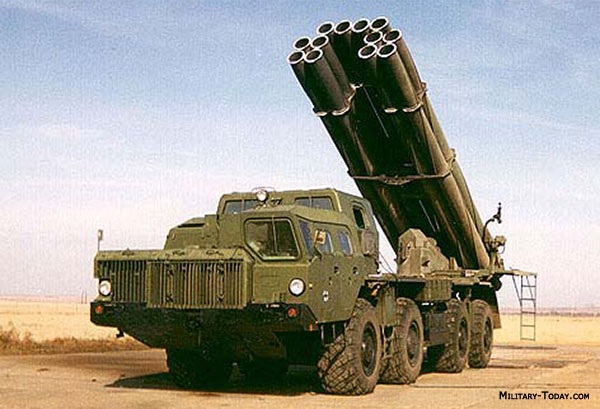
Border infrastructure in the North & NE sectors receives significant defence spending and is actively monitored. The army is also comfortable with stocks of light infantry equipment and consumables (such as anti-tank guided missiles, artillery fuses, long-range Smerch rockets), which were acquired in bulk since 2017, under V-C's emergency powers. The process to acquire future stocks is more or less completed for all items.
Army commanders then discussed ways to enhance capabilities against China and add greater options against Pakistan. They recommended:
◘ additional equipment, to sustain intense conflict for 10 days across many war zones
◘ better theatre operational efficiencies, through reorientation of forces, improvement in mobilisation speeds and better operational management.
April 10th, 2019
Army Chief General Bipin Rawat highlighted the changing threats India faces and his vision to counter them

Effective Military Modernization in face of challenges
==========================
Squeeze on capital spending
Govt has mandated the military to modernise and shape up for a "two-front war". At the same time, it has not increased but rather reduced defence spending as a percentage of GDP. Its generous OROP (pensions scheme) for the forces will be taking a greater share of total defence allocation. As a result, the military has had to scale back on capital procurements.
In fact, procurements were paused for a couple of years
◘ Make in India MMRCA has been postponed. Contracts of some capital ships for the Navy were delayed
◘ IAF owes over Rs 15,000cr to HAL, as Rafale payments blew a hole in IAF's capital budget. HAL resorted to borrowing for the 1st time
◘ However, critical war stocks were replenished during the NDA term
◘ Many (large) foreign and domestic deals are in the offing. S400 anti-ballistic missiles deal was signed in 2018. Indigenous Tejas Mk1A is close to being ordered.
Overview of Army's shake-up
Indian Army has traditionally maintained over-sized numbers and lagged on modernisation. The pensions timebomb will severely curtail the Army's capital budget, and even completely squeeze it if action is not taken to alter the balance. The Army Chief has signalled a radical shake-up in personnel by pulling out army men from non-active roles, downsizing, changing force composition and exploring gainful employment opportunities for early retirees. The Army will also alter the dynamics and formations of the units, through the purchase of advanced systems, change in deployment and greater coordination with the Airforce.
Infrastructure
Completion of critical or strategic infrastructure helps to reduce military expenditure and improves its fighting capability. Centre has sanctioned and expedited works like rail links, roads, bridges, tunnels, airfields, landing strips, power lines, non-fossil fuel power projects, fibre-optic cables, communication towers, satellites, border intruder detection, coastal radars, etc to better serve remote or border regions of A&N islands, NE and North India. Though this type of infra is very expensive, it can be used by both civilians and the military. Interestingly, recently inaugurated Bogibeel bridge or Pakyong Airport in Sikkim (eg) will help to speed up ongoing projects and reduce the cost of construction.
Tackling corruption and smart procurement
Rampant corruption of previous Congress-led governments has hard-wired the public into thinking all other political groupings are the same. Congress used this cynical attitude to smear the NDA government with corruption allegations but the Rafale deal has instead shown that NDA was exemplary in its procurements. Local commanders are afforded higher grants to buy critical items or sanction essential works. Eg Army has used it to procure small arms and protective equipment for patrols; ammunition for tanks, artillery and infantry; improved living quarters and built link roads on its own.
Efficient ordering, stock audits and production
Ordering and stock-taking were digitalised and audits were done on quality and quantity of stock. This was done as CAG had found ordering was haphazard, leading to critically low stocks of ammunition, etc whilst also unwanted, often defective production piled up in stores at a huge cost. Production agencies, like Ordnance Factory Boards, were made accountable for quality control and poor production outcomes (incl a threat of privatisation). Non-core OFB production was outsourced and private sector competition was instituted. OFB was allowed 3% spend on R&D to improve process technologies (eg artificial intelligence, automation). Results are encouraging: OFBs have reduced no. of employees and markedly increased production.
Prioritise serviceability over new capital procurements
UPA era was characterised by weak serviceability of all military equipment. So, while the political class and the general public obsessed with new procurements, the effective availability of existing equipment was pathetic. The causes of the dysfunction were many, eg. lack of money, poor inventory control, poor institutional arrangement for acquiring foreign spares, complex returns process, improper maintenance and inadequate oversight by people-in-charge. Equipment availability was prioritised -- to be raised to 95% -- by fast-tracking maintenance and spares contracts over 4 years. With equipment back in service, fewer replacement purchases were made. Shortcomings were addressed by digitalising records, localising maintenance depots, "just in time" inventory control, reassessment of requirements (which may change over time), etc.
Made in India equipment, along with a well-designed servicing plan, is perhaps the best option for the armed forces, as it minimises overall costs, improves strategic control and yields the most economic benefit for the country. For this, Govt needs to energise the whole indigenous R&D effort.
Made by India
The Army now has access to a host of quality indigenous subsystems and platforms that are being readied by India's public defence R&D / production agencies (DRDO, HAL, Ordnance factories. Shipyards) along with the Indian private sector. There are also JVs with foreign OEMs. Foreign equipment, that will be partly made in India, will add many notches higher capability to the present.
◘ Attack helicopters
◘ Anti-aircraft systems or SAMS
◘ Long range or supersonic cruise missiles
◘ Rocket artillery and tactical ballistic missile systems
◘ Tube Artillery of many types
◘ Anti-tank missiles and platforms
◘ Tanks and different types of Tank munitions
◘ Heavy-lift helos, utility helos
◘ Military vehicles of different types
◘ Radars, eg foliage penetration, air-borne & long-range
◘ Military Satellites and digital border intruder detection
◘ Drones incl mini, area surveillance and armed drones
National Security directive to give guidance
Political directive on national security issues is expected later this year. The military can use this to plan and optimise future force formations and equipment procurements.
More on Army's big plan
==============
https://www.indiatoday.in/magazine/cover-story/story/20190121-battle-of-the-bulge-1427715-2019-01-12
February 24th, 2019
DETAILED
Managed to recover from critical shortages and poor equipment availability
-------------------------------------------- It was probably known that stocks of crucial ammunition were dangerously low, but it was brought into sharp focus only when top people decided to make a difference, and then a sincere effort was made to find out. Around mid-2016, a decision was taken to urgently deal with shortages. Emergency orders were placed for ammunition, spares, small arms, body armour, etc. to bring them up to respectable levels. Equipment availability was prioritised -- in fact, the bar raised to 95% -- by fast-tracking maintenance and spares contracts over 4 years.
As full payment was made in the same year or over a short no. of years, inevitably big-ticket purchases had to be delayed. Ministry says the situation is manageable but the Finance ministry must provide a larger capital outlay in the near future. Fortunately, MOD will be able to save monies from overhauling its assets management system.
Savings will come from the complete revamp of ordering, stock-keeping and production
Digitization of records and inventory control has brought greater transparency, greater facility and better cost-efficiency. Ministry says they are working to get the "most bang for every buck it spends". EG: new MROs for Army helos were established close to user bases, as this significantly improved availability of helos, and probably saved in operating costs.
Army's in-house servicing is reaping benefits of the new method of working. There is good coordination btw MOD and the Army decision makers, decisions are made faster, resources are going where they should and the money is being fully utilised in the financial year. Efficiency has come about due to:
1. Delegation of financial powers
2. Shortening of decision-making
3. Simplification of the process
4. Emphasis on indigenous sourcing of equipment and stores.
Naturally, if the purchase can be completed in a relatively short period, then budget allocation for it can be precise.
Non-core items (eg clothing, uniforms) can now be bought directly from the market, at better quality and price than the Ordnance Factory Board. Forces can save around Rs 1200cr per year.
Change to "Just in time" model of stock keeping becomes inevitable due to failures in the past
Layers of Army management incl. Army's top brass now have a complete view of equipment availability. With information at hand, the current Army Chief has issued a directive to reduce unnecessary and excessive procurement. "We now follow a ‘just in time’ model of keeping spares which means the only absolute minimum number of spares will be kept in stock".
Hopefully, they can avoid mistakes of the past: "There have been instances in the past when we had bought spares worth tens of thousands of crores of rupees and didn’t use them. In some cases, these spares were not even opened and have now become dead stock since the equipment they were meant for, has been retired from service!!"

No comments:
Post a Comment