◙ Highlight the torture of devout Hindus by a corrupt UPA govt
-------------------------------------------------------
BJP has put up Pragya Singh Thakur, a Hindu lady who was falsely accused in Malegaon blasts case, as a Lok Sabha candidate for Bhopal constituency. It is a calculated move to corner the Congress ahead of polling in BJP / Hindu heartlands of Madhya Pradesh, Gujarat, Rajasthan, Central & Eastern UP, Maharashtra, Bihar, North India, North Karnataka, Jharkhand and Chhattisgarh.
Pragya Singh Thakur was kept in jail for 10 years without even facing trial, where she was ruthlessly beaten up, tortured, humiliated and defamed as a terrorist. Other devout Hindus (like Lt Colonel Prasad Purohit) were picked up and given similar treatment. It was a time when Islamic terror backed by Pakistan's ISI and funded by China, Saudis & Western sponsors, was raging non-stop across India and had targetted Hindu places (eg temples) and large crowds in public places (eg railway station, hotels). Anger was only natural, but the response was muted. Congress was in government. It initiated a sinister and false narrative of "Hindu or Saffron terror" and prosecuted many Hindus to justify its purpose, of defaming Hindus and deflecting attention away from Islamic terror. The UPA governments did little to stop terrorist attacks and responded meekly or maliciously to attacks (see below). HERE
PM Narendra Modi made a very clear statement of BJP's intent during TimeNow interview (see article). He said the fielding of Pragya Singh Thakur as the BJP candidate from Bhopal, was a symbolic answer to all those who labelled the rich Hindu civilization as “terrorist” and asserted that "the symbol will prove costly for the Congress". Clearly, PM Modi is mobilising public opinion against the Congress on this issue and in return, BJP will wreck the Congressi ecosystem if it sweeps the BJP / Hindu heartlands in the remaining phases.
PM Modi defends Sadhvi Pragya as she take on Digvijaya in Bhopal
| Prime Minister Narendra Modi and BJP's Lok Sabha candidate for Bhopal Pragya Singh Thakur. |
The Myth of Hindu Terror: Insider Account of Ministry of Home Affairs (Book)
======================================
R V S Mani is former under-secretary, Ministry of Home Affairs.
The book gives a first-hand account from inside the Ministry of Home Affairs (MHA) and narrates among other things, on how commonplace political interference had become in matters of national security. Not much has been written on the challenging times faced by the internal security officials during UPA 1 and II governments— periods marked by serial blasts and terror attacks, including the notorious 26/11 Mumbai terror attack.
Mani was posted in one of the most crucial departments of MHA, the Internal Security (IS) division, from 2006 to 2010. He tried to focus on how MHA officials, under the direction of the then UPA political leaders, were forced to carry out orders that were morally wrong apart from being illegal.
Officials involved in internal security were pressurised to bend to illegal, immoral political orders that suited the interest of the political dispensation, which caused irreparable damage to the country, and eventually led to the 26/11 attack. Mani says it was “Hobson’s choice” where officers had a choice to save themselves or their country. It will be worthwhile to wait and see whether, or not, the scores of individuals who have been named by Mani, for not so flattering reasons will respond to his accusations.
Mani, who took five months to complete the book, has bared the plot in the initial pages, stating that “the so-called secular narrative attempted to be propagated between 2004-2013 had the potential to tear India’s social fabric to shreds”. The rest of the book is filled with anecdotes, as one would expect from someone who has worked among spooks. He has substantiated the central theme of the book by quoting and attesting official records and incidents, some of which are in the public domain and many of which are not.
Unlike members of his clan, Mani has named political personalities, IAS and IPS officers. He has either indicted them for their wrongdoings or appreciated them, such as former IB officer Rajendra Kumar, whom he has mentioned multiple times and credited him for destroying several ISI sleeper cells that were flourishing in the country.
The book has been divided into 14 chapters. In one chapter, titled “Seeding of Hindu terror”, he has shared several anecdotes to prove how the Congress-led UPA government had forced the MHA officials to manufacture a false narrative about the presence of “Hindu terror”. Mani mentions how he was summoned by the then Home Minister Shivraj Patil to his chamber and was asked to share information on terrorist attacks. At the time, two more individuals, who were identified as senior Congress leader Digvijaya Singh and former Maharashtra IPS officer Hemant Karkare, sat there seeking information from him, while Patil sat in his chair totally unconcerned about what was happening. According to Mani, both Singh and Karkare were unhappy with his information that “a particular religious group was in most of the terror attacks”. This was in June 2006 and according to him, it was during this time that the “first seed of the canard” that there existed Hindu terror was sown.
This promulgation of the theory of Hindu terror, according to the book, led to many knots among the various agencies that work under the MHA as agency people were asked to change the narrative from terror to Hindu terror. According to him, “At a time when we had the best team in the IS division, the attitude of the government in power and intent to cover every terror incident as ‘saffron’ and the ambivalence in acting against the real perpetrators of the terror attacks were making this country a cannon fodder for those with evil designs against India”.
Mani says the most challenging time came during the Mumbai attack as almost all the top officials of IS division were in Pakistan. According to Mani, this was all part of a design which has been explained in great details in the book. And with a less than adept Home Minister at the helm, which Mani has tried to prove by giving examples, the terrorists got crucial hours to “secure” themselves. In this chapter too he has named IAS officers, politicians and Bollywood personalities for playing a questionable role during and after the attack.
Behind the scenes account, during the attack and when the investigation started, are vividly mentioned in the book. It also talks about how credible inputs about an impending terror attack on Mumbai were not heeded due to intervention from “top political office” - as a result, the agency and officials got the blame for not stopping the attack.
A full chapter has been given to the happenings in MHA when P. Chidambaram became the Home Minister. Mani shares how the initial two DGs of NIA were picked without following any due process and how the NIA acted as the personal favourite of the Home Minister and “big brother” to other agencies. According to him, the NIA introduced a non-existent “Hindu terrorism” concept. “In every case assigned to NIA, they overlooked the first set of evidence and replaced it with the evidence supporting the Hindu terror narrative”.
It is worthwhile to mention here that senior officials with the NIA, with whom this correspondent used to interact during the UPA times, have admitted off the record that they had no evidence of any organised Hindu terror.
Perhaps, the most interesting part of the book is aptly titled “The whispering rooms”. In this chapter, Mani has included several incidents that will sound unbelievable at first but it will eventually sink in. Like how the CBI sat on requests by the Indian representative to the UN when he sought evidence against Dawood Ibrahim which only the CBI had since the “political quarters when P. Chidambaram was the Home Minister, were against providing any hardcore evidence against Dawood to the UN”.
He also writes about how an iconic property in Lutyens Delhi (which was 7, Race Course Road, the residence of the Prime Minister—Mani has chosen not to mention) was “sold” to an NRI. Perhaps a more interesting part of the chapter, which will leave the reader wishing that some more pages were devoted to it, is when Mani narrates incidents regarding how our intelligence agencies stopped several terror attacks. Many of these incidents have not come out in the public domain before.
He has also written about how there are set protocols, safeguards that the MHA carries out before any “surgical strike”. According to him, Mani received no such orders to implement these safeguards during 2006-2010, the time when UPA government says that it carried out surgical strikes. So did the UPA government actually carry out the strike? That is something the book leaves on the reader to decide.
On 20 July 2010, then prime minister Dr Manmohan Singh hosted a lunch in which US ambassador Timothy Roemer asked Congress president Rahul Gandhi about 'Lashkar-e-Taiba's activities in the region and its immediate threat to India'. Wikileaks cables reveal that Rahul Gandhi responded by saying that 'the bigger threat may be the growth of radicalised Hindu groups'.
It was not just a casual comment by a leader then considered the prime minister-in-waiting. By 2010, a lot of work—overseen by senior members of the United Progressive Alliance administration (UPA)—had gone into constructing the 'saffron/Hindu' terror myth. R V S Mani, former under-secretary in the Ministry of Home Affairs (MHA), in his new book ‘Hindu Terror’ (2018) takes the reader on a detailed tour of the processes and mechanisms through which the strongmen in the UPA government created this formidable narrative.
Hindu Terror and National Investigation Agency (NIA)
===================================
Extract: HERE ->
If anyone recapitulates the investigation history of NIA through 2009-2010, it was all about introducing a new nonexistent ‘Hindu Terrorism’ concept. In every case assigned to NIA—from the Samjhauta Express Blasts, Malegaon to Ajmer Sharif— they overlooked the first set of evidence and replaced it with evidence supporting the Hindu Terror narrative.
The first major virgin case on which NIA claimed success is the case of some law & order disturbance between the participants in a rally on Diwali day in 2009, in which the Hindu Jagran Manch and Sanathan Sansthan [sic] were the participants. On 16.10.09, it was Diwali eve and a Narakasur effigy competition was held near the Shantadurga temple at Sancoale-Verna in Goa. The case report said, the accused persons and ‘other persons known and unknown’ conspired together to plant IEDs at the places of effigy competitions as they were against such competition and as part of their conspiracy, the above said group planted IEDs in a vehicle which was parked on the road near the Shantadurga temple on the night of 16.10.2009. Subsequently, the vehicle was located and the bomb was diffused by the Verna police station.
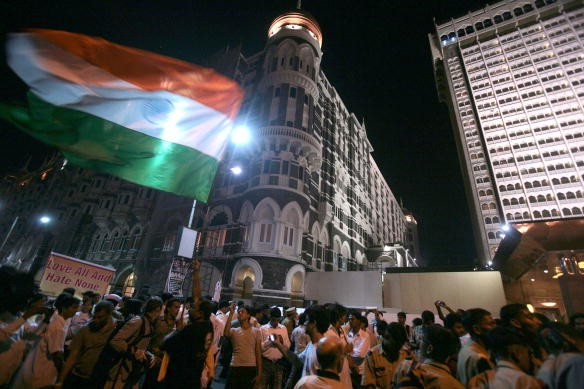
NIA termed it ‘a case of Hindu Terrorism’.
I have heard a lot of debates on national media channels and people speaking for and against the existence of any Hindu Terror. But many people do not know of the dots and those who know, fail to join the dots.
It was amply clear that under the garb of new initiatives, the new Home Minister had pulled wool over the nation’s eyes. They were not his initiatives. For example, a separate NIA-like mechanism had already been ordered by the apex court and the Administrative Reforms Commission in its VIIIth report titled ‘Combating Terrorism’ before Chidambaram’s tenure as Home Minister began. The federal agency—which he said was long due and endeared himself to the Supreme Court—the NIA was actually used by the new Home Minister as an instrument to propagate a narrative of Hindu Terror, Saffron Terror etc. The lack of transparency in the appointment of its first and second Directors General was very evident.
David Coleman Headley
At a distance of nearly a decade, the ‘evidence’ called ‘David Coleman Headley’ seems mythical. In popular memory, only the two differently coloured eyes remain. And we in India’s security establishments know that there are not only two versions of the Headley story but several and Internal Security certainly does not know which is closest to the truth.
The NIA played a vital part in the interrogation of the man known to international media and security establishments as David Coleman Headley (born as Daood Sayed Gilani in Washington).
A man called Tahawwur Hussain Rana was a Pakistani Canadian resident of Chicago, the USA who was an immigration service businessman and a former military physician. In 2011, he was convicted of providing support to the militant group Lashkar-e-Taiba and of allegedly plotting an attack on the Danish newspaper Jyllands-Posten. At the trial of Rana, an alleged co-conspirator, David Headley gave detailed information about the participation of Pakistan’s Directorate of Inter-Services Intelligence (ISI) in carrying out the 26/11 Mumbai attacks.
Headley was arrested at Chicago’s O’Hare International Airport while he was attempting to travel to Pakistan on 9 October 2009.
US authorities gave Indian investigators, ie, the then NIA, direct access to Headley. NIA was the investigating agency for terror cases in India. According to a report in the Economic Times, Meera Shankar, the then Indian ambassador to the US called on Union Home Minister P Chidambaram to discuss the agenda for his meeting (in September 2009) with the US Department of Homeland Security chief Janet Napolitano. She (Shankar) said: The Rana trial is going on and Headley is the key witness. The revelations coming out from the trial are shedding new light on the full details of the (26/11) conspiracy.
Since his guilty plea, Headley has cooperated with US and Indian authorities and given information about his associates. On 24 January 2013, a US federal court in Chicago sentenced Headley to 35 years in prison for his role in the Mumbai attacks.
The interrogation report of David Headley was submitted as a part of the ‘tour’ report of the investigating team, that is the NIA, then led by Inspector General Behara. The NIA submitted the ‘tour’ report to the Home Minister, P Chidambaram. The Home Minister’s office is reported to have excised portions of the Headley testimony to NIA.
From custody in the USA, Headley later deposed in ‘in camera’ proceeding in the Abu Jundal case in India.
During the online part of the trial in the Jundal case, Headley apparently said that Muzzamil Bhat (a key Kashmiri military asset of the LeT, according to the FBI) had told him that Muzzamil had played an important role in recruiting Ishrat Jahan and Pranesh Pillai alias Javed Mohammad Sheikh as fidayeen. According to Headley, Muzzamil also claimed that he had been instrumental in their being assigned the task of eliminating the then Chief Minister of Gujarat (Narendra Modi) and another prominent leader of Gujarat (Amit Shah). This part of the Headley testimony was soon available in the public domain.
A vital letter, which was found filed in one of the several litigations in the Jundal case, is the letter of Daniel Clegg, the then Legal Attache in the US Embassy in Delhi. He had expressly assured India of total cooperation of the US government in access to David Headley for questioning.
However, the then Indian government, including I recall, the then Home Minister Sushil Kumar Shinde (2012-2014), pedalled a public lie that the US government had been resisting any further access to David Headley. Often, NIA documentation was offered to the media as proof. Several years later, the then NIA, under the UPA regime, was accused of excising vital portions of the Headley testimony for tendering before the courts. However, the security establishment knew that the NIA had submitted a full ‘tour report’ containing the full Headley testimony to Home Minister Chidambaram.
A very pertinent point is to what extent was Headley’s interrogation excised? By admission, the references to Ishrat Jahan as ‘a botched mission’ has been revealed in the Abu Jundal trial.
Maybe, the portion defining film-maker Rahul Bhatt’s role in assisting David Headley in carrying out the recce of the Taj and Trident Hotels on 26 November 2008 too was excised for the courts. The nation wants to know how is it that a person who accompanies Headley on a recce—takes detailed rounds of Mumbai city—claims innocence, saying that he was not aware of what Headley was up to?
Also, why should Rahul’s father pedal influence and write to the Union Home Minister? Since the son was innocent and had no idea of what Headley, his companion, was up to, they could have consulted a lawyer, got a statement recorded with any judicial authority under relevant sections of the Criminal Procedure Code and got him exonerated in the public eye.
One more important aspect of Headley’s statement was the ‘Kasab tradeoff’. In the statement before the trial court in the Abu Jundal case, Headley had reportedly hinted that there were attempts to take hostage some persons— possibly a Director-level person/s from India’s security establishments—to be traded off with Ajmal Kasab by the ISI. This testimony was also a part of Headley’s NIA interrogation which got edited out from official records.
Attempts to take hostage some Israelis and trade them for Ajmal Kasab’s release was revealed in Headley’s statement before the court in the Jundal case in March 2016.
However, way back in 2009, immediately after the 26/11 Mumbai attacks, there were whispers amongst the security and intelligence community that there would be attempts to take Indian government officials hostage and trade them off for Ajmal Kasab’s release. This was a purely internal security assessment about Indian officials. People like PK Mishra, then Director (IS), were on high alert, moving about within Delhi police cover. The NIA was very much aware of this. Was there a line of questioning by the NIA team which interrogated Headley in Chicago in 2009? What was the specific line of questioning? Was there any input from the interrogation with Headley on a possible tradeoff? Was it also a part of the answers which were excised?
For purely public consumption, most of the ‘dossier diplomacy’ started only after 7th January 2009. Before that, possibly, I was one of the alternative ‘target officials’ whose ‘botched up’ attempt to take hostage had already happened. Was some collaboration in existence between some top Indian political entity with Pakistani establishments? Was it a case of overplaying and recalibration? We do not know.
April 22th, 2019
NIA termed it ‘a case of Hindu Terrorism’.
I have heard a lot of debates on national media channels and people speaking for and against the existence of any Hindu Terror. But many people do not know of the dots and those who know, fail to join the dots.
It was amply clear that under the garb of new initiatives, the new Home Minister had pulled wool over the nation’s eyes. They were not his initiatives. For example, a separate NIA-like mechanism had already been ordered by the apex court and the Administrative Reforms Commission in its VIIIth report titled ‘Combating Terrorism’ before Chidambaram’s tenure as Home Minister began. The federal agency—which he said was long due and endeared himself to the Supreme Court—the NIA was actually used by the new Home Minister as an instrument to propagate a narrative of Hindu Terror, Saffron Terror etc. The lack of transparency in the appointment of its first and second Directors General was very evident.
David Coleman Headley
At a distance of nearly a decade, the ‘evidence’ called ‘David Coleman Headley’ seems mythical. In popular memory, only the two differently coloured eyes remain. And we in India’s security establishments know that there are not only two versions of the Headley story but several and Internal Security certainly does not know which is closest to the truth.
The NIA played a vital part in the interrogation of the man known to international media and security establishments as David Coleman Headley (born as Daood Sayed Gilani in Washington).
A man called Tahawwur Hussain Rana was a Pakistani Canadian resident of Chicago, the USA who was an immigration service businessman and a former military physician. In 2011, he was convicted of providing support to the militant group Lashkar-e-Taiba and of allegedly plotting an attack on the Danish newspaper Jyllands-Posten. At the trial of Rana, an alleged co-conspirator, David Headley gave detailed information about the participation of Pakistan’s Directorate of Inter-Services Intelligence (ISI) in carrying out the 26/11 Mumbai attacks.
Headley was arrested at Chicago’s O’Hare International Airport while he was attempting to travel to Pakistan on 9 October 2009.
US authorities gave Indian investigators, ie, the then NIA, direct access to Headley. NIA was the investigating agency for terror cases in India. According to a report in the Economic Times, Meera Shankar, the then Indian ambassador to the US called on Union Home Minister P Chidambaram to discuss the agenda for his meeting (in September 2009) with the US Department of Homeland Security chief Janet Napolitano. She (Shankar) said: The Rana trial is going on and Headley is the key witness. The revelations coming out from the trial are shedding new light on the full details of the (26/11) conspiracy.
Since his guilty plea, Headley has cooperated with US and Indian authorities and given information about his associates. On 24 January 2013, a US federal court in Chicago sentenced Headley to 35 years in prison for his role in the Mumbai attacks.
The interrogation report of David Headley was submitted as a part of the ‘tour’ report of the investigating team, that is the NIA, then led by Inspector General Behara. The NIA submitted the ‘tour’ report to the Home Minister, P Chidambaram. The Home Minister’s office is reported to have excised portions of the Headley testimony to NIA.
From custody in the USA, Headley later deposed in ‘in camera’ proceeding in the Abu Jundal case in India.
During the online part of the trial in the Jundal case, Headley apparently said that Muzzamil Bhat (a key Kashmiri military asset of the LeT, according to the FBI) had told him that Muzzamil had played an important role in recruiting Ishrat Jahan and Pranesh Pillai alias Javed Mohammad Sheikh as fidayeen. According to Headley, Muzzamil also claimed that he had been instrumental in their being assigned the task of eliminating the then Chief Minister of Gujarat (Narendra Modi) and another prominent leader of Gujarat (Amit Shah). This part of the Headley testimony was soon available in the public domain.
A vital letter, which was found filed in one of the several litigations in the Jundal case, is the letter of Daniel Clegg, the then Legal Attache in the US Embassy in Delhi. He had expressly assured India of total cooperation of the US government in access to David Headley for questioning.
However, the then Indian government, including I recall, the then Home Minister Sushil Kumar Shinde (2012-2014), pedalled a public lie that the US government had been resisting any further access to David Headley. Often, NIA documentation was offered to the media as proof. Several years later, the then NIA, under the UPA regime, was accused of excising vital portions of the Headley testimony for tendering before the courts. However, the security establishment knew that the NIA had submitted a full ‘tour report’ containing the full Headley testimony to Home Minister Chidambaram.
A very pertinent point is to what extent was Headley’s interrogation excised? By admission, the references to Ishrat Jahan as ‘a botched mission’ has been revealed in the Abu Jundal trial.
Maybe, the portion defining film-maker Rahul Bhatt’s role in assisting David Headley in carrying out the recce of the Taj and Trident Hotels on 26 November 2008 too was excised for the courts. The nation wants to know how is it that a person who accompanies Headley on a recce—takes detailed rounds of Mumbai city—claims innocence, saying that he was not aware of what Headley was up to?
Also, why should Rahul’s father pedal influence and write to the Union Home Minister? Since the son was innocent and had no idea of what Headley, his companion, was up to, they could have consulted a lawyer, got a statement recorded with any judicial authority under relevant sections of the Criminal Procedure Code and got him exonerated in the public eye.
One more important aspect of Headley’s statement was the ‘Kasab tradeoff’. In the statement before the trial court in the Abu Jundal case, Headley had reportedly hinted that there were attempts to take hostage some persons— possibly a Director-level person/s from India’s security establishments—to be traded off with Ajmal Kasab by the ISI. This testimony was also a part of Headley’s NIA interrogation which got edited out from official records.
Attempts to take hostage some Israelis and trade them for Ajmal Kasab’s release was revealed in Headley’s statement before the court in the Jundal case in March 2016.
However, way back in 2009, immediately after the 26/11 Mumbai attacks, there were whispers amongst the security and intelligence community that there would be attempts to take Indian government officials hostage and trade them off for Ajmal Kasab’s release. This was a purely internal security assessment about Indian officials. People like PK Mishra, then Director (IS), were on high alert, moving about within Delhi police cover. The NIA was very much aware of this. Was there a line of questioning by the NIA team which interrogated Headley in Chicago in 2009? What was the specific line of questioning? Was there any input from the interrogation with Headley on a possible tradeoff? Was it also a part of the answers which were excised?
For purely public consumption, most of the ‘dossier diplomacy’ started only after 7th January 2009. Before that, possibly, I was one of the alternative ‘target officials’ whose ‘botched up’ attempt to take hostage had already happened. Was some collaboration in existence between some top Indian political entity with Pakistani establishments? Was it a case of overplaying and recalibration? We do not know.
April 22th, 2019

No comments:
Post a Comment