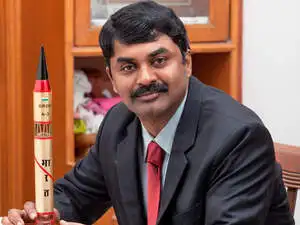
Govt's defence R&D organisation chief, Sateesh Reddy, says:
Self-sufficiency in weapons
-----------------------------------
1. DRDO is one of the preferred employers of graduates from top institutes. DRDO offers good financial incentives as well as study support, merit-based career paths and awards/ recognition for good performers.
2. In 5 years, we aim to be self-reliant in sectors like missiles, radars and armaments.
3. For exports, we are showcasing DRDO products to international parties. To minimise manufacturing costs, we are reducing the royalty cost to the private sector and giving free handholding support to them.
Support for the private sector
-------------------------------
4. Private sector is firmly engaged. There are more than 1800 partner companies, which is a big jump from the previous decade. Many are involved in aerospace manufacturing (ie aircraft, missiles, armaments) and some will get to be lead system integrators as well.
5. Through DcPP (development cum production) partnership, we will get the private sector involved in all stages of system development.
6. Private sector will be given DRDO technologies to bring them into manufacturing, can share our R&D facilities, and start-ups will be supported through Technology Development Fund.
Fighter aircraft design
-----------------------------
7. Advanced LCA (or medium-weight fighter) has completed design or configuration phase. It is ready to be constructed.
8. Fifth-generation fighter (AMCA) will be fully designed and built within five years - though it will go through a prolonged testing phase after that. We are confident of meeting IAF's specifications.
9. Jet engine development is a strategic priority but we need outside help to fructify it!!
Missiles
----------
10. Anti-tank missiles: Land-based NAG has successfully completed trials, Man-portable version (MPATGM) is now available for user trials, and Air-launched version (Helina) is in development trials and has not reached user trials.
11. Anti-aircraft missile: Air-launched ASTRA is ready for induction, and we are confident of doubling ASTRA's range in the next phase, to make it truly a state-of-art missile.
12. Agni series of missiles, under the nuclear ballistic missile programme that started two decades or so ago, has successfully reached the end of development.
13. Ballistic Missile Defence (BMD) is where we have successfully demonstrated our technologies in both endospheric & exospheric interceptions. Active development of the final weapon system is underway.