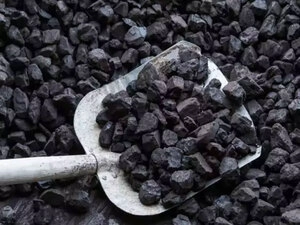
41 coal blocks were put up for auction in June 2020, with annual capacity of 1/3rd of total domestic production!! Generous commercial terms were designed to attract foreign investment (eg. 100% FDI) and the latest mining technologies. These would help to extract coal from difficult coal blocks. Central Indian states stand to benefit.
Featured Post
Visit arvindagarwal2.blogspot.com for posts from 2017 to 2019
Wednesday, August 26, 2020
How does India plan to reduce coal imports?
Coal imports in FY 2020 amounted to 247mt (Rs 5.8 lakh cr). Thermal component was 197mt. Govt plans to cut imports by half (~110 mt) over 5-7 years by operationalising "commericial mining" reforms set out earlier. Commercial mining is expected to ramp up coal production, increase availability of coal in some areas and reduce costs. Exports would be encouraged while coal remains a valuable commodity.
41 coal blocks were put up for auction in June 2020, with annual capacity of 1/3rd of total domestic production!! Generous commercial terms were designed to attract foreign investment (eg. 100% FDI) and the latest mining technologies. These would help to extract coal from difficult coal blocks. Central Indian states stand to benefit.
Monday, August 24, 2020
Can DRDO & Indian industry replace defence imports that are banned under the "negative list"
The aims of the import ban are clear enough: over time, India must create enough domestic capabilities and production quality improvements, and the ban should save resources to propel a thorough modernisation of the Armed forces. Assuming the policy is good, it is still necessary to ask what is being done to translate it into desired success. What are the indications on the ground regarding the moves being made and pace of change, if any?
Opening up to the Private sector
India has built platforms and defence technologies that are on the "negative list" for defence imports. So there are domestic substitutes available or in the pipeline. Another aspect is about keeping pace with advancement in technologies and proper & cost-effective production.
Most of the defence technologies are developed by DRDO, the premier defence research organisation under the GOI. It is clearly not sufficient to meet all the needs, be it primary research or product development, production techologies and maintenance. Likewise, Defence PSUs and OFBs which are tasked for building equipment can not do everything, for the lack of resources, processes, technologies and enterprise. The constraints of the present system are limiting the ambitions of the GOI and the Services.
India's answer is to involve the private sector. It is asked to come up with innovations, based on its own learnings and through working with DRDO & academia. It is licensed DRDO technologies and tasked to set up capacities and provide the best in class production quality at reasonable cost. Private sector can utilise its own competences based on existing businesses, and may have the wherewithals to manufacture to scale at high quality. Likewise, it can come up with its own technologies, through an enterprising attitude and a certain amount of risk capital.
Policy towards better co-operation and production
It is reasonable for Govt of India to want to limit the expansion of the public sector, particularly of manpower hiring, and shift production towards the private sector. For economies of scale and improving core competences, a strategic model is developed. For cost-effective and hassle-free defence manufacturing, defence industrial parks are being created, eg UP & TN defence corridors. These also cater for most defence PSUs needs. Prototype testing by the private sector can now be done in Govt-owned facilities and user acceptance trials are to be completed in a shorter timescale. A framework for contractual placements is devised to serve the requirements of the Services and promote sectorial growth, indigenisation and exports.
The scope is not restricted to a few defence industrial parks, as there are opportunities for aerospace, shipping, space, autos, electronics, telecommuncations, construction equipment, textiles, life-support, energy, materials, advanced IT services, etc. Govt is expected to promote these "strategic" sectors with their own policies and merits. The defence import ban will see them benefit from defence contracts.
New opportunities are opening up, particularly as new technologies and new types of equipment are being inducted into the Forces. The Services have signalled their future requirement for modern technologies and have shown commitment to support initiatives that will genuinely meet the needs of the Armed forces.
What has been the change?
Many say the strategic partnership model is not working. Big defence projects are at standstill or mired in complexities. Money for defence purchases is tight which is resulting in delays in placing orders of already approved indigenous platforms. Imports of basic requirements continues, for example small arms are being imported which could have been procured from local industry. Information about real ground-level change is not easy to get hold of. Clues can be found by reading about new contracts and chat from people in charge. The negative list on imports is also an "indication".
There are stories of private sector having received contracts for ammunition production. Kalyani Group and TATA are at advance stage for receiving orders for artillery and armoured vehicles. Defence PSUs are inducting new production technologies for cost-effective and better quality production. Ordnance factory boards will be corporatized. We know the UP industrial corridor has signed many MOUs and a few centres are setting up on the ground after completing land acquisition. TN corridor participants are more mature and defence MSMEs there are getting heavily engaged in outsourcing and production. Academic collaboration has accelerated. IIT Kanpur has paired with UP corridor and IIT Chennai has done it with TN corridor. It is safe to say the pace of change has accelerated simply because many DRDO platforms are at completion and are being integrated with existing inventory.
https://www.indiatoday.in/india-today-insight/story/this-is-a-self-imposed-negative-list-drdo-chairman-1714689-2020-08-25
The aims of the import ban are clear enough: over time, India must create enough domestic capabilities and production quality improvements, and the ban should save resources to propel a thorough modernisation of the Armed forces. Assuming the policy is good, it is still necessary to ask what is being done to translate it into desired success. What are the indications on the ground regarding the moves being made and pace of change, if any?
India has built platforms and defence technologies that are on the "negative list" for defence imports. So there are domestic substitutes available or in the pipeline. Another aspect is about keeping pace with advancement in technologies and proper & cost-effective production.
Most of the defence technologies are developed by DRDO, the premier defence research organisation under the GOI. It is clearly not sufficient to meet all the needs, be it primary research or product development, production techologies and maintenance. Likewise, Defence PSUs and OFBs which are tasked for building equipment can not do everything, for the lack of resources, processes, technologies and enterprise. The constraints of the present system are limiting the ambitions of the GOI and the Services.
India's answer is to involve the private sector. It is asked to come up with innovations, based on its own learnings and through working with DRDO & academia. It is licensed DRDO technologies and tasked to set up capacities and provide the best in class production quality at reasonable cost. Private sector can utilise its own competences based on existing businesses, and may have the wherewithals to manufacture to scale at high quality. Likewise, it can come up with its own technologies, through an enterprising attitude and a certain amount of risk capital.
Policy towards better co-operation and production
It is reasonable for Govt of India to want to limit the expansion of the public sector, particularly of manpower hiring, and shift production towards the private sector. For economies of scale and improving core competences, a strategic model is developed. For cost-effective and hassle-free defence manufacturing, defence industrial parks are being created, eg UP & TN defence corridors. These also cater for most defence PSUs needs. Prototype testing by the private sector can now be done in Govt-owned facilities and user acceptance trials are to be completed in a shorter timescale. A framework for contractual placements is devised to serve the requirements of the Services and promote sectorial growth, indigenisation and exports.
The scope is not restricted to a few defence industrial parks, as there are opportunities for aerospace, shipping, space, autos, electronics, telecommuncations, construction equipment, textiles, life-support, energy, materials, advanced IT services, etc. Govt is expected to promote these "strategic" sectors with their own policies and merits. The defence import ban will see them benefit from defence contracts.
New opportunities are opening up, particularly as new technologies and new types of equipment are being inducted into the Forces. The Services have signalled their future requirement for modern technologies and have shown commitment to support initiatives that will genuinely meet the needs of the Armed forces.
What has been the change?
Many say the strategic partnership model is not working. Big defence projects are at standstill or mired in complexities. Money for defence purchases is tight which is resulting in delays in placing orders of already approved indigenous platforms. Imports of basic requirements continues, for example small arms are being imported which could have been procured from local industry. Information about real ground-level change is not easy to get hold of. Clues can be found by reading about new contracts and chat from people in charge. The negative list on imports is also an "indication".
There are stories of private sector having received contracts for ammunition production. Kalyani Group and TATA are at advance stage for receiving orders for artillery and armoured vehicles. Defence PSUs are inducting new production technologies for cost-effective and better quality production. Ordnance factory boards will be corporatized. We know the UP industrial corridor has signed many MOUs and a few centres are setting up on the ground after completing land acquisition. TN corridor participants are more mature and defence MSMEs there are getting heavily engaged in outsourcing and production. Academic collaboration has accelerated. IIT Kanpur has paired with UP corridor and IIT Chennai has done it with TN corridor. It is safe to say the pace of change has accelerated simply because many DRDO platforms are at completion and are being integrated with existing inventory.
https://www.indiatoday.in/india-today-insight/story/this-is-a-self-imposed-negative-list-drdo-chairman-1714689-2020-08-25
Sunday, July 12, 2020
Border Road Organisation is doing a great job
========================
Since 2014, BRO has been working at great speed in all border areas. This video explains both the rationale and progress made at the Indo-Tibet border in Arunachal Pradesh.
========================================
========================
Since 2014, BRO has been working at great speed in all border areas. This video explains both the rationale and progress made at the Indo-Tibet border in Arunachal Pradesh.
Work will start in December on a 14.9 km, 4-lane tunnel that will provide essential connectivity to Arunachal Pradesh (close to Tibet border) from Assam (nr Gohpur and Numaligarh towns). It will be built in three phases, so it may take some time to complete.
Wednesday, June 24, 2020
Hydropower projects of India
────────────────
India's HP installed capacity is now 50 GW, which is 3.8% of total global capacity (1300 GW). Status of top nations is: China (356.4), Brazil (109.1), US (102.8), Canada (81.4), India (50.1), Japan (49.9) and Russia (49.9). India has 35 GW HP capacity u/c or in planning.
Dam construction of all types is intense as seen from this quote. While talking on Safety of existing dams, "Environment minister Prakash Javadekar, said the country has more than 5,000 dams, with nearly 4,700 under construction."
Importance of HP projects - flexibility: On 5th April 2020 at 9pm, public was encouraged to switch off their lights for 8 minutes to show support for Covid workers. Disruption was managed by coordinating efforts with state govts and major HP operators. At the appointed time, HP generation was reduced from 26,000 MW down to 8,000 MW to match the demand reduction. An expert commented that, "flexibility of hydropower resources to meet the rapid drop and rise in the demand on 5 April 2020 triggered policy-makers to seriously think of installing more hydropower projects, along with pumped storage.”
It underscores Govt's drive to heavily promote large-scale HP projects, so these facilitate the ramp up of solar & wind-based power to meet very ambitious targets by 2030.
Incentives for hydropower projects: All HP projects will be treated as renewable power. It helps to increase off-take, reduces debt cost & servicing, and increases viability. HP power can be used to fulfill Renewable Purchase Obligations by discoms. Debt repayments are now stretched to 18 years and tariffs adjustment is made over 40 years with 2% pa increments. Govt is also funding flood control component on case-by-case basis, and feeder roads and bridges.
Ongoing projects and news
1. Permanent cement making (or clinker grinding unit) via private sector, in Arunachal, to supply proposed 2880MW Dibang MP and for employment thereafter.
India hydropower projects
Saturday, May 16, 2020
UK RECORDS LONGEST STRETCH EVER WITHOUT COAL-FIRED POWER
Britain has broken its record for the longest period of time without the use of coal-fired power as it registered 18 continuous days without thermal power. It is the longest since the Industrial revolution in 1882. The reduction has come a long way since two years back when it recorded the first 24h stretch.
This is partly due to the fall in demand from schools, shops, factories and restaurants that are closed down temporarily due to the coronavirus lockdown, but it is also attributed to the rise in popularity of solar power.
The new solar power record was broken on 20 April after farms generated over 9.6GW of electricity for the first time. The collapse of coal and the rise of renewable energy sources led to a fall in CO2 emissions from the UK power sector. Since 2012, the amount of emissions required to produce one kilowatt-hour of energy declined by more than two-thirds, from 507g of CO2 to 161g.
This is partly due to the fall in demand from schools, shops, factories and restaurants that are closed down temporarily due to the coronavirus lockdown, but it is also attributed to the rise in popularity of solar power.
The new solar power record was broken on 20 April after farms generated over 9.6GW of electricity for the first time. The collapse of coal and the rise of renewable energy sources led to a fall in CO2 emissions from the UK power sector. Since 2012, the amount of emissions required to produce one kilowatt-hour of energy declined by more than two-thirds, from 507g of CO2 to 161g.
Sunday, May 10, 2020
Where should India spend its money?
===============================
India has achieved world-class quality in some sectors and yet has medium-level HDI, woefully inadequate infrastructure and poor delivery of public services. It is actually a good thing that rather than wait for all the gaps to be filled, India has been striving for higher levels of economic progress.
It is my thought that there are several rungs in the economic ladder and Centre should go hard at the next two levels. In my view, this is what PM Modi's govt is going to do in this term. There are also signs that enterprising States, corporates and businessmen can achieve high economic growth out of this foundation.
India is clearly moving out of absolute poverty, severe deprivation, and lack of basic social support. These are the lowest rungs of the economic ladder that will get completed after meeting the UN's sustainable goals. Many large states are still laggards in this respect and some of the 115 most deprived or "aspirational" districts are found in wealthy states like Maha, TN, Gujarat and Haryana. To help these places, Centre is sharing a higher proportion of its budget with States and it is sending additional funds directly to local govt bodies or Gram Panchayats. Central schemes including Aadhaar, direct bank transfer and MNREGA are designed to reach the poorest in villages or slums, and the migrant workers.
If one looks at HDI, then it is a slow, secular trend of improvement that takes its own time. States shouldn't measure their efforts in any way based on what impact they have had on HDI. Likewise, Centre has to look beyond HDI for directing policy or setting economic goals. PM Modi's NDA I government of 2014-19 was seen as pushing very hard on infrastructure which is the next rung on the economic ladder.
Now, in the second term, it is taking on the next rung which is about achieving or delivering quality standards and outcomes, through effective policy implementation and human capital deployment. It is a vast area covering economic reforms, governance and behavioural change, skills development, assured quality outcomes and economic efficiency. With this, it will be easier to deliver on the Commerce minister Piyush Goyal's call for higher quality standards for the industry. High product standards will open up India to world markets and reduce the scope for cheap, inferior reject-quality imports from China.
This will enable highly enterprising businesses and corporates to go one rung higher for innovation, world-class production and exports. And finally, some Indian corporates will become fast-growing giants that will be highly attractive for investors and bring large amounts of low-cost capital. Already, Centre has lowered corporate taxes to encourage new manufacturing in India and some enterprising states govts have slashed labour laws to bring in foreign direct investment. The stage is set for India to go ahead despite having patches of poor development.
Infrastructure, high efficiency, low cost of factors of production, assured outcomes of public services, and high quality of production all comprise two of the most essential rungs and are also the most difficult tasks to complete.
===============================
India has achieved world-class quality in some sectors and yet has medium-level HDI, woefully inadequate infrastructure and poor delivery of public services. It is actually a good thing that rather than wait for all the gaps to be filled, India has been striving for higher levels of economic progress.
It is my thought that there are several rungs in the economic ladder and Centre should go hard at the next two levels. In my view, this is what PM Modi's govt is going to do in this term. There are also signs that enterprising States, corporates and businessmen can achieve high economic growth out of this foundation.
India is clearly moving out of absolute poverty, severe deprivation, and lack of basic social support. These are the lowest rungs of the economic ladder that will get completed after meeting the UN's sustainable goals. Many large states are still laggards in this respect and some of the 115 most deprived or "aspirational" districts are found in wealthy states like Maha, TN, Gujarat and Haryana. To help these places, Centre is sharing a higher proportion of its budget with States and it is sending additional funds directly to local govt bodies or Gram Panchayats. Central schemes including Aadhaar, direct bank transfer and MNREGA are designed to reach the poorest in villages or slums, and the migrant workers.
If one looks at HDI, then it is a slow, secular trend of improvement that takes its own time. States shouldn't measure their efforts in any way based on what impact they have had on HDI. Likewise, Centre has to look beyond HDI for directing policy or setting economic goals. PM Modi's NDA I government of 2014-19 was seen as pushing very hard on infrastructure which is the next rung on the economic ladder.
Now, in the second term, it is taking on the next rung which is about achieving or delivering quality standards and outcomes, through effective policy implementation and human capital deployment. It is a vast area covering economic reforms, governance and behavioural change, skills development, assured quality outcomes and economic efficiency. With this, it will be easier to deliver on the Commerce minister Piyush Goyal's call for higher quality standards for the industry. High product standards will open up India to world markets and reduce the scope for cheap, inferior reject-quality imports from China.
This will enable highly enterprising businesses and corporates to go one rung higher for innovation, world-class production and exports. And finally, some Indian corporates will become fast-growing giants that will be highly attractive for investors and bring large amounts of low-cost capital. Already, Centre has lowered corporate taxes to encourage new manufacturing in India and some enterprising states govts have slashed labour laws to bring in foreign direct investment. The stage is set for India to go ahead despite having patches of poor development.
Infrastructure, high efficiency, low cost of factors of production, assured outcomes of public services, and high quality of production all comprise two of the most essential rungs and are also the most difficult tasks to complete.
Monday, March 9, 2020
5 G technologies for India
────────────────
That Reliance Jio came out with its own 5G technology Link is highly significant for Indian manufacturing, "self-reliance", national security and affordable access to 5G for all. And Jio as a company is more than capable of cracking open the 5G market, of price-sensitive Indian consumers, with its market bursting offers. For all the reasons below other telcos must be wondering what has just hit them!!India would like to be among the early technology adopters of 5G. But there are many hurdles. Almost all telcos apart from Jio are in losses, have hefty urgent liabilities and very large borrowings. These telcos would love to run 5G services, but they don't want risks nor to make significant investments from their side. They are lobbying Govt to sell 5G spectrum at knock-down prices to make 5G happen early and at competitive consumer prices. However, this is not likely given the legacy of the 2G scam, and the Govt's desire to not undersell public assets nor do away with open auctions.
India does not have its own 5G technology, so domestic manufacturers will remain on the sidelines, whilst foreign rivals will only strengthen. Govt wouldn't sanction any deal that does not involve significant Make-in-India but they may subsidise manufacture in India. It will be a tussle of who garners the most benefit, the foreign suppliers or Indian companies. Foreign vendors also create security risks that have been highlighted by US intelligence.
Indian telcos have an invidious choice as there are few vendors and none is perfect. A foreign system involves a multi-year commitment and wholesale trust in a particular firm. The lock-in will make it costlier to keep up with the latest advances and it does not seem to translate into substantially lower consumer prices that currently prevail in 4G. The market uptake as such would be niche and not worthy of paying high spectrum charges.
Reliance Jio says it has, "developed everything on 5G, so we are totally self-sufficient.” It says its tech is "more scalable than other vendors" and it has its "own cloud-native platform." Put together, this gives Jio autonomy, flexibility, affordability and security. Reliance Jio says it has put forward its own system for the pre-launch 5G trials, and once successfully done, it can rapidly transition to manufacture in India via a third party. Jio can expand unhindered in sensitive areas like industrial internet of things, security and surveillance patrols by drones, and digitalising of agriculture. At the same time, it has a marketing plan for exploiting the high-end consumer market.
Sunday, March 8, 2020
Vision for Port sector: the creation of world-class infrastructure
~~~~~~~~~~~~~~~~~~~~~~
The Chintan Baithak meet in Mamallapuram discusses both challenges, and solutions to challenges faced by ports. The challenges are to strengthen Major Ports to directly compete with private ports, e-governance initiative to make ports faceless and paperless, developing India as ‘trans-shipment hub' and other aspects of Vision 2030.
Status of Major Ports, including innovations, were presented and areas requiring ministry interventions were put forward. Shipping minister resolved some issues and pledge full support. He asked Major Ports to follow the vision of ‘Smart, Sustainable and Safe Ports of India’. VP M Venkaiah Naidu stressed on the need to harness India's vast coastline for sustainable growth and development of the country.
He supported Sagamala project and said India has an excellent opportunity for port-led development as ports were vital means for exports and imports. Creation of world-class port infrastructure was necessary to bring all Indian ports on par with leading global ports, and for India to become a $5 trillion economy. Transshipment hubs would also be required on both coasts.
Further, he advised ports to adopt best practices to effectively utilise their financial resources for maximum benefit. To reduce logistics costs, ports should strife for energy- efficiency, lower dredging costs, digitisation and reduced human interface, and improved turn-around performances. Measures that are environment-friendly should be promoted to counter climate change, and CSR funds should take care of local communities and skill youth so they can grab job opportunities.
Renewable Energy
~~~~~~~~~~~~~~~~~~
The entire power requirement of all 12 Major ports will be met by solar and wind power via Green port initiative. It covers port operations and ships berthed there, which spew 10 times greater emissions than ports. Earlier, savings were made when grid power was connected to all berthed ships so ships' auxiliary power could be switched off. Major Ports are pursuing renewable energy and energy efficiency drive to meet tighter emission norms, and reduce cargo charges and shipping costs to increase traffic to the ports.
Environment-friendly Measures
~~~~~~~~~~~~~~~~~~
Major ports are combating dust pollution by environment-friendly technologies (eg closed conveyor system, mechanisation of bulk cargo handling). Recycling of Ships Act and the accession to IMO’s Hong Kong Convention makes India the prime destination for ship recycling and it expects to double volume by 2024.
~~~~~~~~~~~~~~~~~~
At Oct 2019, only 44 out of 202 minor ports were functional. Under the National grid for ports, 100 minor ports would be renewed and integrated with nearby Major ports through improved connectivity. Port-led development would be stimulated further by establishing and integrating Inland waterways. This is based on a study that looked at the revival of each minor port, identifying the specific cargo linked to it and the downstream industry.Over 235 port-connectivity projects (~ Rs. 235,000cr) have been identified under Sagarmala. These include multimodal hubs, Inland waterways (1st phase), pipelines for crude oil, refined petroleum products and natural gas, besides 91 roads and 83 rail projects incl. freight expressways, DFCs, major rail projects, and last-mile connectivity.
Major Port at Vadhavan
~~~~~~~~~~~~~~~~~~
In Feb 2020, Union Cabinet approved a new Major Port (Rs65,500cr, 10m TEU, JV JNPT/PPP) at Vadhavan, Maharashtra, complete with reclamation & excellent connectivity. Govt will have a 51+% share in the SPV through JNPT. SPV will develop infrastructure and all business activities will be handled by the private developer. Environmental (CRZ) clearances and concerns of opposition groups may be settled by reclamation of 570ha. Centre is interested in developing Vadhavan as a Major port despite the environmental problems because JNPT has exhausted all scope for expansion. With completion of JNPT's terminal 4 in 2023, the capacity rises from 8m to 10m TEU. But the govt expects the containerised trade to double and cross 10m by 2022-25. It is banking on the major Make-in-India drive and value addition that favours containerisation. After Vadhavan is completed by 2025, JNPT will be in the top 10 ports with the largest capacity.
Minister of shipping explains eg, "While the ports in the country are able to handle the largest sea-going vessels in the world for liquid cargo, including POL and bulk cargo, there is an inadequacy in India’s ability to handle and receive ever-increasing large containerised ships. This can be attributed to non-availability of deep-draft ports."
Vadhavan Port is a gamechanger for the West Coast, due to the 20m draft, its huge capacity, and a very well-connected and vast hinterland. With a natural draught of 20m close to the shore, it is able to accommodate mega-vessels with 15,000 to 25,000 TEU, without expensive dredging. Most full-loaded shipments will then call directly at Vadhavan and avoid costly transshipment elsewhere. In contrast, the present situation is thus: "JNPT has a draught of 15 m which is grossly insufficient to handle vessels above 10,000 TEU. Mundra, farther north in Gujarat, has a maximum draught of 16 m and can handle only mid-size container ships. This discourages mainline operators from sending their latest-generation container vessels to India."
New Transshipment Ports
~~~~~~~~~~~~~~~~~~
India's desire to become a manufacturing hub and engage strongly in world trade gives the necessary push to develop world-class ports. Sagarmala project looked at the optimal distribution of ports for Indian needs and realised that while other nations' ports had mushroomed, they made Indian trade more expensive and jeopardised India's strategic interests.
Vizhinjam port due for completion in 2020-21, is a transshipment port located near the southern tip of Kerala. Not only is it ideally located, but as a private port, it is best placed to seriously challenge Colombo port on costs, operational efficiencies and trading volumes. Vizhinjam port is one of many initiatives to secure dominance of India in IOR and help counter China’s Maritime Silk Route.
Andaman and Nicobar Islands are in a very strategic location in the Bay of Bengal and also closest to international shipping lanes. The Nicobar Islands have a natural depth, which with a proposed investment of $1 billion, can develop into a stopover port for big containers. India is also interested in ship-to-ship transshipment of containers and port-led trade in nearby population centres.
Proposed Colachel port can be a new deep seaport (~ Rs 27000cr). Though NGOs and local political parties have drummed up opposition to the plans, procedures are getting completed and the land is being allotted. A DPR has been released for the port.
Port Policies: Cabotage liberalisation and Competitive tariffs
~~~~~~~~~~~~~~~~~~
Cabotage liberalisation in May 2018 has shown a 29% surge in coastal container cargo from 1.1m to 1.4m TEU. More domestic trade is done directly with Indian ports or using Indian port transshipments. It is helped by the emergence of deep minor ports and dredging of major ports, to establish a domestic-only circuit, where 6500 TEU container loops 5 South & East ports of Cochin, Tuticorin, Chennai, Krishnapatnam and Visakhapatnam. Though the foreign share of Indian export-import container trade remains at 40%, some change is happening. One international shipping line (Wan Hai Lines) has added Tuticorin and Cochin (besides JNPT) for direct calls in the India-China route.
Cost of handling Indian goods at foreign ports is "hefty and avoidable" @ $200-250/ container. To push for a meaningful change, Govt is set to rework vessel-related charges made by mainline vessels at Major ports, to make discounts less ad-hoc in nature and bridge the pricing gap with minor ports and regional rivals. This will be done via Major Ports Authority Bill 2020 in the current sitting of parliament.
Operational efficiencies and E-governance: Faceless and Paperless Ports
~~~~~~~~~~~~~~~~~~
Operational efficiencies come under modernisation, mechanisation, and digitisation. Install of Container scanners, RFID system, Enterprise computing hardware, network cabling and user interfaces, etc. are combined with new software like automatic berth allocation, plot planning, booking to port linkages, seamless goods throughput, etc. Machine learning and Artificial Intelligence software are to come in the future.
Besides, Port Community System (PCS) a centralised web-based system for e-governance was introduced for all Major ports. It has a common interface and allows seamless, secure transfers of data between participants. It is part of the e-governance initiative. It is paper-less, has single-window access, is available to all participants, and used for all port-related tasks. As such, it reduces time and cost for all. Data can be used for research and analysis.
To further promote paperless ops, E-invoicing, payments, and document transfer via PCS's e-DO (Electronic Delivery Order) are now mandatory. Blockchain technology and Smart Contracts raise confidence in information sharing and make e-transactions very fast and highly secure. PCS is upgraded to PCS1x to include a "latch-on facility" so it could interact with all trade partner portals. This forms the National Maritime Single Window, an all-encompassing portal and India's method to transform EoDB and cost-efficiency.
Thursday, March 5, 2020
YES Bank: A Trade buy for State Bank of India? Link
If YB's liquidity is the primary issue, it would have secured outside funding. When that failed, Govt hastened a deal with SBI et al. But, SBI can not ignore YES Bank's near-zero net worth and will not invest unless there is something for them, like sharing of YB's technology, rapid expansion, and strong growth prospects. YB's investors are getting carried away and who can blame them! As of now, we don't know what the deal is worth, all the parties involved, and details like, is SBI contemplating a merger or a stake buy.
China-Pakistan Nuclear Proliferation: What difference does this make?
IMO, it makes no difference. It is though a bludgeon to bash these deviant and miscreant countries and their poisonous narrative, in all forums, mindlessly and repeatedly as they do you. In an era of paid media, fake news, fake victimhood, and popular mass delusion, there is no solid middle ground. The news report feels it will undermine attempts to equate India and Pakistan Nuclear missile programs and it may somehow bolster India's chances of getting entry into NSG as a full nuclear state. It thinks it opens China and Pakistan to serious consequences for violating the Nuclear Non-Proliferation Act.
If YB's liquidity is the primary issue, it would have secured outside funding. When that failed, Govt hastened a deal with SBI et al. But, SBI can not ignore YES Bank's near-zero net worth and will not invest unless there is something for them, like sharing of YB's technology, rapid expansion, and strong growth prospects. YB's investors are getting carried away and who can blame them! As of now, we don't know what the deal is worth, all the parties involved, and details like, is SBI contemplating a merger or a stake buy.
China-Pakistan Nuclear Proliferation: What difference does this make?
IMO, it makes no difference. It is though a bludgeon to bash these deviant and miscreant countries and their poisonous narrative, in all forums, mindlessly and repeatedly as they do you. In an era of paid media, fake news, fake victimhood, and popular mass delusion, there is no solid middle ground. The news report feels it will undermine attempts to equate India and Pakistan Nuclear missile programs and it may somehow bolster India's chances of getting entry into NSG as a full nuclear state. It thinks it opens China and Pakistan to serious consequences for violating the Nuclear Non-Proliferation Act.
Last month, India had detained a Karachi bound Chinese ship.— WION (@WIONews) March 4, 2020
Now, it has emerged that this ship was carrying nuclear-capable equipment to Pakistan. This report has the details pic.twitter.com/lEZhsAyxh3
Towards higher Oilseed Yields Link Link
Good news has appeared in reports.
GROUNDNUT
ICRISAT shared aspects of two new groundnut varieties with healthier oil (>78% oleic acid content) and potential yields of more than 3t/ha. The high oleic acid in new varieties (x10 higher) extends shelf life and has health benefits like improved blood lipid profile and better glycemic control. Cultivation has started and it will take two years to reach consumers. In an industry meet in Gujarat, an important state for groundnut, it was decided to popularise eco-friendly farming like bio-fertilizer. For robust uptake of new varieties, measures would be taken to achieve high yields and high returns to farmers. Regional production of high-quality seeds with high genetic purity would be set up, and marker-based, quality control checks would be done in farmers’ fields, seed systems, and value chain.
CASTOR OILSEED (inedible)
Agricultural surveys in Gujarat peg production at 1.74 mt in ~750,000ha for 2019-20. This is despite the locust attack in December 2019 which caused serious damage to the crop. Gujarat's yield is said to be 2.39 t/ha against last year’s estimate of 1.75 t/ha. The overall yield for the country for 2019-20 is 2.05 t/ha as compared to 1.41 t/ha last year. Gujarat is by far the biggest producer of castor oilseed and its yield estimate puts it at the very top of the global yields. India's yield would take it from 7th to 2nd rank based on 2017 charts.
RAPE MUSTARD OILSEED
Fungus infection, Alternaria affects up to 2.97m ha or ~43% of total sown area in a bad year, where losses can be as high as 3.4 mt. “But the losses in Rajasthan and UP, where mustard is grown in huge quantities, are lower these days as farmers are more aware and apply fungicide during early days of infestation. Problem is severe in Assam." Scientists have identified genomes from chickpeas that have resistance to Alternaria, so resistance can be transferred to rapeseed-mustard.
According to SEA (solvents extractors association), “R & M are among the most promising oilseed crops for reducing dependence on edible oil imports (via yield and area growth) and increasing farmers' incomes through advancement in existing methods. Besides, R & M offers higher returns at low cost of production and lesser water requirement for irrigation. There should be effective extension support to bridge the awareness gap of advanced techniques, particularly in rainfed regions."
SEA and Solidaridad are organizing extension support for Rajasthan which is unable to improve or diversify out of low-income, dryland field crops. It makes Raj a good place to start. 100 Mustard Model Farms will be set up on pilots (over 5 years) for 2500 farmers. Field Resource Centre will be set up and farmer field schools will share technical know-how, training and extension support to farmers. First year's yields increased by 30% with more expected. Meanwhile, ICAR is encouraging farmers in East India to grow mustard in rice fallows, with success in the area added and yields. 20 seed hubs will be set up in East and NE India, exclusively for mustard, by the next financial year.
OIL PALM (not oilseed)
Nagaland has 2620ha under palm plantation and has potential for 20+mt/ha of fresh fruit branches for >5yr plants (equals Malaysia, global no. 2) with quality planting materials, irrigation, and proper management. It has 68,000ha of marginal, rain-fed land for oilseeds/ oil palm. With improved irrigation, Telangana will raise oil palm on 18,100ha in the next 2 years.
Sunday, February 23, 2020
Towards higher farm productivity Link
Institutional factors such as land size and access to land, credit, effective markets, technology and infrastructure such as irrigation, influence the ability of smallholders to commercialize and diversify. Govts have worked on strengthening these factors to improve farm productivity. It is now also looking for climate change resilience and sustainability in terms of resource utilisation (eg irrigation that uses more water for higher production is not sustainable for a water-stressed India).
HIGHER CEREAL YIELDS, RABI and MAIZE
Higher cereal yields are reducing the water footprints (water use per unit production) of all cereals. Production not only meets the demands of a growing population (up 235% in the last 60 years) but allows enough land and water for other crops and land uses. For example, India achieved 26.4% increased total cereal production (btw 2005-14) without additional water (down 6.6%) or land (up 1.8%). However, inputs like irrigation (up 51.4 Mha to 58.2 Mha), fertilizer (up 20 Mt to 24 Mt) and pesticides (40 kt to 53 kt) fostered higher yields.
Shift from Kharif to Rabi is one of the hidden causes for higher cereal crop yields, as both high yielding (up 64%) & traditional varieties (up 36%), show higher productivity during Rabi or dry-season (Ministry of Agriculture and Farmers Welfare, 2017). Rabi temps and less cloud cover favours photosynthesis, reduced water loss and better pest control.
![]() |
| Yields growth (helped by a shift to dry season & irrigation) has lowered water footprints, as both Irrigation water (blue) and Plant uptake (green) have fallen. |
Changing dietary preferences mean more land is required for horticulture, livestock, pulses, vegetable oils, etc, though cereals remain important as calorific foodgrains. In view of groundwater depletion (up 23% btw 2000 to 2010 in one study), a shift toward much higher maize production seems inevitable. Maize has the best combination of low water use, high & fast-growing yields and rising demand from industry and livestock sectors. (Edit: GM maize can yield up to 10t/ha, up from 3.05t/ha in 2019).
Millet and sorghum, nutrient-dense coarse cereals, are very popular (and desirable) choices for consumers but need very large yield increases for profitability. Millet production has stabilised at around 10.5-11mt, due to rising urban demand, good yield accretion (up from 1.03t to 1.26t/ha btw 2008-19) and govt's millet scheme (eg. distributed in PDS & school meals, as millets boost child growth by 50%).
![]() |
| Yield growth of Corn is at 2%, Maize has since cooled, Wheat is coming back strongly, and Rice is surefooted. |
SHIFTS IN CROPS and REGIONS
Productivity and sustainability can be optimised whilst meeting demands for particular foods. Rice production is currently surplus. It makes sense to shift paddy from water-stressed North India to basmati (where possible) and to East India, where water is plentiful and productivity is expected to keep rising with better methods and procurement. The area vacated in the North can shift to more profitable horticultural crops and water loss can be minimized by covered horticulture. Wheat has stopped expanding since 2015, due to good yield growth (3.14t to 3.42t/ha btw 2014-19). It may expand again due to rising demand, higher irrigation and healthy yields. It is the preferred crop for farmers in Rabi, in North & Central India.
Maize is most productively grown in South at good yields favoured by rising irrigation and poultry demand. Half the area vacated by nutri-cereals, particularly sorghum, has gone to pulses, which is heavily promoted by govt. East India is favoured for oilseeds which can be double-cropped in rice fallows. Coastal regions are favoured for exports of high-quality horticulture & processed foods (eg banana exports from Andhra, processed fruits, dry milk powder). Micro-irrigation coupled with new high-yielding varieties of sugarcane in UP and South India can see production increases with reduced water use.
DECENTRALISED QUALITY SEED PRODUCTION
New regional oilseeds seed hubs are being set up that will boost yields by providing farmers with high yielding, drought- and pest-resistant varieties. It targets 14m ha of total rice fallow, particularly in the East and NE states, eg. Jharkhand, Odisha, WB, East UP, Assam. Value chains will also come up for processing and marketing. ICAR is encouraging farmers to bring 1.4m ha under mustard in Jharkhand. Another target is Assam. "Private mustard seed companies are already active in West, North & Central India, so 20 seed hubs will be set up in East, exclusively for mustard, by the next financial year."
ICAR says while farmers in major mustard growing regions in MP, Haryana, UP and WB have shifted to wheat, oilseed area has risen in eastern parts by a similar extent. MSP hike also played a crucial role in boosting acreage of the oilseed in non-mustard growing areas. "Last year, average mustard yield was 1.49t/ha and it is expected to remain the same in 2019-20. But in some areas in eastern Uttar Pradesh, it's rising to a record 1.9t/ ha!!"
SOIL HEALTH CARD
1. The National Productivity Council study, with a sample of 1700 farmers, found a 10% cut in the use of chemical fertilizers and a 5-6% increase in farm productivity (higher incomes & time savings for farmers).
2. The NAIEM or Hyderabad study among growers of cotton, paddy and soybean, found those who followed recommendations of SHC, had lowered costs by 4-10%, and increased incomes by 30-40%.
Issues with blind use of fertilizers
India consumes 25.6 mt of fertilisers, with 17 mt of N, 6mt of P and 2.5mt of K. The ideal ratio of NPK (4:2:1) has been skewed towards nitrogen (6.7:2.4:1). Started during Green Revolution in the 1960s, farmers had been over spraying subsidised chemical fertilisers on crops, imperilling public health, degrading soils and upending crop yields. Urea, in particular, was used in doses several times above recommended levels. It accentuated deficiencies in other elements (P, K & micro-nutrients) and caused an imbalance of soil.
Health impact
The "chemical health epidemic", describes higher incidences of cancers and other diseases found in states with excessive per hectare use of chemicals. For example, fertilizer chemicals have made their way into Punjab’s food chain, groundwater and soil.
SHC, its implementation and way forward
At the farmers' level, SHC is meant to reduce input costs, increase crop yields, increase the use of hybrid seeds, establish new types of crop and increase farmers' incomes. On a broader scale, its aim is to "replenish severely degraded soils and promote balanced use of chemicals."
While soil deficiencies in a region are well-know, the importance of SHC is that it gives customised recommendations for farmers. A former member of ICAR says testing can't be a "one-time affair" and routine testing is required for achieving sustained gains.
SHCs are renewed every two years and offer local farmers specific recommendations on fertiliser use. These are based on tests for main elements and micro-nutrients in the soil. Sampling, testing and reporting of local soil conditions are done through a nationwide network of laboratories, built up under SHC scheme by PM Modi's NDA govt in 2015. 250 million cards have been sent to farmers so far!! Nitrogen shortages were found in soils of Punjab, Haryana, UP, Rajasthan, Gujarat and Maharashtra. Phosphorous-depleted soil was found in Himachal, Haryana, UP, Rajasthan, Gujarat, parts of Bihar and Jharkhand.
Soil health initiative weaning farmers off fertiliser overuse
FARM MECHANISATION
Higher farm mechanisation and higher farm power availability are known to increase farm productivity. Power availability, for running production and post-harvest operations, will be increased from 2.02 kW per ha (2016-17) to 4.0 kW per ha by the end of 2030. India (at 40-45%) is increasing mechanisation further, towards levels seen in China (57 per cent), Brazil (75 per cent) and USA (95 per cent).
Govt provides farmers assistance through the states for procuring agri-machines, agri-equipment and for setting up Custom Hiring Centre (see Farm Mechanisation - NABARD Link). The thrust of funding in the last 4 years, was on machinery like laser leveller, happy seeder technology, combine harvesters and small equipment like power weeders, while tractors see steady growth in sales at 7.5%pa.
Focus on farm mechanization to cope up with increasing food demand
FARMER PRODUCER ORGANISATIONS, LAND LEASING and KISAN CREDIT CARD link
Despite the many govt schemes, for 86% of farmers with small and marginal sized farms, credit remains difficult and farming support mechanisms are inadequate or non-existent. Yet, experts admit that small Indian farmers are highly efficient in farming and more so than larger farmers. It would seem that good support to these small farmers would increase farm productivity and go a long way to doubling farmers' incomes.
The marginal farmers are not well-organised or powerful in any economic sense. Their agri-produce is often undersold or wasted and is inadequate to earn a decent income. Farmer Producer Organisation (FPO) organises small and marginal farmers into larger units (of ~20) and aggregate these into thousands of farmers. FPO helps farmers in value-addition at the local level where the farmer and his family have a financial stake in it.
FPOs can clearly do much more to support the farmers as they have economic, institutional and political clout. For example, FPO can get easier finance, eg for funding farm solar PVs under PM KUSUM. FPO can make informed choices on local infrastructure, eg. choice of water bodies for conservation (under Jal Shakti Abhiyan) and piped water (under Jal Jeevan Mission).
One important benefit for all concerned is that FPO must be market-orientated and will encourage farmers to produce only what can be sold, as quantity, quality, use of chemicals, traceability, processing, packaging & branding, etc. are devised with careful thought. FPO can deploy advanced technologies to assist them in estimating production, understanding the buyers & markets, understanding pricing power and export opportunities.
Then, there is a huge ambiguity about landholdings. As a result, the "workers" or landless farmers miss out on most of the entitlements and remain poor, helpless and prone to suicides. A sub-leasing agreement that is officially certified would benefit the leasor through surety of ownership and leasee by govt entitlements. As such, govts and institutions like banks can identify each relevant party and support their activities.
Lastly, the vast majority of marginal farmers have little or no credit supplied through official channels, be it commercial banks, co-operative banks or rural development banks. Govt's measures on farmer credit, such as interest subvention scheme are entirely wasted as they fail to reach the very people they are designed for!! Kisan credit card (KCC) is a cash credit card with low-interest rates (~4%). KCC is not limited to land-holding farmers as it is available for tenant farmers, tribal farmers, livestock farmers and fisheries farmers. KCC gives credit, not only for production but also for personal use. According to NABARD official, NPA risk is similar to the sector.
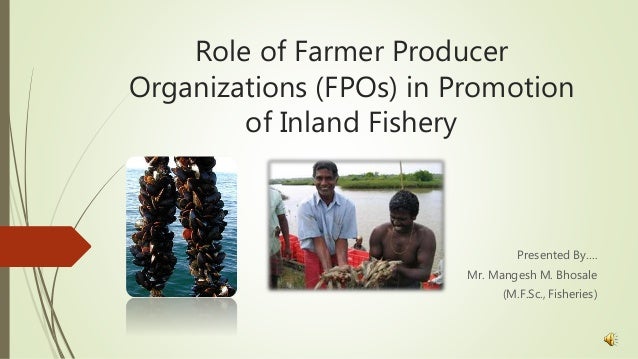
Role of farmer producer organization (slide 17+)
WATER MANAGEMENT and LAND USE in hilly terrains Link
Climate change is expected to increase extreme flooding events in highlands and reduce rainfall in lowlands. World Bank's initiative in Himachal sets out a way to derive more through better water management & land use. 400,000 farmer households will benefit from a loan of just $80 million!!
1. Better hydrological information: Hydrological monitoring stations will be set up in upper reaches, to monitor water quality and quantity of flow.
2. Better water infrastructure: It starts with devising holistic "catchment area treatment" (CAT) plans. It then, targets construction of micro-watersheds in the upper catchment areas, with local help, to increase the year-long supply of water there and to channel water more effectively downstream (ie. improves sustainability of source). Lastly, it creates irrigation facilities downstream and increases their use by rationing water (for agriculture and general-purposes) through charges for water.
3. Better land-based resource management: It advocates a shift from low-value cereal production to climate-resilient crop varieties and higher-value fruits, vegetables, and aromatic & medicinal plants. The aim is to maximise the financial returns on the water used. State land plans will help in all aspects, including setting up infrastructure, training local population, facilitating the shift in production, and marketing of produce.
Subscribe to:
Comments (Atom)