Featured Post

Visit arvindagarwal2.blogspot.com for posts from 2017 to 2019

Wednesday, June 28, 2023


DeMentalists

"Do as we preach," cries Germany

India can't do it all with renewables; it must add thermal as power demand soars. Western climate activists demand action against coal.

"When in need we don't do what we preach."
Germany reopened its thermal plants to escape gas shortages.

Headlines

India’s power demand grew fastest in over three decades caused by unseasonal weather and a sharp economic recovery. It has forced India to ramp up coal and solar output to avoid power cuts.

The government hopes to add 16 GW of renewable energy in the next fiscal year, a 13% increase in installed capacity in 2022-23 (Jan 23).

India expects to burn about 8% more coal in 2023-24. Coal thermal power will contribute 1,255 terawatt-hours (tWh) in 2023-24, compared with 1,180 tWh this fiscal (Apr 23). 

Nitin Gadkari during the 'Industrial Decarbonization Summit 2022’ (IDS-2022)

"Energy security is a serious concern. We are determined to raise living standards so we will not shut down our industries for lack of energy. Even if global pressure is on us and protests are held inside the country. 

"Our energy needs are growing very fast. However, we face difficulty increasing our power and energy capacities due to environmental pressure groups. Funds for upcoming thermal projects have dried up thanks to global climate change lobbyists.

"Solar or renewable energy is already 38% of total capacity - which can go to 50%. 50 GW of hydro projects are stopped or delayed because of legal cases filed by NGOs at every stage, from forest clearances to land acquisition.

"Should we be happy with power shortages in the next few years? No, our approach will be to care for both power and the environment."

Sunday, June 25, 2023

 Manned rail level crossings


UMLCs were removed from BG in 2019
MLCs are a cause of traffic jams on busy routes
3980 MLC eliminated in 2019-23
~17360 MLC as of 3/2023
Target all 2429 MLC on Quadrilateral & Diagonals by 3/2025
It may take 15-20 yrs & few lakh crores to remove all.

Priotising MLCs for RUB/ ROB

All railway zones have completed field surveys of the LCs and stations to identify “bottlenecks”

Surveys used satellite-based train location tracking data & data analytics:

Report found:

➣ 477 MLCs delayed trains by 1 hour per day ➣ 250 congested stations or station yards which delayed trains for 4 hour ➣ Loss of over 4% section capacity

https://t.co/KzDS83OBlL

Sunday, June 18, 2023


Towards higher farm productivity   Link


February 2020

The Green Revolution had a stellar impact on staple grain productivity, food grain availability, lower food prices, and poverty reduction. However, it left out large parts of the country that were unirrigated or grew low yielding crops. It encouraged the unsustainable use of inputs, e.g., “injudicious use of chemicals that damaged soil fertility” and high extraction of water that lowered water tables and caused salinity. Land degradation and such are discussed here.

Institutional factors such as land size and access to land, credit, effective markets, technology, and infrastructure such as irrigation influence smallholders’ ability to commercialize and diversify. Governments have worked on strengthening these factors to improve farm productivity. It is now also looking for climate change resilience and sustainability in terms of resource utilization (e.g., irrigation that uses more water for higher production is not sustainable for a water-stressed India).


HIGHER CEREAL YIELDS, RABI and MAIZE

Higher cereal yields reduce the water footprint (water use per unit of production) of all cereals. Production not only meets the demands of a growing population (up 235% in the last 60 years) but allows enough land and water for other crops and land uses. For example, India achieved a 26.4% increase in total cereal production (between 2005-14) without additional water (down 6.6%) or land (up 1.8%). However, inputs like irrigation (up 51.4m ha to 58.2m ha), fertilizer (up 20 mt to 24 mt) and pesticides (40 kt to 53 kt) have fostered higher yields.

Shift from Kharif to Rabi is one of the hidden causes for higher cereal crop yields, as both high yielding (up 64%) & traditional varieties (up 36%) show higher productivity during Rabi or the dry-season (Ministry of Agriculture and Farmers Welfare, 2017). Rabi's lower temperatures and less cloud cover favour photosynthesis, reduced water loss and better pest control.

Yield growth (helped by a shift to dry season & irrigation) has lowered the water footprint, as both irrigation water (blue) and plant uptake (green) have fallen. 


Changing dietary preferences has meant more land is required for horticulture, livestock, pulses, vegetable oils, etc., though cereals remain significant as calorific food grains. In view of groundwater depletion (up 23% between 2000 and 2010 in one study), a shift toward much higher maize production is likely. Maize has the ideal combination of low water use, high and fast-growing yields and rising demand from the industry and livestock sectors. (Edit: GM maize can yield up to 10t/ha, up from 3.05t/ha in 2019).

Millet and sorghum, nutrient-dense coarse cereals, are promoted for health reasons. However, low yields make them less popular among farmers. Millet production has stabilized at around 10.5-11mt due to rising urban demand, high yield accretion (up from 1.03t to 1.26t/ha between 2008-19) and the government’s millet scheme (distributed in PDS & school meals, as millets boost child growth by 50%).

Yields for corn, rice and wheat are high and increasing. Millet and sorghum yields are low. Millet yields are increasing fast, while sorghum yields are stagnant.


SHIFTS IN CROPS AND REGIONS

Production, productivity and sustainability are relevant to crop patterns and regional shifts.

Rice production is surplus. Due to the water-stressed nature of North India, it makes sense to shift paddy (except basmati rice) to East India, where water is plentiful and productivity is expected to rise. The area vacated in the North can be cultivated for low-water-intense crops like oilseeds or profitable horticultural crops. Covered horticulture minimizes water loss.

Wheat is a Rabi crop and the preferred crop for farmers in North & Central India. This is due to high MSP and predictable production. Yield growth has been excellent (e.g., 3.14 t/ha to 3.42 t/ha between 2014-19). Lack of domestic demand slowed wheat production from 2015 onwards but rising export uptake has once again boosted sown area and production.

Maize is grown in South India where superior yields are achieved due to improved irrigation. Demand from poultry and industry contributes to higher production. Maize production in Bihar will be used for biofuels. Significant area under the nutrient-cereals (particularly sorghum) has shifted to other crops. Pulses area was expanded to achieve self-sufficiency. Likewise, the government has identified rice fallow lands to achieve partial oilseed self-sufficiency. 

Coastal regions are ideal for export-oriented production of premium horticulture & processed foods (e.g., bananas, processed fruits, dry milk powder). Micro-irrigation coupled with high-yielding sugarcane varieties in UP and South India has the potential to significantly increase production with reduced water use.


DECENTRALISED QUALITY SEED PRODUCTION

Potatoes are one of the most cultivated horticultural crops. Yet, the potato yield in Gujarat is 31 t/ha and in Assam, it is only 10 t/ha. This is because quality seeds, which make up 40-50% of the total production cost, are not cost-effectively transported to East and South India from Punjab producers. Apical Rooted Cuttings is a low-cost, low capital-intensive method that should decentralize potato seed production. APC facilities are being trialed in Bengaluru in collaboration with the University of Horticultural Sciences (UHS). It can easily be set up in East India.

New regional oilseed seed hubs are being set up that will boost yields by providing farmers with high yielding, drought- and pest-resistant varieties. It targets 14m ha of total rice fallow, particularly in the East and NE states, such as Jharkhand, Odisha, WB, Eastern UP, and Assam. Value chains will also emerge for processing and marketing. ICAR stated, “Private mustard seed companies are already active in West, North & Central India, so 20 seed hubs will be set up in the East, exclusively for mustard, by the next financial year.”

ICAR says farmers in major mustard growing regions in MP, Haryana, UP and WB have shifted to wheat, but oilseed area has risen in eastern parts to a similar extent. MSP hike also played a crucial role in boosting oilseed acreage in non-mustard growing areas. “Last year, the average mustard yield was 1.49 t/ha and is expected to remain the same in 2019-20. But in some areas of eastern UP, it’s reaching a record 1.9 t/ha!


Soil health initiative weaning farmers off fertiliser overuse


SOIL HEALTH CARD

Soil health cards have been a success so far. The scheme was examined in two studies. The second study does not mention SHC uptake, but this only highlights the importance of proper uptake for SHC’s success.

  1. The National Productivity Council study, with a sample of 1700 farmers, found a 10% cut in chemical fertilizer usage and a 5-6% increase in farm productivity (higher incomes & time savings for farmers).
  2. The NAIEM or Hyderabad study among growers of cotton, paddy and soybean, found those who followed recommendations of SHC had lowered costs by 4-10%, and increased incomes by 30-40%.

Issue with the blind use of fertilizers

India consumes 25.6 mt of fertilisers, with 17 mt of N, 6mt of P and 2.5mt of K. The ideal ratio of NPK (4:2:1) has been skewed towards nitrogen (6.7:2.4:1). Started during the Green Revolution in the 1960s, farmers over-sprayed subsidised chemical fertilisers on crops, imperilling public health, degrading soils and upending crop yields. Urea, in particular, was used in doses several times above recommended levels. It accentuated deficiencies in other elements (P, K & micro-nutrients) and caused soil imbalance.

Health impact

The “chemical health epidemic” describes high incidences of cancers and other diseases found in states with excessive per-hectare chemical use. For example, fertilizer chemicals have entered Punjab’s food chain, groundwater and soil.

SHC, its implementation and the way forward

At the farmers’ level, SHC is meant to reduce input costs, increase crop yields, increase hybrid seeds use, encourage different types of crops and increase farmers’ incomes. On a broader scale, its aim is to restore severely degraded soils and promote the balanced chemical use.

While soil deficiencies in a region are well-known, SHC gives specific recommendations for farmers. A former ICAR member says testing can’t be a “one-time affair” and routine testing is required for better results.

SHCs are renewed every two years and offer local farmers specific recommendations on fertilizer use, based on tests for main elements and micro-nutrients. Sampling, testing and reporting are done through a nationwide network of laboratories built up under the SHC scheme by the Central govt in 2015. 

250 million cards have been sent to farmers so far! Nitrogen shortages were found in Punjab, Haryana, UP, Raj, Guj and Mah. Phosphorous-depleted soil was found in HP, Haryana, UP, Raj, Guj, Bihar and Jharkhand.


Focus on farm mechanization to cope up with increasing food demand


FARM MECHANISATION

It is known that higher farm mechanisation and power availability increase farm productivity. Power availability for production and post-harvest operations will be increased from 2.02 kW per ha (2016-17) to 4.0 kW per ha by 2030. India (at 40-45% mechanisation) is advancing mechanisation towards levels seen in China (57 per cent), Brazil (75 per cent) and the USA (95 per cent).

The government provides farmers assistance through the states for procuring agri-machines, agri-equipment and setting up Custom Hiring Centres (see Farm Mechanisation - NABARD link). The thrust of funding in the last 4 years was on machinery like laser levellers, happy seeder technology, combine harvesters and small equipment like power weeders. Tractors sales have steadily grown at 7.5% pa.

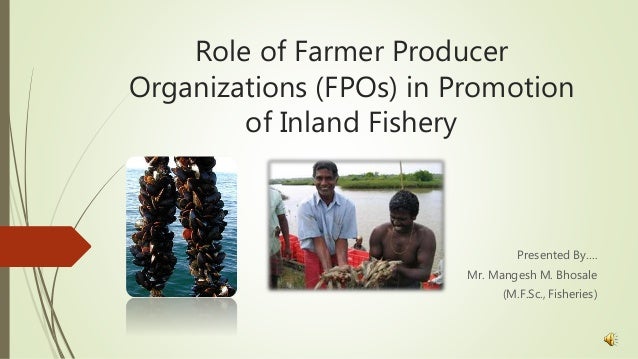
Role of farmer producer organization (slide 17+)


FARMER PRODUCER ORGANISATIONS, LAND LEASING and KISAN CREDIT CARD link

FPO: Economic clout to marginal farmers

Despite the many government schemes, for 86% of farmers with small and marginal farms, credit remains difficult and farming support mechanisms are inadequate or non-existent. Yet, experts state that small Indian farmers are highly efficient and more so than larger farmers. The central government realized that proper support at the grassroots would boost farm productivity and contribute significantly to doubling farmers’ incomes.

Marginal farmers are not well-organized or powerful. Their produce is often the last to be sold so it is likely to be underpriced and undersold. Farmer Producer Organizations were set up by the central government that combined marginal farmers into local units of around 20 and aggregated them into thousands. FPO helps farmers with generating value at the local level where the farmer and his family have a financial stake in it.

FPOs are designed to provide margibal farmers with economic, institutional and political clout. As an example, FPOs can get easier financing under PM KUSUM to buy solar PVs. FPO can make independent and optimal choices, e.g. planning of water bodies (under Jal Shakti Abhiyan) and piped water (under Jal Jeevan Mission).

One distinct benefit is that FPO needs to be market-oriented and encourage farmers to produce only what can be sold in terms of quantity & quality. Farmers’ cooperatives must plan for selecting crops, improving yields and establishing quality standards. Careful thought is given to storage, processing, branding, packaging, the use of chemicals, traceability, etc. FPO can deploy experts and technologies to assist them in estimating markets, understanding distribution & buyers preferences, pricing and export opportunities


Importance of sublease agreements

Benefits are usually given in the name of the farm owner and not the active farmer. In this situation, the worker or landless farmer (i.e. those without an officially recognised title) miss out on government entitlements and remains poor and prone to suicide. A sub-leasing agreement that is officially certified would benefit the leasor through ownership surety and the leasee through government entitlements. As such, govts and institutions like banks can identify each relevant party and support their activities. 

Kissan Credit Card (KCC)

The vast majority of marginal farmers were not able to access credit through official channels, be it commercial banks, co-operative banks or rural development banks. Govt's measures on farmer credit, such as the interest subvention scheme were entirely wasted as they failed to reach the people they are designed for! 

Kissan Credit Card (KCC) is a cash-paying credit card with low interest rates (~4%). KCC is not limited to land-holding farmers as is also available to tenanted farmers, tribal farmers, livestock farmers and fisheries farmers. KCC gives credit not only for production but also for personal use. NABARD officials say NPA risk on credit is the same.


FARMER WATER MANAGEMENT and LAND USE IN HILLY TERRAINSains link

WB worked on a model scheme for improving HP’s water management and land use.

  1. Better hydrological information: Hydrological monitoring stations will be set up in uplands to monitor water quality and flow quantity.

  2. Better water infrastructure: Catchment area treatment (CAT) plans were devised to create sustainable water sources. Construction of micro-watersheds in the upper catchment areas was done to increase the year-round supply of water for uplands and to control the discharge of water for lowlands. Irrigation facilities were created for cultivable land (which were downstream), and rationing of water through water charges was introduced.

  3. Better land-based resource management: A shift was made from low-value cereal production to climate-resilient varieties and higher-value fruits, vegetables, and aromatic & medicinal plants. This improved the ability of farmers/ lowland citizens to pay for water infrastructure via water charges. State land plans helped in respects of infrastructure, training, land acquisition, distribution, and marketing.


             https://youtu.be/Kt_tQ9iqb8U

Thursday, June 15, 2023

 A study was done in Maharashtra to gauge the impact of Per Drop More Crop (PDMC) component of PMKSY


ADOPTION

 Maharashtra state has been a leading adopter of MI since 1980s.

 Till 2019/20, 25.3 lakh ha (or 42.5% of gross irrigated area) is under drip irrigation.

PDMC scheme has contributed 6.42 lakh ha or 25.4% of MI from 2015/6 to 2019/20.


MAJOR POINTS

■ Cotton: "Despite being a major crop for Maha and ranking 1st by area in India, Maha suffers from very low yields. The main reason for low yields is that the cotton crop is mainly rain-fed and monsoon failure leads to crop failure. Our sample indicated that DI increases yields by almost 80%, which will boost the agri economy, allied manufacturing and rural services."

■ Sugar: "Maha is a water-stressed state. Yet, it is a major producer of a water-intensive crop like sugarcane. Only 3 lakh ha (25.7%) of sugarcane land is covered by DI. This indicates huge potential for adopting DI, increasing yield and saving water. All means including extension services are required to make that switchover happen."

■ Horticulture: "Maha is a horticultural state. Micro-irrigation significantly increases productivity and the production of horticultural crops. Farmers can reap the benefits of the existing marketing infrastructure."

■ Practical issues: "Subsidy for costs needs to continue, especially as maintenance is costly and wear-and-tear to plastic tubes is quite likely.

— Mice and stray animals can physically damage drips. Fencing is required.

— Other measures suggested are: Grid electricity comes to farms mainly at night, and an erratic grid supply creates a risk of malfunction or fires. So solar power should be encouraged.

— Awareness and education of MI benefits is necessary for non-adopters.".