Featured Post

Visit arvindagarwal2.blogspot.com for posts from 2017 to 2019

Friday, November 29, 2019

India will go for a higher share of the $360 billion global satellite market 


Antrix CMD, the commercial arm of Indian Space Agency (ISRO), made these remarks:

"ISRO's satellite launch revenues are just $50-60m (or 20% of total revenue). India will now take on more commercial satellite contracts, where satellites will be launched by the newly created NSIL, National Space India ltd, while ISRO will concentrate on supporting and expanding the space production ecosystem, where it will build technologies, design & manufacture systems, and market them globally. ISRO will actively seek to involve the private sector in a big way, so the country can reap a far greater share of the global space market." India can grow in nanosatellite launches, where demand is large enough, but it will continue to struggle in the much larger heavy-satellite market (without significant innovations).

"We can learn from Space X -- which has grown significantly by doing lots of innovations (eg. it fully developed a re-entry system). Their production technologies are playing a big role in reducing costs."

Broadband summit:
    

DRDO WILL MAKE INDIA SELF-RELIANT IN MISSILES, RADARS, SONARS, EW SYSTEMS AND ARMAMENTS 2ND LINK

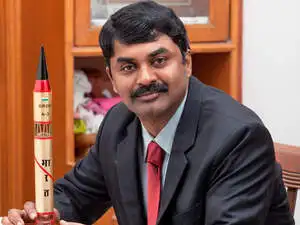
Govt's defence R&D organisation chief, Sateesh Reddy, says:

Self-sufficiency in weapons
-----------------------------------
1. DRDO is one of the preferred employers of graduates from top institutes. DRDO offers good financial incentives as well as study support, merit-based career paths and awards/ recognition for good performers.
2. In 5 years, we aim to be self-reliant in sectors like missiles, radars and armaments.
3. For exports, we are showcasing DRDO products to international parties. To minimise manufacturing costs, we are reducing the royalty cost to the private sector and giving free handholding support to them.

Support for the private sector
-------------------------------
4. Private sector is firmly engaged. There are more than 1800 partner companies, which is a big jump from the previous decade. Many are involved in aerospace manufacturing (ie aircraft, missiles, armaments) and some will get to be lead system integrators as well.
5. Through DcPP (development cum production) partnership, we will get the private sector involved in all stages of system development.
6. Private sector will be given DRDO technologies to bring them into manufacturing, can share our R&D facilities, and start-ups will be supported through Technology Development Fund.

Fighter aircraft design
-----------------------------
7. Advanced LCA (or medium-weight fighter) has completed design or configuration phase. It is ready to be constructed.
8. Fifth-generation fighter (AMCA) will be fully designed and built within five years - though it will go through a prolonged testing phase after that. We are confident of meeting IAF's specifications.
9. Jet engine development is a strategic priority but we need outside help to fructify it!!

Missiles
----------
10. Anti-tank missiles: Land-based NAG has successfully completed trials, Man-portable version (MPATGM) is now available for user trials, and Air-launched version (Helina) is in development trials and has not reached user trials.
11. Anti-aircraft missile: Air-launched ASTRA is ready for induction, and we are confident of doubling ASTRA's range in the next phase, to make it truly a state-of-art missile.
12. Agni series of missiles, under the nuclear ballistic missile programme that started two decades or so ago, has successfully reached the end of development.
13. Ballistic Missile Defence (BMD) is where we have successfully demonstrated our technologies in both endospheric & exospheric interceptions. Active development of the final weapon system is underway.

Saturday, November 23, 2019

Grand vision revealed by Indian Railways

NEWS:
      IR is keen to increase speeds of fast trains. These still do not touch more than 105kmph
       : IR is moving towards having only HSR semi-HSR tracks in its network. link
       : IR will manufacture 720 ultra-modern coaches of Vande Bharat Express in the next 3 years.
       : Many bullet trains routes are being targetted. It will be done in sections, not by building a network.

      Semi-HSR tracks will need upgrades, fencing, signalling, and elimination of level-crossings
        : First semi-HSR track upgrades will happen on Delhi-Mumbai & Delhi-Kolkata routes @ 18,000cr.
        : Doubling and more will happen on 34,000km and cover 96% of passenger travel.
        : 150 premium trains will be run by the private sector, on routes freed by completion of W & E DFCs.
        : IR has started 3 other DFC routes.
        : 5 Mhz spectrum allocation will allow state-of-art upgrades to signalling, for safety at high speeds.
        : IR will electrify all its 68,000-km BG tracks. link

      Upgrades will happen on a massive-scale for passenger services, amenities, rolling stocks, capacity
        : Bio-toilets in all coaches, are nearing full completion.

      RailTel tasked for WiFi, Railwire Saathi, NIC e-office, Video Surveillance, Modern Train Control system
        : Wifi in all stations, are done in 5400 stations. High use makes them hubs for digital transformation.
        : Railwire Saathi or digital kiosks, will come up in 7000 stations and be run by entrepreneurs.
        : 100,000 CCTV cameras being contracted for stations & coaches, as part of Video Surveillance.
        : Face recognition, motion detection & intrusion alert, will be continuously monitored by humans & AI.
        : All freight and passenger trains will have CCTV surveillance and WiFi link-up.  link

COMMENTS:
1. All passenger tracks will be converted to semi-high speed, rated for 160 kmph or more.

2. Work involved in converting tracks to semi-high speed such as track doubling & upgrades, fencing, signalling, and elimination of all level-crossings will make Indian Railways, by default, one of the safest in the world!!

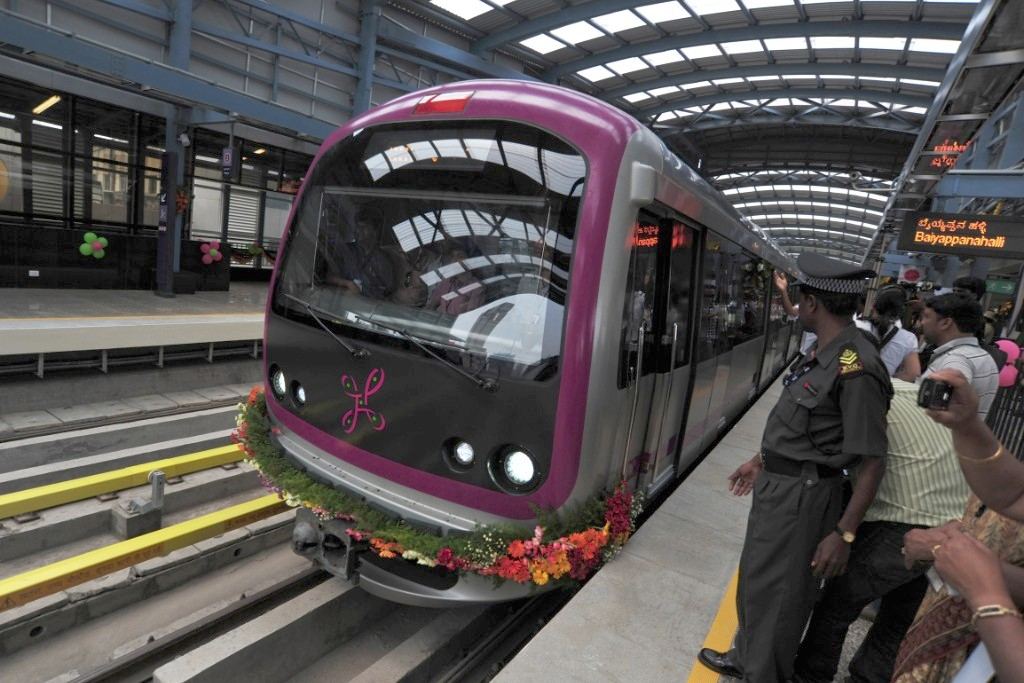
3. HSR plans are meant for connecting economic hubs to metropolitan cities like Delhi, Mumbai, Kolkata, Chennai, Bangalore, Hyderabad. 

4. HSR will be priced to maximise revenue, given the high fixed costs in form of loan servicing. Thus, if HSR has enough uptake from the travelling public, the fares can be priced at affordable levels. As such, regional economic hubs will become engines of future growth of metropolitan cities and vice versa

5. Train-18 and aluminium versions thereof will be built in large numbers for running on semi-HSR tracks. Govt has cleared the way for manufacturing rolling stock via corporatisation & modernisation of railway production units.

6. Train-18 are highly profitable as they are achieving over 95% occupancy on both routes, with just 1 rake per route! 45 rakes (or 720 coaches) in 3 years can truly transform passenger experiences and travel times over the vast expense of India. IR plans to manufacture 160 coaches in 2019-20 and follow it with 240 coaches per annum.

7. Private train operators will become the preferred choice for operating premium, semi-HSR routes. This is to achieve high-quality services, higher profits for IR and incremental investments by the private sector.

8. 5 MHz of 4G spectrum will transform IR wrt signalling, communications, monitoring, digitisation of records, etc.

9. RailTel's fibre-optic network can catalyse the digital upliftment of rural habitations around Railway WiFis

10. CCTV monitoring and WiFi on all trains will generate instant information on wrong stoppages (done for looting), nefarious human activities and other safety or security concerns. It will bring high levels of comfort wrt safety and security. Artificial intelligence, with its unprecedented scrutiny of data, is a valuable tool in law enforcement.

11. IR is actively looking to do foreign railway projects. Good execution at home, done on an impressive scale, is the key.
Indian Railways for automatic train protection signalling and world-class technical training

Friday, November 15, 2019

Possibilities for Railways' Rs 50 lakh crore investment to 2030

Govt has a number of railway investment buckets, such as:
1. Metro-rail 
2. High-speed rail
3. Dedicated freight corridors
4. New railway lines
5. Doubling or more of existing track
6. Strategic lines in mountainous terrain
7. Commercial development of stations, renewable power and efficiency improvements

I have done a spreadsheet analysis to apprehend what is possible with Rs 50 lakh crore. It suggests the overall plan is feasible at 6% financing and 67% debt. It does not account for inflation, which in any case will help to repay debt. Centre's burden is also not astronomical, as budgetary allocations will be much lower --in the initial years-- due to phasing. 

The plan allows Govt to do projects in all categories - but in allocations of funds and debt, a balance is needed between benefiting most number of people, and heading off challenges of low profitability. For example, 5000 km of Metrorail, suburban & regional rapid transit system  (5000km is big but achievable if suburban rail and RRTS are included) benefits 75% of people, consumes 50% of total equity but generates net losses after financing. HSR makes losses at 20% equity but benefits a large number of high-paying, intercity commuters. Both will require additional taxes, eg higher property rates or stamp duty. 

Other projects can be done within the suggested debtequity ratio, which is not surprising as projects with high freight components (eg DFC, doubling) are generally viable. The plan aims to exploit high profitability buckets by offering generous augmentation of freight capacities, commercialisation of stations and railway modernisation. (Electrification & digitisation are not included as these will be used to enhance profits of existing IR network).

Up to 2,000km of strategic lines are also provided.


Metro/ RRTSHSRDFCNew linesDoublingStrategicOthersTotal
Target line km5,0008,00010,0007,15030,8402,000N/A62,990
Cost per Km (cr)325250403012.5100--
Total cost (lakh cr)16.252042.153.8621.7550


Daily rides (millions)404.87Nil2.565.520.72Nil53.7
Revenue('000cr)82.1220089.5520.8189.762.9121506.15
Profit Passenger20.5364
0.482.070.034
87.15
Profits Freight, RE, 15.42035.824.820.710.78417.5115.02
Profit margins43.8%42.0%40.0%25.4%25.4%28.1%83.3%39.9%


Return on Capital2.20%4.20%8.95%2.45%5.90%0.40%10.00%3.75%
Equity%50%20%0%75%10%100%0%33%
Equity (lakh cr)8.13401.610.392016.12
Financeable debt 6%5.99145.970.883.80.142.9233.69
Funding Shortfall (lakh cr)2.132NilNilNil---Nil---


Centre: State funding40:6050:50100:0060:40100:00100:00100:00---
Centre Equity & Shortall pa (cr)34,20025,00008,0503,21016,670087,130

Bengaluru is a fast-growing city that is choked with traffic. 43-km metro network in phase-1 is currently being extended by 76 km by 2021 in phase-2, at a cost of Rs 26,405 crore. State has asked Centre for funding another 181km in phase-3 for Rs 30,700cr. "A 181km new metro extension and a 162-km new suburban rail service will ease pressure on building more roads, highways and flyovers. It will also reduce migration from town and villages, thereby reducing the burden on civic amenities."

"All-weather connectivity to the local population, facilitate the movement of armed forces and boost tourism," says DM Rajnath Singh. Work on 3 strategic railway line, a tunnel at Sela Pass to Tawang, Hollongi airport near Itanagar and operationalisation of Pasighat airport are some of the steps taken to improve connectivity in Arunachal. 

These lines are 378km Missamari-Tenga-Tawang227km Pasighat-Tezu-Rupai and 249km North Lakhimpur-Bame-SilapatharTawang line is the most treacherous of the three, as it crosses 14,000ft at Sela Pass & has 80% tunnels. It will cost around Rs 35,000 crore link. NB. Construction for 498km Bilaspur-Manali-Leh line btw Himachal & Ladakh is underway.

Tuesday, November 5, 2019

Finance minister hints at significant reforms

Background Analysis

Piyush Goyal, trade minister commented that exports must necessarily grow to $ 1 trillion if India aspires to reach a $ 5 trillion economy by 2024. Export growth of this magnitude would appear difficult if India can't get better access to foreign markets. Recent opting out of RCEP can be viewed as a set-back, but in reality, it is not so damaging as India has FTAs with ASEAN, Korea, Japan and Singapore. On the other hand, a step-up in trade with the United States and a deal with European Union incl UK -- if a good deal is possible -- could be more than enough.

RCEP poses a threat from lesser market access to the East Asian block, and from the stronger competition that will brew up in the future. Clearly, India too must raise the competences of agriculture, industry and services. In other words, India must significantly enhance domestic competitiveness to match foreign rivals, and this can't really happen unless it is fully exposed to the competition. India still has time to gear itself up, suo moto, to meet the challenges and then join the RCEP trading block as a competent partner. It is possible - though quite difficult. 

Take a look at India's lowly rankings in Global Competitiveness Index and Global Innovation Index. This is partly because India has not tried to lead the global product development, tried to reduce logistic costs, improve labour productivity, manufacture in large scale or have farmers become self-sufficient through various means. 

A start has been made in reducing the costs of doing business and allowing industry to keep more of their retained profitsIndustry on its own must apply its mind to successfully gain in global competitiveness. Costs of doing business reforms have a very broad scope, that includes legal and procedural changes, on-the-ground operational changes, fees and tax changes, sectoral reforms, macroeconomic improvements, investment in infrastructure, and social changes that increase the economic engagement of people. Thus, very many reforms are needed and this is what Finance Minster, Nirmala Sitharaman is perhaps talking about. 


Finance Ministry's statement at Indian Express Adda

We will not miss the bus again, will next wave of reforms soon


Other aspects of a globally successful economy

An internally competitive economy, which reduces the costs of doing business, is just one aspect of a globally successful economy. Government and industry have a symbiotic role in creating goods and services that can be traded with other countries.

-- large supply of low-cost capital in hands of entrepreneurs
-- adoption of cutting-edge technologies
-- competence of workers in all walks of life
-- good labour mobility, and strong work-ethic & enterprising attitude of workers
-- marketable innovations (ie. intellectual property rights)
-- depth of competitive value chains within the country
-- strong institutions to support businesses
-- efficient trading systems for conducting business, low levels of corruption and a good system of governance
-- cache for attracting people and businesses to the country for tourism, conferences, services like education, health, financial services (ie good living conditions, infrastructure, high-quality public services, skilled workers and good image)
-- infrastructure capacity additions and upgradation of facilities, in line with economic growth
-- connectivity with neighbours, within the region and internationally
-- internal security, competence in defence and diplomatic wherewithals

Govt's $1.5 trillion infrastructure spending plan over 5 years, may just be enough to create infrastructure that provides good internal connectivity, efficient business processes, adoption of cutting edge technologies, good agricultural capacity and value additions, satisfactory tourism activity, improvement in quality of life parameters, etc. However, skills development, innovation and school education are not being vigorously targeted, and this will make it difficult for India to lead on marketable innovations, provide competently run systems, or establish depth of value chains

Make in India will be sub-optimal, particularly as IPR will be with foreign companies. Good response though is already seen in sectors like electronics, and this can extend to other sectors like medical devices. Strong growth, backed by indigenous IPR, can come in sectors where India has competences like engineering goods, chemicals and pharmaceuticals. Indigenous R&D in defence is showing good successes, and large orders of indigenous products are in the offing.

Internal security has improved, although policing and judiciary remain hard to reform. With respect to internal security, there are many positive initiatives like emphasis on Aadhaar ID & fingerprint recognition, face recognition (emerging), widespread use of CCTV & artificial intelligence (both emerging); interception of threats and action against preceived threats, cybersecurity & strong, in-country data security (emerging); highly trained commandos to protect cities, improved border security, automonous electronic surveillance at the border; stronger legal & actual stance on terrorism & transnational crimes, co-ordinated action by Centre & States against national crimes like illegal drugs trade, child trafficking, etc (emerging). Action against black money, money laundering, foreign NGOs, etc, which is ongoing, will reduce the scope for mischief -- but political malpractice will most probably continue to be overlooked in the interest of political expediency!!