Govt has a number of railway investment buckets, such as:
1. Metro-rail
2. High-speed rail
3. Dedicated freight corridors
4. New railway lines
5. Doubling or more of existing track
6. Strategic lines in mountainous terrain
7. Commercial development of stations, renewable power and efficiency improvements
The plan allows Govt to do projects in all categories - but in allocations of funds and debt, a balance is needed between benefiting most number of people, and heading off challenges of low profitability. For example, 5000 km of Metrorail, suburban & regional rapid transit system (5000km is big but achievable if suburban rail and RRTS are included) benefits 75% of people, consumes 50% of total equity but generates net losses after financing. HSR makes losses at 20% equity but benefits a large number of high-paying, intercity commuters. Both will require additional taxes, eg higher property rates or stamp duty.
Other projects can be done within the suggested debt/ equity ratio, which is not surprising as projects with high freight components (eg DFC, doubling) are generally viable. The plan aims to exploit high profitability buckets by offering generous augmentation of freight capacities, commercialisation of stations and railway modernisation. (Electrification & digitisation are not included as these will be used to enhance profits of existing IR network).
Up to 2,000km of strategic lines are also provided.
| Metro/ RRTS | HSR | DFC | New lines | Doubling | Strategic | Others | Total | |
| Target line km | 5,000 | 8,000 | 10,000 | 7,150 | 30,840 | 2,000 | N/A | 62,990 |
| Cost per Km (cr) | 325 | 250 | 40 | 30 | 12.5 | 100 | -- | |
| Total cost (lakh cr) | 16.25 | 20 | 4 | 2.15 | 3.86 | 2 | 1.75 | 50 |
| Daily rides (millions) | 40 | 4.87 | Nil | 2.56 | 5.52 | 0.72 | Nil | 53.7 |
| Revenue('000cr) | 82.12 | 200 | 89.55 | 20.81 | 89.76 | 2.91 | 21 | 506.15 |
| Profit Passenger | 20.53 | 64 | 0.48 | 2.07 | 0.034 | 87.15 | ||
| Profits Freight, RE, | 15.4 | 20 | 35.82 | 4.8 | 20.71 | 0.784 | 17.5 | 115.02 |
| Profit margins | 43.8% | 42.0% | 40.0% | 25.4% | 25.4% | 28.1% | 83.3% | 39.9% |
| Return on Capital | 2.20% | 4.20% | 8.95% | 2.45% | 5.90% | 0.40% | 10.00% | 3.75% |
| Equity% | 50% | 20% | 0% | 75% | 10% | 100% | 0% | 33% |
| Equity (lakh cr) | 8.13 | 4 | 0 | 1.61 | 0.39 | 2 | 0 | 16.12 |
| Financeable debt 6% | 5.99 | 14 | 5.97 | 0.88 | 3.8 | 0.14 | 2.92 | 33.69 |
| Funding Shortfall (lakh cr) | 2.13 | 2 | Nil | Nil | Nil | --- | Nil | --- |
| Centre: State funding | 40:60 | 50:50 | 100:00 | 60:40 | 100:00 | 100:00 | 100:00 | --- |
| Centre Equity & Shortall pa (cr) | 34,200 | 25,000 | 0 | 8,050 | 3,210 | 16,670 | 0 | 87,130 |
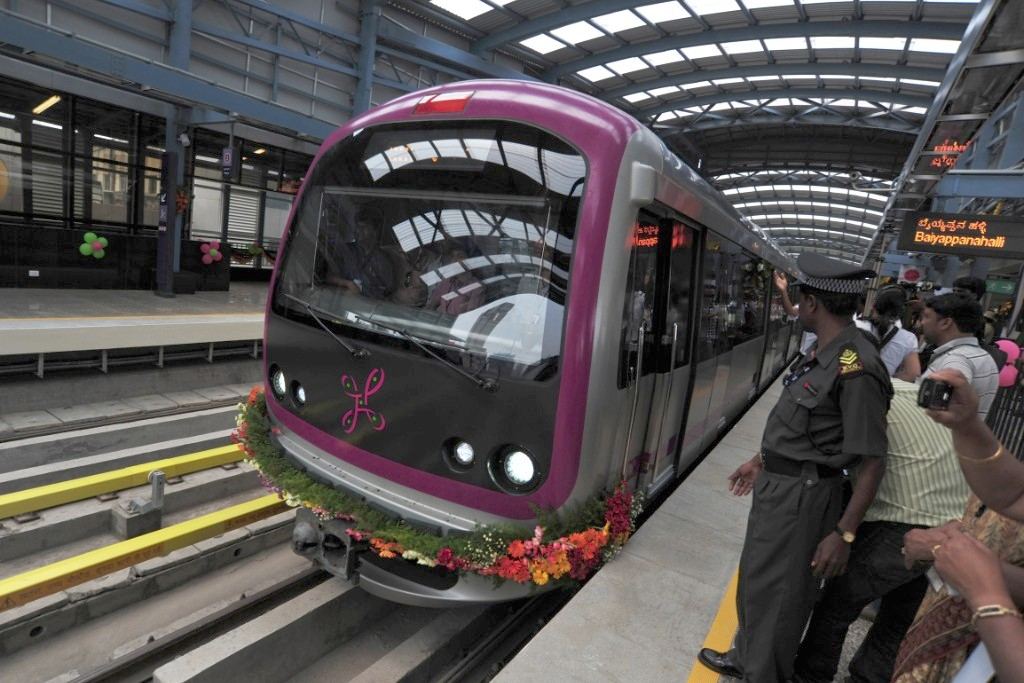
Bengaluru is a fast-growing city that is choked with traffic. 43-km metro network in phase-1 is currently being extended by 76 km by 2021 in phase-2, at a cost of Rs 26,405 crore. State has asked Centre for funding another 181km in phase-3 for Rs 30,700cr. "A 181km new metro extension and a 162-km new suburban rail service will ease pressure on building more roads, highways and flyovers. It will also reduce migration from town and villages, thereby reducing the burden on civic amenities."
"All-weather connectivity to the local population, facilitate the movement of armed forces and boost tourism," says DM Rajnath Singh. Work on 3 strategic railway line, a tunnel at Sela Pass to Tawang, Hollongi airport near Itanagar and operationalisation of Pasighat airport are some of the steps taken to improve connectivity in Arunachal.
These lines are 378km Missamari-Tenga-Tawang, 227km Pasighat-Tezu-Rupai and 249km North Lakhimpur-Bame-Silapathar. Tawang line is the most treacherous of the three, as it crosses 14,000ft at Sela Pass & has 80% tunnels. It will cost around Rs 35,000 crore link. NB. Construction for 498km Bilaspur-Manali-Leh line btw Himachal & Ladakh is underway.
These lines are 378km Missamari-Tenga-Tawang, 227km Pasighat-Tezu-Rupai and 249km North Lakhimpur-Bame-Silapathar. Tawang line is the most treacherous of the three, as it crosses 14,000ft at Sela Pass & has 80% tunnels. It will cost around Rs 35,000 crore link. NB. Construction for 498km Bilaspur-Manali-Leh line btw Himachal & Ladakh is underway.

No comments:
Post a Comment