Featured Post

Visit arvindagarwal2.blogspot.com for posts from 2017 to 2019

Thursday, December 19, 2019

GST:  Still halfway from realizing the full potential

Road ministry says that logistics costs have come down from around 14% to 10-12%, and distance covered by freight lorries has improved from 225km per day to 300-325km. Several rounds of GST tax rate cuts have sharply lowered the prices of most household items. However, services have not benefited from rate reductions, apart from a few like restaurants and property construction.

Ease of doing business has improved as the number of forms filed by businesses has come down from 495 to just 12. Business can recover Input tax (ie. cumulative indirect tax on purchases) and is not affected by "tax-on-tax" (or a cascade of irrecoverable taxes) of the previous regime. The new federal administration body ("GST council"), made up of central and state governments, will ensure uniformity of law across states (ie. not just tax rates).

Anticipating the sea change in taxation, the way of reporting and the uncertainties involved, businesses slowed down production in the weeks before GST roll-out. This is believed to have caused the sharp slowdown in gross domestic product (GDP) growth to 6% in the June quarter of FY18, compared to a 7% expansion in the fourth quarter of FY17 ending March 2017. Growth recovered in subsequent quarters with policymakers suspending some of the toughest provisions such as invoice-matching and extending deadlines for filing returns, in addition to handholding businesses and traders to navigate the new system. By the last quarter of FY18, growth had recovered to 8.1%, though after that the economy started cooling off. This trend continues with growth slowing down to 4.5% in the second quarter of FY20, its slowest pace since March 2013.
Deepening economic slowdown and shortfalls in GST revenues are testing the assumptions made at the onset, such as that GST could spur the economic growth rate by 1-2 percentage points and that an efficient and distortion-free tax system would curtail tax evasion and provide much higher tax revenues. Experts point out that it is too early to judge GST by the current trends in economic growth and revenue collections. “It will take about five years to realize the full potential of GST. We are halfway towards that goal. Now we should allow GST to settle and only incremental changes should be made".
Conclusions
GST is a simpler regime than the earlier fragmented system, but all parties agree that it should be further simplified (particularly by trimming the number of GST rates). GST system has ensured near full uniformity across states, though states can levy different rates for petroleum, electricity and real estate, except under-construction properties. GST has removed internal trade barriers and improved Ease of doing business.

The tax efficiency (through distortion-free system & simple Input tax deductions) will no doubt bring dividends to the economy in due course. Dealing with issues such as the inclusion of currently excluded sectors and clarity on issues like intra-company services between two offices will help. The voluntary settlement of differences without penalty will ease some of the concerns of the industry. Further technology enhancements will help to increase compliance and widen the tax base further. 

Monday, December 16, 2019

Political meltdown of Labour heartlands in Northern England
==================================

My comment - "What explains the change in voting habits?"

Labour lost 50% of the seats in large swathes of North England, though it is seen that political transition towards Tories started from 2005 and seats flipped only in 2019. So, what changed? In a nutshell, former Labour strongholds in North England have moved into services and other manufacturing sectors, and the new money has been coming into the communities from the private sector. Hence the reset.

Electorally speaking, if sub-regions (divided into market towns, rural, urban, metropolitan) match up economically, ideologically (ie wanting to leave EU) and demographically, then the voting pattern should be similar. The author states that "the red wall (comprising Labour fortresses) is dominated by rural, small market-town seats which hug the more (demographically) diverse, safe Labour seats in the cities of the Midlands and the North". Thus, Labour fortresses are made up of diverse areas, where a large number are a close match to Tory-voting areas of South England. The political impact is seen in the North, because whilst the South is relatively stable, the North has undergone a major economic upheaval.

There was Labour support for all of the last 100 years because these regions were dependent on government-owned industries and people used trade unionism as a means to extract wealth. Economic ruination of local industries like coal mining & steelworks, happened in the 1980s during Margaret Thatcher's terms as Prime Minister. The pain encompassed whole communities and was excruciating. Recovery came gradually, perhaps gathering pace a decade later in PM Tony Blair's era.

The drift in voting from Labour must be due to a change in belief systems. A realisation, based on actual progress over the decades, that what, "works for the rest of rural or semi-rural England can happen, and is happening, in most of the former Labour heartlands". People who have seen development coming from new industries owned by the private sector are asking for more of this type of investment, rather than handouts. They will not disfavour the private sector, for as long as the communities benefit from the economic opportunities created by them.

Saturday, December 7, 2019

WONDERFUL VIDEO - Kishore Kumar and SD Burman

Kishore Kumar in his own voice remembering S D Burman

SONG FOR ALL AGES

DEVOTIONAL BHAJANS

POWERFUL STOTRAM

Dedicated to SHRI SHIVA MAHADEVA     (Devon Ke Dev Mahadev TV serial)
Dedicated to SHRI SHIVA MAHADEVA     (Others songs)

Songs from Old and New MAHABHARAT TV serials
By the middle of the 21st century, India would be the largest market on earth
“India will soon have the largest population, and with rising per capita incomes, it will go on to be the largest market in the world. By 2030, India would also be an upper-middle-income country where one in two households is expected to be comfortably in the middle class. 

"By the middle of the 21st century, India will be a country that no power would be able to ignore, and its economy would be closely linked to product markets through global value chains, and to the factor markets through investment capital and skilled workforce."

Serious attempts are being made through the Skill India Mission to skill nearly 400 million people
"India enjoys a demographic dividend. Its working-age population is larger than its nonworking age population. This dividend is likely to propel growth for at least three decades to come. By 2030, India will have a surplus skilled labour of over 200 million, and it would be a net supplier of skilled workforce for the entire world. These workers will also be English speaking, globally mobile and drivers of growth for economies around the world.

India is turning into a haven for new entrepreneurs
"India has made the fastest progress in improving the ease of doing business. Its global ranking has jumped by 79 places to 63th in 2019, in a short span of five years.

"India is the fastest-growing digital economy and has the third-largest Start-up ecosystem in the world. This combined with a large pool of skilled professionals will make India the technology incubator of the future world.”

India has undertaken monumental tax reforms
Goods and Services Tax has done away with cascading, differential tax systems and brought India's complex federal polity under one nation, one tax regime. "GST is now being further simplified to internalize efficiencies and to evolve a moderate and efficient indirect tax system that creates an integrated market for the whole economy.

"Corporate tax reforms announced recently are equally historic. Corporate tax rates have been brought down from 30 to 22 per cent and for new investments to only 15 per cent making India one of the most competitive industrial locations across the world.

Modern logistics improve the efficiency of our economy and makes India globally competitive 
"Five years ago, we used to build 12 km roads per day; today we build 30 km per day. We are modernizing our railways and have undertaken major upgradation of our ports and airports through the public-private partnership route."

India is one of the most attractive FDI destinations in the world
India has undertaken unprecedented structural reforms since the liberalization of the 1990s. Several industries have been de-regulated, many state-owned enterprises privatised and the government has opened its doors to Foreign Direct Investment. India today has one of the most liberal FDI regimes, with more than 90 per cent of foreign investment flowing-in through the automatic route. 

"Over the last five years, Government has undertaken deeper FDI reforms liberalizing defence, construction, single-brand retail, contract manufacturing, aviation, financial services, mining etc. As a result, India achieved record FDI flows of US $286 billion between 2014-15 to 2018-19 making it the one of most attractive FDI destination across the world.”


Wednesday, December 4, 2019

India's Face Recognition program
═════════════════════════

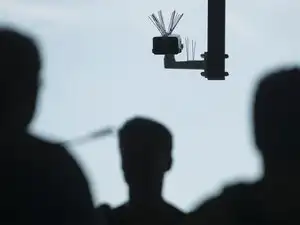
India has a small police force for its population size, and that is not likely to change. Conviction rates of crimes are low, pre-trial imprisonments are high, courts are swamped and justice delayed - mostly because of lack of corroborating evidence and proper records, and improper police investigations. Face recognition program is a game-changer for all concerned - police, courts, harassed victims, remand prisoners, conviction rates, and crime rates. It helps to identify suspects and witnesses (early in the investigation), accurately document facts and serves as a check before going to court.

Face recognition helps to identify antecedents (ie. go back in time and trace contacts with people under suspicion, all the while keeping it under wraps), and catch hidden hands or key participants in crimes. Agencies can suo moto broaden the investigation by looking at activities of incriminated people and organisations.

Face recognition (and its follow-up) will make criminals switch to faceless contacts (ie "dark web" or hidden internet). To counter this, agencies must simultaneously enhance their cybercrimes departments.

With artificial intelligence's ability to scrutinise data for shapes and suspicious activities, and the tremendous growth in CCTV cameras - eg. via smart cities mission & private security cameras - India has a surfeit of pictorial data waiting to be collated. Data must be tightly shared and secured using blockchain. Once the data is analysed and a central database is compiled, including IDs of all known offenders, it is possible to monitor activities of people under suspicion and identify random people in crime scenes.

India sees outbreaks of mob violence, often aided and abetted by the unseen agent provocateurs, that is not properly dealt with by law enforcement. If unscrupulous state governments are involved, they get away with it because they can compromise police actions, evidence, investigations, and prosecutions. Other anti-social elements can hide behind anonymous people, and even if these trouble-makers are arrested, it does not lead to actionable evidence against the masterminds.

Face recognition with AI can quickly identify regular participants and probable ring-leaders in mobs; and it can trace probable agent-provocateurs through mutual contacts & communications, without needing local police co-operation to any great extent.

National security imperatives regarding internal security like movements of foreign agents, border security like illegal immigration, and transnational crimes like smuggling & human trafficking, can be tackled through tracking and monitoring. Over time, security agencies should be able to anticipate threats that amount to acts of terrorism and take actions like protective custody, arrests, deportations and liquidations in encounters.
India is planning a huge facial recognition program to help the police force