Featured Post

Visit arvindagarwal2.blogspot.com for posts from 2017 to 2019

Monday, November 15, 2021

 Distribution of Industrial sites being set-up for manufacturing goods under PLI scheme link


Thursday, October 21, 2021

 What is happening in Commerce, Foreign Trade, FTAs, and FDIs?


Wednesday, October 13, 2021

Indo-Mediterranean connect via Gulf isolates Pakistan-Turkey nexus

Opinion by Paul Antonopoulos

India is working to broaden its vital geostrategic interests from South Asia to cover Oceania, whole of Asia, Europe, and the Caucasus. Foreign ministers of like-minded countries are meeting this month (October 2021) to discuss improved connectivity from India to the Mediterranean through the Gulf. Countries comprise India, Greece, Cyprus, Israel, Egypt, Saudi Arabia and UAE. It's an ambitious agenda for national security purposes, and it opens better trade routes for Indian exports and gives an alternative to China’s BRI.

International North-South Transport Corridor (INSTC) 

INSTC is being implemented. When completed, it will reduce freight costs by 30% and travel times by 40%. The linkage will boost trade between Russia, Iran, Central Asia, India and Europe. INSTC is also of geopolitical importance. For example, Indian-developed port of Chabahar in Iran, will counter the nearby Chinese port in Gwadar, Pakistan as both are set up to service Central Asia from the Persian Gulf. Additionally, it will styme Turkey plans to create an alternative corridor to the Turkic Central Asia through forceful annexation of Armenian territory. Thus, Armenia has become strategically important to India for defeating the geostategic moves of Turkey-Pakistan-China combine.

Turkey and Pakistan's history of genocide and current global pariah status

The destruction of the Ottoman Empire preceded the creation of Turkish Republic in 1923. It was led by Mustafa Kemal Atatürk, who had just completed “Turkey for the Turks”, an Islamist campaign of terror, that genocided 3 million Christian Greeks, Armenians and Assyrians. Pakistan’s founding father Muhammad Ali Jinnah wanted to be known as the Atatürk of India — in his 1938 eulogy, he described Atatürk as the "greatest man of the age and an example for the Muslims of India". Given that Pakistan adopted a similar, genocidal Islamist ideology after its creation in 1947, the Pakistan-Turkey nexus has always been strong and aggressive. Ankara’s continuous rants against Indian sovereignty over Kashmir are but a manifestation of the same.

During the Cold War and the War on Terror, West maintained uncomfortable relations with many countries but this is nolonger required. For example, US once tolerated Turkish aggression during the Cold War because Turkey helped to counter the Soviet Union. Likewise, Pakistan was given a free pass for its nefarious acts within the country and against India. Now, both Turkey and Pakistan are recognised as pariah states; and this has led them to becoming increasingly isolated from regional and global players.

Frosty relations with Gulf and Mediterranean countries

The most telling aspect of Turkey’s and Pakistan’s global isolation is that Arab states that were traditionally friendly to the two countries, particularly Saudi Arabia, are now shifting their relations closer to Greece and India. Under Crown Prince Mohammed bin Salman, Saudi Arabia has been progressing slowly, from medieval ideology to increasingly opening the country to modernity. Due to this shift in ideology, Saudi Arabia is increasingly disengaging from funding extremist groups, something that Pakistan is adamant on maintaining despite chronic social issues in the country that more urgently need attention.

The trade volume between Pakistan and Saudi Arabia was just $3.6 billion in 2019. India and Saudi Arabia in 2019-2020 traded $26.84 billion. Although impressive, it points to the geopolitical direction of Saudi Arabia as it now refuses to be locked into partnerships with only Muslim countries.

As Saudi Arabia has their own tensions with Turkey, particularly over the country’s unapologetic support for the Muslim Brotherhood that threatens many of the monarchies in the Arab Peninsula, it too is finding new partnerships and alliances. In one example, Saudi Arabia recently signed off on a deal for a Patriot missile system to be manned by Greek soldiers to protect vital infrastructure from any Yemeni attacks.

Opposition to Turkey’s support for the Muslim Brotherhood and Pakistan’s regressive ideology that belongs in centuries past has also seen great resistance in Egypt and the UAE, both of whom have strengthened relations with India. It is also worth noting that later this month, India, Egypt and Israel will participate in joint military exercises, the UAE is in a mutual defense pact with Greece, and Cyprus regularly participates in exercises with Greece, Egypt and Israel.

All the countries involved in the proposed India to Mediterranean corridor are already consolidating their relations in the military and economic fields. However, the completion of such a corridor would consolidate these countries into a formal multilateral partnership, thus further isolating the Pakistan-Turkey nexus of aggression. 

In this way, such a corridor will create an arc of peace and cooperation, crossing countries of different religions, cultures, ethnic groups and traditions. Such a corridor would be the symbol of tolerance that shows the involved countries taking the right steps towards a prosperous future.

Saturday, July 31, 2021

 Railways priorities over the next 3 years
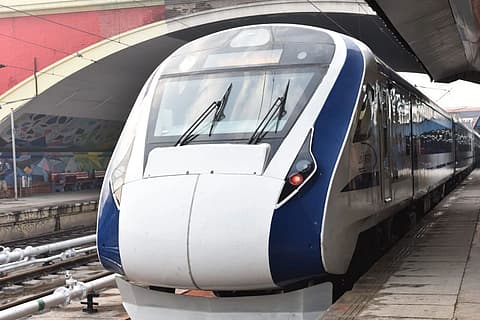
IR has already taken great strides in reshaping the railways business. The process of digitisation, modernisation, electrification, renewable power, corporatisation, private sector participation and asset utilisation will continue, as will its focus on network expansion, competitive freight rates and quality upgrades for passengers and freight.

Over the last 7 years, Govt has proactively invested huge resources in the expectation of creating a robust, world-class railways enterprise that also truly benefits all types of passengers and freight. For example, huge annual budgetary allocations have gone towards never-before-seen improvements in infrastructure, passenger amenities and production unit competencies. 

Inter alia IR work is about building freight capacity, connecting remote areas/ strategic border states and industrial centres; doubling, uni-gauging and electrification of tracks, eliminating level crossings, completing the backlog of track and bridge maintenance, moving trains at higher speeds and keeping great punctuality, adding amazing & ergonomic coaches and modern high-HP locos, eliminating accidents to reach zero passenger deaths, installing AI surveillance and public Wifi, and giving 21st-century comforts and services to passengers

In the next 3 years, IR will complete major projects like a semi-HSR corridor from Mumbai to Kolkata (via Delhi), and it will be embedding new ideas like operating premium passenger services through the private sector and using newly-acquired 5 MHz spectrum in 700 MHz frequency to its fullest extent in digitisation, signalling and safety.

This article talks about three areas of special interest for the IR

These are station redevelopment, Vande Bharat trainsets (on lots of key passenger routes across India) and accident prevention measures like TCAS. It will be a chance for the Govt to redeem itself for Vande Bharat delay and prove it's credentials on Atmanirbhar Bharat by not importing the ETC Level-2 signalling from Europe.

If done properly, these initiatives will give a very favourable view of the Govt and IR transformation in particular. In other words, whether people like the Govt or not, they will be chuffed at the visuals and will be wanting to give the railways a ride. Let's see!

◙  Fast track manufacture of Vande Bharat coaches to add 600 in 2022-23 and 1000 in 2023-24.

◙  Complete overhaul 10s of busy railways stations, along with commercial RE development.

◙  Expand at a fast pace (from a pilot project), and cover the entire rail network with an indigenous ultra-modern signalling system (TCAS or train collision avoidance system).

Project Raftar 

Project Rafter is a holistic endeavour aimed to raise passenger train speeds by 25kmph (& double freight train speeds) by 2022. It has been delayed due to COVID. PDF goes into details.

1) Removing bottlenecks
— Infra to remove permanent speed limits, eg. remove level crossings, track renewals, bridge maintenance, etc
— Complete unigauging & electrification to reduce changeover delays

2) Operational changes
— Operational changes to divert traffic (eg. economic measures); timetabling / time blocks for slow freight trains
— Increase throughput, eg longer freight trains, higher HP locos. Electric trainsets or MEMUs for passenger & mail trains will speed up acceleration, braking, climbing and descending.
— New technologies like automated track laying & repairing machines, early detection of cracks, use of Artificial intelligence, surveillance cameras, automatic data-loggers and 4G networking.


3) Further capacity improvements
— Proliferation of faster trains/ trainsets & higher-capacity freight trains
— Power supply sytems
— Automatic signaling
— Uniform track designed for min. 130kmph, incl. fencing
— Improved intersections, stabling yards; fly-past at busy junctions; maintenance blocks (ie. redundancy) on busy routes
— Build alternative routes & multiple rails on same track

This article talks about the semi-HSR upgrade for Delhi-Mumbai and Delhi-Howrah routes, a stretch of 3,008km. It is designed to run trains at 160 kmph and costs Rs 5,550cr (for all civil and technical works). Operational date is March 2024.

Realignment of curves, other track upgrades and ROB/ RUB at all level-crossings are essential requirements. Concrete wall barriers will be used - for stopping trespass - as barbed fence is liable to be stolen! Technical work involves signalling upgradation and strengthening of power supply. For the latter, OHE upgradation (over-head equipment) will deliver higher power flow to operate semi-HSR trains. 44 Taction sub-station (TSS) will also be installed.

Wednesday, June 16, 2021

 Where is India heading in Ecommerce?   Link

K Ganesh, Founder of GrowthStory talks about Tata Digital's Retail eCommerce venture and more

India's eCommerce is at an early stage and set to grow exponentially. "ECommerce is a global phenomenon which India is catching up with and Covid has only accelerated it. It is several orders of magnitude cheaper to sell online in a vast country like India than to build tens of thousands of stores." Operators can quickly and cheaply scale up to all-India levels and chain stores like Future group are struggling to compete. Tata and Reliance (two Indian mega conglomerates) have entered this sector. They have vast resources, professional competence and prior experience in traditional retail to rely upon.

Tata took the unusual step of buying into growth rather than doing it all within the company. It is paying a premium for loss-making but highly growth-orientated, new-age digital companies. For super apps to be successful, they must satisfy a core purpose that is heavily frequented. This can be chat or messaging, digital payments, daily shopping, commuter ticketing, etc. Tata's stakes in BigBasket [fresh fruit & vegetable shopping] and medicine acquisitions work is in that direction. However, customers will look for great functionality from a super app and not just a good one-off app. I think Reliance's deal for bringing in WhatsApp has the best potential for a super app. [Tata Digital is to go public with an IPO. Retail IPOs including Paytm & Zomato are great for domestic investors as they can share in the emerging boom in new Indian equity.]

Indian eCommerce market is so big that both Flipkart and Amazon are growing tremendously. This is despite Amazon going all out to win market dominance and crush the competition. Amazon and Flipkart use national distribution channels where products can be shipped anywhere from distributed warehouses. Others DoorDash, BigBasket, Swiggy use the hyper-local distribution where products are shipped from a nearby traditional store.

"Most products can be delivered by either method. But fresh products like foods, vegetables, restaurant food, etc can only be delivered by hyper-local companies. Hyper-locals compete for neighbourhood by neighbourhood, in city after city. Also, large investments are needed so the hyper-local model is costly and does not work on one national strategy. To meet the challenge of competition, they have to stitch together local strands, build the right culture and hope customers keep coming back!" For example, hyper-locals find it more convenient to use existing stores as warehouses and for delivery. So they co-opt local stores and national chains and run their businesses with smooth digital interfaces.

"To sum it up, there is a great opportunity in the hyper-local. At the national level, Flipkart and Amazon are there and we may see large players like Reliance and Tata that can become big. But for hyper-locals, the field is still fully and completely open. Competition is really not the issue as they are taking share from offline or traditional stores."

Friday, June 4, 2021

What are your thoughts on 20% Ethanol blending target? Is it sustainable? Link

Sabyasachi Majumdar, Vice President of ICRA

"Quite simply if India's entire sugar exports are diverted to ethanol production, the blending target can easily reach 20%!! 

"In recent years, new sugarcane varieties have substantially boosted sugarcane production from UP as well as sugar recovery. A surplus of 5m tonnes of sugar is produced every year and exports are being encouraged through incentives. Firstly global demand & supply situation can reduce exports in some years which creates cash flow problems and storage issues. Also beyond a few years  I believe after 2023, subsidies will have to stop as there are trade rulings barring them. So, Government is looking for alternative uses for sugar.

"Avoiding the surplus is the biggest worry. For example, petrol makes up just 10% of total oil imports, though a lot of the rest is refined and exported. A 20% saving on oil for petrol has a small impact on forex but it does not reduce our dependency on imported oil very much. [Edit: sugarcane juice can be converted to aviation fuel or bio-butane which can be consumed or exported.]

"However, ethanol blending is a massive boost for the sugar industry, as it brings sustainability of quality incomes to farmers and stability of employment in factories along the supply chain. I see it as a game-changer for our industry! Domestic sugar price will rise, but so will production to compensate. Blending norms can be adjusted if there is a deficit sugar year or production falls away due to disease."

Wednesday, May 19, 2021

Progress in Digital payments in India

India ranks as a laggard in technology adoption. Link. Yet in fintech, there has been explosive growth. Starting from 2016, India has gone from nowhere to become the leader in digital payments. In 2020, India processed 25.5 billion real-time online payments. China was at 15.7b, followed by S Korea (6b), Thailand (5.2b) and UK (2.8b). US at 1.2b was ranked 9th!!

India's transaction volume share from real-time, online transactions is expected to grow from 15.6% (in 2020) to 37.1% in 2025 when it will become the most popular method of payment. Other electronic payments (eg cards) will grow from 22.9% to 34.5%. Importantly, paper-based payments which had a considerable 61.4% share in 2020 will shrink to just 28.3%. Encouragement of digital payments and dissuasion of cash & black money =================================================== No doubt, demonetisation (2016-17) and a very strict Covid lockdown (2020) were seminal moments along this journey when electronic payment alternatives became a necessity. It compelled ordinary people to move away for the first time from the cash-in-hand or people-to-people means. The push towards everyday use of digital banking was started post 2014 via Jan Dhan accounts, Aadhaar and digital benefits transfers (DBT). Towards this end, universal banking enrolment of the poor was started on a mission mode, finger-print reading devices were set up, digital payment systems were developed and India's RuPay debit cards and Kisan Credit card were popularised. Incentives such as free accident cover were given to all. Kisan Credit cards reach out to 25m small farmers & fishermen and offer hassle-free concessional credit worth Rs 2 lakh crore! KCC have high convenience as they are used for giving benefits and operating farming schemes (eg crop insurance). During demonetisation, Govt made cash hoarding illegal and barred cash payments over a certain limit. In 2020, it removed the merchant discount rate or electronic payment charge. There were fines for medium-sized companies (revenues > $7m) that did not accept debit card payments for free. In 2020, it enforced e-invoicing for B2B transactions and e-way bills (freight travel documentation) via GSTN portal & a unique IRN. Various mechanisms were created to clamp down on black money generation. Most significant was the total recast of the indirect tax system via GST legislation (2017) when used alongside invoice matching and powerful data analytics. Other legislations were enacted such as Benami property transactions (2016), undisclosed foreign incomes and assets (2015), unregulated deposit schemes (2019), extension of real-time, centralised reporting of bank transfers (RGTS), RBI supervision over cooperative banks and non-bank financial institutions (2019-2020), digital mapping and registration of land ownership (2020-), etc. Indian remittance tax (2019) at 5% on outgoing remittances from India will identify potential black money sources in India. Tightening of existing FCRA (foreign contribution regulation act) (2020) requires opening of a State Bank of India account where money transactions can be tracked, and unauthorised activities of any sort will revoke FCRA registration. Discretionary spending (i.e. admin expenses) is limited to 20%.

Importance of Digital India =====================

Digital India aims to give people the benefit of quality public services, which are comprehensive, easy to navigate, interactive and available at a touch of a button, remotely through the internet. It endeavours to make India "digitally empowered" in all fields, be it the private sector or government.

One of Digital India's motto is to be "faceless, paperless, cashless".

For cashless, Digital India had to establish a governance system & net banking ecosystem which ensured confidence in all aspects of electronic transactions, the safety & competence of the banking system and anti-fraud measures. It provides incentives to consumers and requires infrastructure to be set up by the traders, businesses, banks, common service centres, telecom companies and equipment manufacturers.

In 2014, India had a high dependency on cash as a store of wealth and as a mode of transactions. Cash flows were 12.4% GDP. "While cards expenses have resisted the scaling up, mobile-based payment technologies such as mobile wallets can be the answer for cashless economy in India." Digitalization of transactions is the best way to move towards a cashless economy. Roadblocks to change were:

1. Masses are either not banked, have bank safety concerns or are not schooled in digital aspects of banking
2. Scepticism of shopkeepers and traders in electronic payments, along with high merchant discount rate.
3. Lack of internet access and smartphones: only 370m out of 1350m had mobile internet & few in villages

1. Banking hesitancy :- National Payments Corporation of India (NPCI) has created a real-time payment system called UPI (Unified Payment Interface). It brings together all the banking institutions under one platform for the sole purpose of providing seamless, instantaneous bank-to-bank transfers.

The user, who is logged on, can send or request money with the virtual ID of the other party, amount and account details. Payment is made after the sender of funds enters his UPI PIN and accepts the transfer. Applications like BHIM and RuPay work on UPI but provide a simplified, user-friendly interface. Customer can make payments using UPI-powered portal in place of the card. He can set up an app (or online wallet) on a smartphone with a bank account or card account; and an online, verified ID using Aadhaar.

The choice of payment portals has mushroomed with private entrants such as Google Pay, Amazon Pay, Paytm, PhonePe & WhatsApp Pay. "We need to build consumer trust in digital transactions and inspire businesses and customers to adopt adequate security safeguards. Investing heavily in encryption and other security measures will be paramount to securing private data of all Indians. Organizations that design with privacy and security in mind will thrive. The new private entrants are coming in with stronger encryption and high-security policy for securing digital communication and digital transactions."

2. Scepticism of sellers :- As money is credited immediately, seller just needs to check the bank account after taking payment. But, seller will trust one of the reputable card processing systems (eg RuPay, Mastercard) or the online payment portal (eg Google Pay), since errors don't arise or there is full compensation for the loss.

3. Access to internet and smartphones :- Rural mobile telephony and data use has grown exponentially since Reliance Jio entered the space with full gusto. India has the highest data usage rate in the world. Mobile broadband (610m subs in 2019) made up over 50% of cellular connections in India (which is close to 100% penetration). By 2024, smartphones would have reached near-full penetration with 1,100m users and 1,250m subscribers.

Further Progress on Digital Payments
=============================
1. UPI transactions grow at pace ◙ More businesses (eg Ola and Netflix) are adopting UPI. These are small value, retail transactions. ◙ Contactless digital payments will be allowed up to Rs 5000. It will boost use in mass transit systems (eg. metro, busses) because speed of transactions is critical to them. Delhi and Mumbai metro have taken it up. ◙ UPI-based customer & business sales will get automatic GST rebates. For this, business must collect customer's PAN or GST number as part of UPI transactions. According to a report, if just 10% of 13m grocery stores (also, sole traders like plumbers & salons) take up digital payments, it will create 3.2m jobs and boost retail consumption by 5%! 2. UPI aids growth in financial services ◙ New Fintech firms are both innovative and well-funded. They are taking UPI into new areas like micro-insurance, retail investments, online education, small trader technologies, agri-tech and even cross-border business. Tier 2 & 3 cities retail as well as small traders are being targeted.
◙ UPI based credit card is a "game-changer" for retail lending, due to transparent repayment history.
◙ UPI is increasing credit access to MSMEs. UPI gives effective tracking of receivables & payables, so good credit risk assessments can be done.

MSMEs comprise 90% of firms in India of which 70% are micro and informal. Only 15-20% get credit in the normal course of business. Cheaper and accessible microfinance can happen if comprehensive & reliable credit information is available. "Open Credit Enablement Network (OCEN) and Account Aggregator framework are means of collecting, aggregating and sharing credit information. Public Credit Registry (PCR) is the register of all credit information." [Improving India’s private credit-to-GDP ratio (about 51 per cent, lowest among peers) via microfinance will boost India's GDP per capita & tax-to-GDP ratio.]

3. Overseas expansion of UPI and RuPay
◙ India's UPI and RuPay card have become global. NPCI International Payments Limited (NIPL) has tied up with 30 other payment networks and is present in 195 countries! Aadhar system has been exported to 10 countries via MOSIP, an open-source system.

4. USSD part of Regulatory Sandbox
◙ USSD is the 1st iteration of Regulatory Sandbox. It works without internet and smartphones (Edit: it is phone-based?). It is being tested for offline retail payments. Cards and wallets can be developed on USSD. 5. India Stack ◙ India is building a world-class, massively scalable digital payment system that is also expansive, secure and efficient. India Stack has the potential to make India among the pioneers and leaders in Fintech revolution.

Monday, May 10, 2021

India: It doesn't end with the exclusion of Chinese 5G firms

Reaction of Chinese Embassy Counsellor is amusing and delusional.  Can the Chinese be so foolish?

The Chinese Embassy spokesman talks piously about "enhancing mutual trust and cooperation" and "open, fair, just, and non-discriminatory business environment", but as usual they, the Chinese live in a make-believe world. Chinese may choose to ignore it but there is widespread, global consensus for rejection of Chinese role in critical infrastructure. Many influential nations have gone further. 

India is working to disengage from Chinese-controlled businesses, joint ventures and supply chains. It has declared that all investments into India will be closely scrutinized so it can weed out Chinese sourced investments. India is not only putting up higher trade barriers on Chinese goods but also blocking Chinese exports routed via third countries like Vietnam, Malaysia and Bangladesh. India has barred Chinese JV firms from participating in public tenders. India is also giving production-linked incentives for setting up Make-in-India supply chains and working with like-minded countries to bring production from China to India. 

One can see ground realities getting altered step by step by step! In 2020, India banned Chinese tech firms from operating in India and in 2021, there is another slap on the faces of the Chinese. 

The exclusion of Chinese firms in India’s 5G trials, as well as in future rollouts, was a future foretold. To imagine that India will open its most sensitive sector to intrusion from the Chinese Communist Party even as its People’s Liberation Army attempts to grab Indian territory is strategic hubris on Beijing’s part. To view India as its competitor is one thing; to bludgeon that idea into military action takes all discussions and negotiations beyond the pale of civil talks. Here, clubs and fists, tactics and manoeuvres are doing the talking. The only solution is for China to get out. To demand, or even expecting business as usual in these times is like China saying: Use Chinese firms, allow them to intrude into your countries, or else!

Those threats have gone past their use-by date. Xi Jinping wants to be feared by the rest of the world. It worked for a while. But now, even that fear is abating in direct proportion to his illusions of grandeur. Philippines Secretary of Foreign Affairs, Teddy Locsin Jr., articulated this in a 3 May 2021 tweet: “China, my friend, how politely can I put it? Let me see… O…GET THE F**K OUT. What are you doing to our friendship? You. Not us. We’re trying. You. You’re like an ugly oaf forcing your attentions on a handsome guy who wants to be a friend; not to father a Chinese province …” These pushbacks will increase. And with them Beijing and the grand supremacy of the Middle Kingdom will turn into a meme.

In its confused state of mind, which in turn is in a state of war within and itching to express it somewhere…anywhere…it seems the CCP has lost its ability to think. In particular, it is unable to read India. It is behaving as an aggrieved party, as though it is surprised by this policy ricochet of Beijing’s actions. For them, this is a diplomatic misdeed. For the rest of the world, this is the right reaction. For those tracking India’s China policy closely, this is a work in progress, a step in India’s evolving critical infrastructure policy with respect to China.

Critical infrastructure comprises those sectors whose destruction would adversely impact a country’s security, economy or safety. It requires the government to identify risks and vulnerabilities — natural (earthquakes or floods, for instance) or manmade (Chinese intrusion, for instance) — and be prepared for them. It is in this context that the exclusion of Huawei and ZTE from India’s 5G trials needs to be seen. In a line, the exclusion of Chinese firms from India’s 5G is a policy that can be informally called, No China 3.0. So far, there are three series of No China policy initiatives.

Series 1

No China 1.0 happened on 29 June 2020, when India banned 59 Chinese apps.

No China 1.1 happened on 28 July 2020, when it banned another 47 Chinese apps.

No China 1.2 happened on 2 September 2020, when India banned another 118 apps.

No China 1.3 happened on 24 November 2020, when it banned another 43 apps.

Series 2

No China 2.0 happened on 2 June 2020, when India banned Chinese firms from participating in highway projects.

Series 3.

No China 3.0 happened on 4 May 2021, with the exclusion of Chinese firms Huawei and ZTE from India’s 5G trials.

But this is not the end. There will be a Series 4, a Series 5, a Series 6…7…8… All of them will ensure No China in India’s critical infrastructure. These policy initiatives will have a four-part drafting. First, around physical critical infrastructure — that is, No China in India’s ports, energy, railways and defence sectors. Second, around virtual critical infrastructure — No China in India’s information technology, internet, broadband sectors. Third, around systemic critical infrastructure — No China in India’s banking and finance sectors. And fourth, around other areas of critical infrastructure — No China in India’s space and nuclear sectors; and emanating from the “Wuhan Virus”, the most important today: No China in India’s public health.

The exclusion of Huawei is, therefore, is subset of a larger policy stream. It is a work in progress, a continuum, with which India will protect its strategic sectors from assault by the CCP-PLA combine that has repeatedly made clear that it does not want India as a friend but considers it an enemy, a threat, an idea it fears and one that it seeks to end.

India is not alone in designing these policies. Given that China is in a state of war, first with itself within and therefore outside, we need to know the tools of tomorrow’s warfare. They will be fought not so much on ground or at sea as they will be in virtual spaces. Or, let’s say, the virtual will drive the physical — the tail has become larger than the dog and is wagging. The looming Cold War will, as Samir Saran articulates, really be a Code War:

With nearly all social, economic, and strategic interactions moving to the virtual and digital realm, states will race to “encode” their political values and technology standards into the algorithms and infrastructure that will govern our societies. This will certainly be a competitive process which will give birth to a persistent “code war”.

What makes Chinese companies entering India’s critical infrastructure dangerous are two outcomes. First, the intrusive nature of 5G technology. And second, China’s National Intelligence Law, Articles 7, 9, 12 and 14, of which turns every Chinese company and every Chinese citizen into a spy. This makes consumers, businesses and governments of all countries that use Chinese equipment vulnerable to intrusion by CCP and PLA.

That’s the reason why Australia banned Chinese firms from its critical infrastructure in August 2019, the UK banned Huawei in July 2020, the US in August 2020, and most of EU including Poland, Estonia, Romania, Denmark, Latvia, and Greece last year. India excluding Huawei from its 5G trials is a step in the same direction. And though the decision is independent, the alignment is clearly with the West.

That said, even if the rest of the world did not ban Huawei or Chinese firms, India must. If there is a collision with China, other countries are at a reasonable geographic distance to negotiate it. With India, there is a 3,488 km long border. India cannot, must not and will not allow Chinese intrusion into its critical infrastructure. There is too much at stake for India, and through India, for rest of the world. So, expect more such exclusions or bans, as one critical sector after another shuts doors to this party, the CCP, that’s visibly and irreversibly turning China into a rogue nation.
Friday, May 7, 2021

Pulses and oilseeds boost likely from much higher Summer cropping  Link  Link

Summer season is a short, bonus season from March to June, between two main crops of Rabi and Kharif. It provides additional income for farmers. As of last year, just 3.2% of total cultivated area (189.2m ha) was used across 13 states having assured irrigation. Bihar, Gujarat, MP, Karnataka and AP are the leading states. Percentage has risen to 4.2%, showing an area growth of 31.9% to 80 lakh ha (see below).

In January Govt planned an increase in area under Pulses, Oilseeds & Coarse grains by 50%By 7th May, it was up by 51% from 26.9 to 40.6 lakh ha!! Irrigation of summer crops is assured due to excess reservoir waters and there was timely distribution of certified high-yielding seeds, pesticides, fertiliser and extension services to farmers.

Govt official said, "Target for summer crops is 5m tonnes of cereals, pulses and oilseeds. Planting of summer crops, especially pulses improves the nitrogen content and prepares the land for Kharif planting. Also, we are encouraging farmers to plant more nutri-cereals (like Maize, Bajra, Jowar and Ragi) as they require less water and demand in global market is high".

Farmers have started sowing summer crops through seed drill/zero till after treating the seeds and they are using high yielding varieties and post-harvest value addition technologies for higher economic gains. This will increase cropped area & yields [retained moisture], reduce labour & production costs [mechanisation] and increase farmers' incomes.

Sowing of Summer Crops as on May 7, 2021


Crops Area in 2021

Crops Area in 2020

% increase

Rice

39.43

33.82

16.6

Pulses

17.75

 6.45

175.2

Oilseeds

10.74

 9.03

18.9

Coarse Grains

12.11

 11.37

  6.5

Total

80.03

60.67

31.9


Organic farming in India: high quality and export success

Himalayan states eg. Sikkim are fully 100% organic and others are becoming one like Uttarakhand. Andra Pradesh may become 1st large state to do. Its ambitious Zero Budget Natural Farming programme is "transforming things on the ground". Organic farming not only stops the dependency on chemicals but improves on the poor soil quality and water scarcity situation in AP.

Organic farming in some measure is happening in other places across India and exports are a useful impetus. In addition, nutraceuticals and health foods are gaining export traction. Organic food exports rose by 51% (to $1.04 billion) in 2020-21! Export quantity has increased by 39% to 890,000 MT. Items are very varied eg. oil cake meals, oilseeds, fruit pulps and purees, cereals and millets, spices and condiments, tea, medicinal plant products, dry fruits, sugar, pulses, coffee, etc. 

India exports organic foods to 58 countries, such as US, Japan, Europe, Israel, Korea, that have very high import standards. India's NPOP certification is accepted in EU, UK and Switzerland. India is negotiating the same with other trading partners.

Thursday, April 22, 2021

Second wave and steps to increase medical oxygen

Deadly second wave of Chinese coronavirus
India is facing dire consequences of the second wave of Chinese coronavirus pandemic. A fast-spreading mutation of the virus has lead to an immense surge in new cases. Huge crowds and lack of precautions had become the norm as people went about their normal lives. This was expected and also necessary for economic revival.

However, the spread and worsened state of affairs is aided no doubt by the gross negligence of opposition states like Maharashtra, Delhi, Chhattisgarh, Kerala and West Bengal, as these continue with policies of inadequate testing, lack of proper follow-up and lack of proper planning for treatment (eg hospital beds, care equipment, consumables spare capacity) and inadequate vaccinations. Lockdowns and inadequate support to migrant workers will create problems for neighbouring states. In hindsight, a second wave was long overdue and large urban centres should have prepared better for it.

Some states are taking a proactive approach whilst others are leaving it all to the Centre. This is putting the onus (and blame) on Centre to rescue situations from incompetent and corrupt opposition state leadership, particularly in Maharashtra and Delhi. For example, politicking by opposition includes non-cooperation, stopping shipments and illegal capture, hoarding & black marketing of essential items and vaccines. Besides, fake news from the usual sold-out journalists and media platforms is leading to a heightened sense of desperation. 

Mehra (Delhi Govt Advocate): My Lords, lives are at stake


.
High Court: I don't understand for whom are you repeating this again and again? The court knows, you know, I know that lives are at stake. Central govt is doing what it can, I'm sorry to say it is your incompetent administration.

Preventing the potential public backlash or anger
Things have NOT yet gotten out of control. But as cases are rising, difficulties for the ordinary person will compound. Govt is providing solace in a few ways: 

1) Avoiding a blanket lockdown.

2) Free rations for the poor as many would become unemployed.

3) Multi-fold increase in production of essential treatments, oxygen and temporary hospital beds; improved logistics including green corridors & armoured escorts to shipments; and tighter controls on distribution to stop black marketing and hoarding.

 -  Remdesivir (anti-viral drug) production has been more than doubled from 4m doses/month to ~ 9m doses/pm. 25 new manufacturing units were started around 12/4, exports banned and imports arranged (eg from Russia).

 -  Temporary COVID hospital at Ahmedabad for 900-beds was inaugurated by 23/4, along with DRDO oxygen plants. As care equipment is at hand, it is done very quickly. Other COVID Hospitals to be installed in a few days are 450-beds (Lucknow), 750-beds (Varanasi), 500-beds (Chhatarpur, Delhi) and 500-beds (Bihar).

Reviewed preparedness of the @ITBP_official Sardar Patel COVID Care Centre in Chhatarpur, Delhi.


This facility will initially reopen with 500 oxygenated beds which will be quickly ramped up to 2000. It will have 10 basic care life support ambulances, X-Ray, BI PAP machine Bi PHASIC Defibrillator, suction machine along with other medical equipment.
4) Vaccinations are opened to over-18s from 1st May (previously limited to over-45s) as vaccinations have worked, and young people need protection:

 -  Vaccines are available as per state policy and also from private sector. Most states including UP, MP, Bihar, Assam, Gujarat, Uttarakhand, [All BJP ruled states], etc. are promising it for free. Otherwise, SI's Covishield is priced at an affordable per dose rate of Rs 300 (govt hospitals) and Rs 600 (private hospitals). Covaxin is priced at Rs 400 (govt) and Rs 1200 (private). Price is set by each manufacturer, so foreign vaccines will surely cost more >> Rs 1200.

 -  Ramp up vaccine production for the 1st May opening up. This includes a 7-fold increase in Covaxin production (to 58m/pm), expansion of Serum Industries facilities (to 120-140m /pm), bring to use spare capacities in PSUs, and arrange imports and Make in India production (eg agreement with Dr Reddy for 250m total of Russian vaccine Sputnik V). Other Indian pharma are in pipeline to deliver higher capacities. 

-  Freedom to import all established vaccines including American, but not Chinese. New Indian vaccines are in trials (eg. Zydus Cadila's ZyCoV-D, Biological E, Gennova). Intranasal vaccine is game-changer for mass vaccinations as it is very effective, easy to take and can cheaply and rapidly be mass-produced. India's Bharat Biotech has one such intranasal vaccine that could enter trials quite soon!! Video

-  Emergency approval for Zydus Cadila's Virafin (oral anti-COVID drug for moderate hospitalised patients). It brings recovery over 7-10 days and reduces the extent of oxygen ventilation. Canada's SaNOtize nasal spray treatment is a breakthrough treatment for COVID. SaNOtize is in talks with many Indian manufacturers. 

Oxygen crisis
Second COVID wave has created an unprecedented demand for oxygen within a few short weeks. As India is equipped with oximeters and ventilators, most patients with low blood oxygen are detected early and can be placed on oxygen. 

Production of more oxygen
1) The medical oxygen supply has been increased by nearly 4 times from 1,273 MT/ day in the last week of February to 4,739 MT/ day on April 17th. This is set to increase further in coordination with national suppliers.

2) In the meantime, Govt has requisitioned all oxygen production from non-essential industries. 

3) Firms in essential industries are not only volunteering their spare capacity but processing industrial oxygen into medical grade oxygen.

4) Supreme Court is considering whether to reopen a significant copper plant in TN which promises to supply 1,000 MT/ day of oxygen.

5) 50,000 MT of liquid oxygen will be imported and IN will assist in bringing it quickly to India.

Distribution of oxygen
Centre is driving the effort to distribute oxygen to hospitals that have shortages.

1) Indian Railways will soon run 'Oxygen Express' trains (on non-stop, green corridors), each loaded with lorries containing liquid medical oxygen containers and oxygen cylinders. Indian Airforce will transport empty containers by air to speed up oxygen dispatches by rail.

2) 162 Pressure Swing Adsorption (PSA) oxygen plants are sanctioned for installation in hospitals. 100 more will be added at request of states. Due to slow pace from Jan 2021, only 33 were built by 18/4. They reckon 59 will be installed by April-end and 80 by May-end. Each plant will produce ~ 0.9 MT/day.

3) DRDO's innovative oxygen generation plants are being installed alongside COVID temporary hospitals. Each plant takes just 72 hours to build. Peak flow is 1 m3/min which is sufficient for ~20-25 ICU beds. UP has ordered such units for 5 health facilities. Besides, DRDO has transferred oxygen generation technology to the industry, which has now started providing oxygen plants to state governments and hospitals.

4) Large industrial firms like all major steelmakers (private and public) and Reliance Industries oil refiners have offered large volumes of medical-grade oxygen to nearby districts, states and across India. Tata is procuring cryogenic cylinders to fill acute shortage of specialist containers.