Tunnelling now and in the future link
Mushrooming of new tunnelling projects, as seen over the last decade or so, was made possible by new tunnelling techniques. The speed and efficiency of the new methods, along with the massive capital expenditure and political get-go, have made a drastic change, both in the quantum of new projects, and how projects are planned and executed.
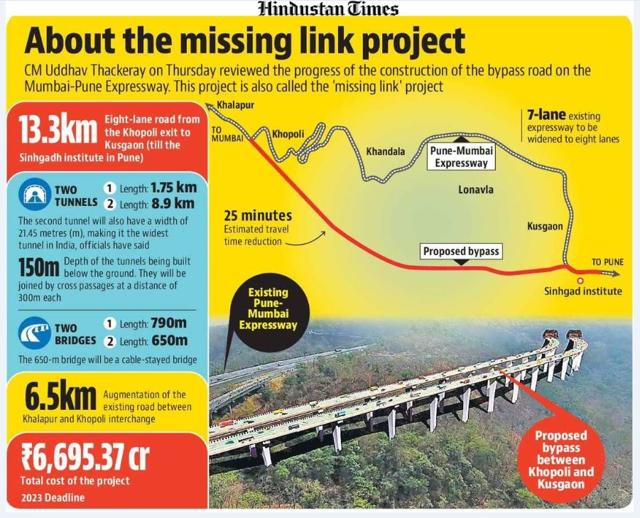

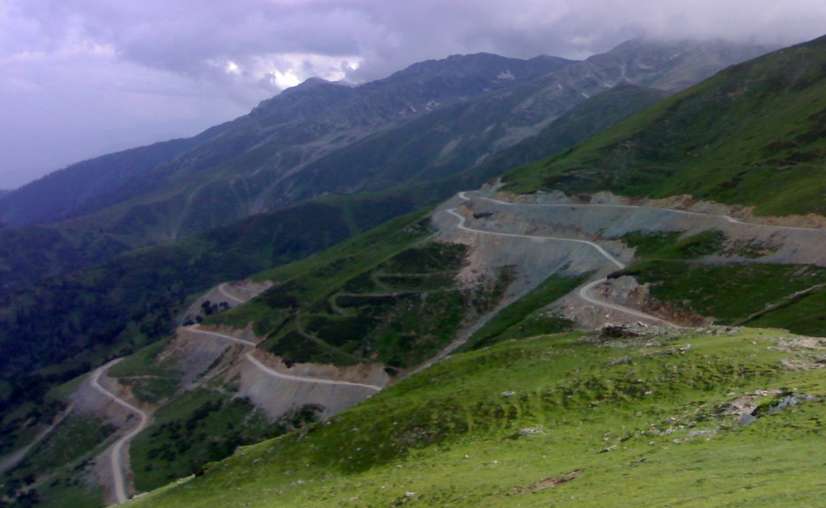
NHIDCL invited bids for 10.3km mega-tunnel below Sinthan Pass in J&K, btw Singhpora & Vailoo. Project costs ₹3253 cr. Time 60 mo.
Conventional blasting method was used earlier but this is slow and cumbersome. Two new methods, namely TBM (tunnel boring machine) and NATM (new austrian tunelling method) are deployed in the recent times. They work well in cities [eg. metrorail] and mountainous areas [eg. border roads in Himalayas] respectively.

TBMs are preferred in cities, as they work efficiently in a limited space. TBM can do most tunnelling tasks by itself [eg. boring, shaping, stablising tunnel walls], whilst it bores and moves forward. TBM method does not need blasting by explosives; and so it would be safer to deploy in a city environment. New Austrian Tunnelling Method (NATM) is more effective and cost-efficient in challenging geologies. Eg. TBMs are unable to deal with shifting rock formations or heterogeneous rock strata of Himalayas. NATM requires specialist machines for many construction tasks, such as asboomers or jumbos; machines for shotcreting, grouting, strengthening the ground, etc.
Construction of the Chenani-Nashri tunnel used NATM technique
The Chenani-Nashri tunnel was of a complex nature as it involved cutting into Himalayan rocks, where forecasting of the rock mass is difficult due to rapidly changing geology. NATM is very useful in these complex and diversified geological conditions. Versatility is the primary benefit of NATM as it can be used for hard rock, soft rock, and blended ground conditions.
Under NATM, the tunnel was sequentially blasted, excavated and supported. Advanced tunnelling and drilling equipment were used. NATM sequences and carefully streamlines construction with regard to security, safety, and economy.
~ ~ ~ ~
Improving on the present
1. Specify modern methodology in the contract: Geological engineers should lead tunnelling projects as they will support modern methods wherever such equipment is available (over conventional drilling and blasting).
2. Made in India equipment: Major problems arise when equipment, eg TBM goes wrong. So, there is a pressing need for indigenisation. It will reduce equipment cost, increase parts availability and make more contractors use modern equipment. Key equipment such as heavy-duty loaders, Liebherr excavators (for loose strata), telehandlers, grouting pumps, Schaeff loaders, drum cutters, hydraulic crawler drill machines, side-dumping loaders.... a lot of advanced equipment for NATM.
"Ideally, we should localise the production of TBM, as this is so important for the industry. It can be done through Govt-industry collaboration and incentives for many years. Even if all the TBMs in India are imported, a lot of the ancillary components could be indigenised". See news below:
Chennai Updates @UpdatesChennai 30 July 2022India’s first Tunnel Boring Machine (TBM) made by Herrenknecht at its factory in Chennai (60% localisation). TBM will be used by L&T on the stretch from Kellys to Taramani Road Jn.

4. Fill gaps by adding new technology products: Mobile equipment like borers, shotcrete equipment, machines that give more precision (speed up work) and equipment with safer blasting techniques (reduce risks).363
— Automated boomers can drill more accurately without any outbreak .. — Manager measure while drilling (MWD) software for controlled blasts .. — Automated drilling increases productivity, and safety and reduces costs.. — Probing geology study (& utility mapping around excavation site) reduces costly mistakes in decision-making ..
5. Training for operators and maintenance: Industry and government should come together to offer training through ITI-styled institutes. It works at many levels, incl imparts skills to give better performance, training to use new tech equipment, reducing equipment breakdown (as operators know how to use equipment properly), worker safety, etc. Qualified professions are also required.

No comments:
Post a Comment