Featured Post

Visit arvindagarwal2.blogspot.com for posts from 2017 to 2019

Thursday, December 19, 2019

GST:  Still halfway from realizing the full potential

Road ministry says that logistics costs have come down from around 14% to 10-12%, and distance covered by freight lorries has improved from 225km per day to 300-325km. Several rounds of GST tax rate cuts have sharply lowered the prices of most household items. However, services have not benefited from rate reductions, apart from a few like restaurants and property construction.

Ease of doing business has improved as the number of forms filed by businesses has come down from 495 to just 12. Business can recover Input tax (ie. cumulative indirect tax on purchases) and is not affected by "tax-on-tax" (or a cascade of irrecoverable taxes) of the previous regime. The new federal administration body ("GST council"), made up of central and state governments, will ensure uniformity of law across states (ie. not just tax rates).

Anticipating the sea change in taxation, the way of reporting and the uncertainties involved, businesses slowed down production in the weeks before GST roll-out. This is believed to have caused the sharp slowdown in gross domestic product (GDP) growth to 6% in the June quarter of FY18, compared to a 7% expansion in the fourth quarter of FY17 ending March 2017. Growth recovered in subsequent quarters with policymakers suspending some of the toughest provisions such as invoice-matching and extending deadlines for filing returns, in addition to handholding businesses and traders to navigate the new system. By the last quarter of FY18, growth had recovered to 8.1%, though after that the economy started cooling off. This trend continues with growth slowing down to 4.5% in the second quarter of FY20, its slowest pace since March 2013.
Deepening economic slowdown and shortfalls in GST revenues are testing the assumptions made at the onset, such as that GST could spur the economic growth rate by 1-2 percentage points and that an efficient and distortion-free tax system would curtail tax evasion and provide much higher tax revenues. Experts point out that it is too early to judge GST by the current trends in economic growth and revenue collections. “It will take about five years to realize the full potential of GST. We are halfway towards that goal. Now we should allow GST to settle and only incremental changes should be made".
Conclusions
GST is a simpler regime than the earlier fragmented system, but all parties agree that it should be further simplified (particularly by trimming the number of GST rates). GST system has ensured near full uniformity across states, though states can levy different rates for petroleum, electricity and real estate, except under-construction properties. GST has removed internal trade barriers and improved Ease of doing business.

The tax efficiency (through distortion-free system & simple Input tax deductions) will no doubt bring dividends to the economy in due course. Dealing with issues such as the inclusion of currently excluded sectors and clarity on issues like intra-company services between two offices will help. The voluntary settlement of differences without penalty will ease some of the concerns of the industry. Further technology enhancements will help to increase compliance and widen the tax base further. 

Monday, December 16, 2019

Political meltdown of Labour heartlands in Northern England
==================================

My comment - "What explains the change in voting habits?"

Labour lost 50% of the seats in large swathes of North England, though it is seen that political transition towards Tories started from 2005 and seats flipped only in 2019. So, what changed? In a nutshell, former Labour strongholds in North England have moved into services and other manufacturing sectors, and the new money has been coming into the communities from the private sector. Hence the reset.

Electorally speaking, if sub-regions (divided into market towns, rural, urban, metropolitan) match up economically, ideologically (ie wanting to leave EU) and demographically, then the voting pattern should be similar. The author states that "the red wall (comprising Labour fortresses) is dominated by rural, small market-town seats which hug the more (demographically) diverse, safe Labour seats in the cities of the Midlands and the North". Thus, Labour fortresses are made up of diverse areas, where a large number are a close match to Tory-voting areas of South England. The political impact is seen in the North, because whilst the South is relatively stable, the North has undergone a major economic upheaval.

There was Labour support for all of the last 100 years because these regions were dependent on government-owned industries and people used trade unionism as a means to extract wealth. Economic ruination of local industries like coal mining & steelworks, happened in the 1980s during Margaret Thatcher's terms as Prime Minister. The pain encompassed whole communities and was excruciating. Recovery came gradually, perhaps gathering pace a decade later in PM Tony Blair's era.

The drift in voting from Labour must be due to a change in belief systems. A realisation, based on actual progress over the decades, that what, "works for the rest of rural or semi-rural England can happen, and is happening, in most of the former Labour heartlands". People who have seen development coming from new industries owned by the private sector are asking for more of this type of investment, rather than handouts. They will not disfavour the private sector, for as long as the communities benefit from the economic opportunities created by them.

Saturday, December 7, 2019

WONDERFUL VIDEO - Kishore Kumar and SD Burman

Kishore Kumar in his own voice remembering S D Burman

SONG FOR ALL AGES

DEVOTIONAL BHAJANS

POWERFUL STOTRAM

Dedicated to SHRI SHIVA MAHADEVA     (Devon Ke Dev Mahadev TV serial)
Dedicated to SHRI SHIVA MAHADEVA     (Others songs)

Songs from Old and New MAHABHARAT TV serials
By the middle of the 21st century, India would be the largest market on earth
“India will soon have the largest population, and with rising per capita incomes, it will go on to be the largest market in the world. By 2030, India would also be an upper-middle-income country where one in two households is expected to be comfortably in the middle class. 

"By the middle of the 21st century, India will be a country that no power would be able to ignore, and its economy would be closely linked to product markets through global value chains, and to the factor markets through investment capital and skilled workforce."

Serious attempts are being made through the Skill India Mission to skill nearly 400 million people
"India enjoys a demographic dividend. Its working-age population is larger than its nonworking age population. This dividend is likely to propel growth for at least three decades to come. By 2030, India will have a surplus skilled labour of over 200 million, and it would be a net supplier of skilled workforce for the entire world. These workers will also be English speaking, globally mobile and drivers of growth for economies around the world.

India is turning into a haven for new entrepreneurs
"India has made the fastest progress in improving the ease of doing business. Its global ranking has jumped by 79 places to 63th in 2019, in a short span of five years.

"India is the fastest-growing digital economy and has the third-largest Start-up ecosystem in the world. This combined with a large pool of skilled professionals will make India the technology incubator of the future world.”

India has undertaken monumental tax reforms
Goods and Services Tax has done away with cascading, differential tax systems and brought India's complex federal polity under one nation, one tax regime. "GST is now being further simplified to internalize efficiencies and to evolve a moderate and efficient indirect tax system that creates an integrated market for the whole economy.

"Corporate tax reforms announced recently are equally historic. Corporate tax rates have been brought down from 30 to 22 per cent and for new investments to only 15 per cent making India one of the most competitive industrial locations across the world.

Modern logistics improve the efficiency of our economy and makes India globally competitive 
"Five years ago, we used to build 12 km roads per day; today we build 30 km per day. We are modernizing our railways and have undertaken major upgradation of our ports and airports through the public-private partnership route."

India is one of the most attractive FDI destinations in the world
India has undertaken unprecedented structural reforms since the liberalization of the 1990s. Several industries have been de-regulated, many state-owned enterprises privatised and the government has opened its doors to Foreign Direct Investment. India today has one of the most liberal FDI regimes, with more than 90 per cent of foreign investment flowing-in through the automatic route. 

"Over the last five years, Government has undertaken deeper FDI reforms liberalizing defence, construction, single-brand retail, contract manufacturing, aviation, financial services, mining etc. As a result, India achieved record FDI flows of US $286 billion between 2014-15 to 2018-19 making it the one of most attractive FDI destination across the world.”


Wednesday, December 4, 2019

India's Face Recognition program
═════════════════════════

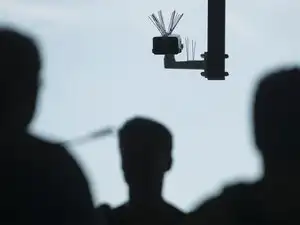
India has a small police force for its population size, and that is not likely to change. Conviction rates of crimes are low, pre-trial imprisonments are high, courts are swamped and justice delayed - mostly because of lack of corroborating evidence and proper records, and improper police investigations. Face recognition program is a game-changer for all concerned - police, courts, harassed victims, remand prisoners, conviction rates, and crime rates. It helps to identify suspects and witnesses (early in the investigation), accurately document facts and serves as a check before going to court.

Face recognition helps to identify antecedents (ie. go back in time and trace contacts with people under suspicion, all the while keeping it under wraps), and catch hidden hands or key participants in crimes. Agencies can suo moto broaden the investigation by looking at activities of incriminated people and organisations.

Face recognition (and its follow-up) will make criminals switch to faceless contacts (ie "dark web" or hidden internet). To counter this, agencies must simultaneously enhance their cybercrimes departments.

With artificial intelligence's ability to scrutinise data for shapes and suspicious activities, and the tremendous growth in CCTV cameras - eg. via smart cities mission & private security cameras - India has a surfeit of pictorial data waiting to be collated. Data must be tightly shared and secured using blockchain. Once the data is analysed and a central database is compiled, including IDs of all known offenders, it is possible to monitor activities of people under suspicion and identify random people in crime scenes.

India sees outbreaks of mob violence, often aided and abetted by the unseen agent provocateurs, that is not properly dealt with by law enforcement. If unscrupulous state governments are involved, they get away with it because they can compromise police actions, evidence, investigations, and prosecutions. Other anti-social elements can hide behind anonymous people, and even if these trouble-makers are arrested, it does not lead to actionable evidence against the masterminds.

Face recognition with AI can quickly identify regular participants and probable ring-leaders in mobs; and it can trace probable agent-provocateurs through mutual contacts & communications, without needing local police co-operation to any great extent.

National security imperatives regarding internal security like movements of foreign agents, border security like illegal immigration, and transnational crimes like smuggling & human trafficking, can be tackled through tracking and monitoring. Over time, security agencies should be able to anticipate threats that amount to acts of terrorism and take actions like protective custody, arrests, deportations and liquidations in encounters.
India is planning a huge facial recognition program to help the police force

Friday, November 29, 2019

India will go for a higher share of the $360 billion global satellite market 


Antrix CMD, the commercial arm of Indian Space Agency (ISRO), made these remarks:

"ISRO's satellite launch revenues are just $50-60m (or 20% of total revenue). India will now take on more commercial satellite contracts, where satellites will be launched by the newly created NSIL, National Space India ltd, while ISRO will concentrate on supporting and expanding the space production ecosystem, where it will build technologies, design & manufacture systems, and market them globally. ISRO will actively seek to involve the private sector in a big way, so the country can reap a far greater share of the global space market." India can grow in nanosatellite launches, where demand is large enough, but it will continue to struggle in the much larger heavy-satellite market (without significant innovations).

"We can learn from Space X -- which has grown significantly by doing lots of innovations (eg. it fully developed a re-entry system). Their production technologies are playing a big role in reducing costs."

Broadband summit:
    

DRDO WILL MAKE INDIA SELF-RELIANT IN MISSILES, RADARS, SONARS, EW SYSTEMS AND ARMAMENTS 2ND LINK

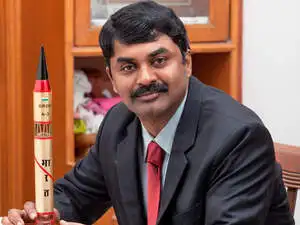
Govt's defence R&D organisation chief, Sateesh Reddy, says:

Self-sufficiency in weapons
-----------------------------------
1. DRDO is one of the preferred employers of graduates from top institutes. DRDO offers good financial incentives as well as study support, merit-based career paths and awards/ recognition for good performers.
2. In 5 years, we aim to be self-reliant in sectors like missiles, radars and armaments.
3. For exports, we are showcasing DRDO products to international parties. To minimise manufacturing costs, we are reducing the royalty cost to the private sector and giving free handholding support to them.

Support for the private sector
-------------------------------
4. Private sector is firmly engaged. There are more than 1800 partner companies, which is a big jump from the previous decade. Many are involved in aerospace manufacturing (ie aircraft, missiles, armaments) and some will get to be lead system integrators as well.
5. Through DcPP (development cum production) partnership, we will get the private sector involved in all stages of system development.
6. Private sector will be given DRDO technologies to bring them into manufacturing, can share our R&D facilities, and start-ups will be supported through Technology Development Fund.

Fighter aircraft design
-----------------------------
7. Advanced LCA (or medium-weight fighter) has completed design or configuration phase. It is ready to be constructed.
8. Fifth-generation fighter (AMCA) will be fully designed and built within five years - though it will go through a prolonged testing phase after that. We are confident of meeting IAF's specifications.
9. Jet engine development is a strategic priority but we need outside help to fructify it!!

Missiles
----------
10. Anti-tank missiles: Land-based NAG has successfully completed trials, Man-portable version (MPATGM) is now available for user trials, and Air-launched version (Helina) is in development trials and has not reached user trials.
11. Anti-aircraft missile: Air-launched ASTRA is ready for induction, and we are confident of doubling ASTRA's range in the next phase, to make it truly a state-of-art missile.
12. Agni series of missiles, under the nuclear ballistic missile programme that started two decades or so ago, has successfully reached the end of development.
13. Ballistic Missile Defence (BMD) is where we have successfully demonstrated our technologies in both endospheric & exospheric interceptions. Active development of the final weapon system is underway.


Saturday, November 23, 2019

Grand vision revealed by Indian Railways

NEWS:
      IR is keen to increase speeds of fast trains. These still do not touch more than 105kmph
       : IR is moving towards having only HSR semi-HSR tracks in its network. link
       : IR will manufacture 720 ultra-modern coaches of Vande Bharat Express in the next 3 years.
       : Many bullet trains routes are being targetted. It will be done in sections, not by building a network.

      Semi-HSR tracks will need upgrades, fencing, signalling, and elimination of level-crossings
        : First semi-HSR track upgrades will happen on Delhi-Mumbai & Delhi-Kolkata routes @ 18,000cr.
        : Doubling and more will happen on 34,000km and cover 96% of passenger travel.
        : 150 premium trains will be run by the private sector, on routes freed by completion of W & E DFCs.
        : IR has started 3 other DFC routes.
        : 5 Mhz spectrum allocation will allow state-of-art upgrades to signalling, for safety at high speeds.
        : IR will electrify all its 68,000-km BG tracks. link

      Upgrades will happen on a massive-scale for passenger services, amenities, rolling stocks, capacity
        : Bio-toilets in all coaches, are nearing full completion.

      RailTel tasked for WiFi, Railwire Saathi, NIC e-office, Video Surveillance, Modern Train Control system
        : Wifi in all stations, are done in 5400 stations. High use makes them hubs for digital transformation.
        : Railwire Saathi or digital kiosks, will come up in 7000 stations and be run by entrepreneurs.
        : 100,000 CCTV cameras being contracted for stations & coaches, as part of Video Surveillance.
        : Face recognition, motion detection & intrusion alert, will be continuously monitored by humans & AI.
        : All freight and passenger trains will have CCTV surveillance and WiFi link-up.  link

COMMENTS:
1. All passenger tracks will be converted to semi-high speed, rated for 160 kmph or more.

2. Work involved in converting tracks to semi-high speed such as track doubling & upgrades, fencing, signalling, and elimination of all level-crossings will make Indian Railways, by default, one of the safest in the world!!

3. HSR plans are meant for connecting economic hubs to metropolitan cities like Delhi, Mumbai, Kolkata, Chennai, Bangalore, Hyderabad. 

4. HSR will be priced to maximise revenue, given the high fixed costs in form of loan servicing. Thus, if HSR has enough uptake from the travelling public, the fares can be priced at affordable levels. As such, regional economic hubs will become engines of future growth of metropolitan cities and vice versa

5. Train-18 and aluminium versions thereof will be built in large numbers for running on semi-HSR tracks. Govt has cleared the way for manufacturing rolling stock via corporatisation & modernisation of railway production units.

6. Train-18 are highly profitable as they are achieving over 95% occupancy on both routes, with just 1 rake per route! 45 rakes (or 720 coaches) in 3 years can truly transform passenger experiences and travel times over the vast expense of India. IR plans to manufacture 160 coaches in 2019-20 and follow it with 240 coaches per annum.

7. Private train operators will become the preferred choice for operating premium, semi-HSR routes. This is to achieve high-quality services, higher profits for IR and incremental investments by the private sector.

8. 5 MHz of 4G spectrum will transform IR wrt signalling, communications, monitoring, digitisation of records, etc.

9. RailTel's fibre-optic network can catalyse the digital upliftment of rural habitations around Railway WiFis

10. CCTV monitoring and WiFi on all trains will generate instant information on wrong stoppages (done for looting), nefarious human activities and other safety or security concerns. It will bring high levels of comfort wrt safety and security. Artificial intelligence, with its unprecedented scrutiny of data, is a valuable tool in law enforcement.

11. IR is actively looking to do foreign railway projects. Good execution at home, done on an impressive scale, is the key.
Indian Railways for automatic train protection signalling and world-class technical training

Friday, November 15, 2019

Possibilities for Railways' Rs 50 lakh crore investment to 2030

Govt has a number of railway investment buckets, such as:
1. Metro-rail 
2. High-speed rail
3. Dedicated freight corridors
4. New railway lines
5. Doubling or more of existing track
6. Strategic lines in mountainous terrain
7. Commercial development of stations, renewable power and efficiency improvements

I have done a spreadsheet analysis to apprehend what is possible with Rs 50 lakh crore. It suggests the overall plan is feasible at 6% financing and 67% debt. It does not account for inflation, which in any case will help to repay debt. Centre's burden is also not astronomical, as budgetary allocations will be much lower --in the initial years-- due to phasing. 

The plan allows Govt to do projects in all categories - but in allocations of funds and debt, a balance is needed between benefiting most number of people, and heading off challenges of low profitability. For example, 5000 km of Metrorail, suburban & regional rapid transit system  (5000km is big but achievable if suburban rail and RRTS are included) benefits 75% of people, consumes 50% of total equity but generates net losses after financing. HSR makes losses at 20% equity but benefits a large number of high-paying, intercity commuters. Both will require additional taxes, eg higher property rates or stamp duty. 

Other projects can be done within the suggested debtequity ratio, which is not surprising as projects with high freight components (eg DFC, doubling) are generally viable. The plan aims to exploit high profitability buckets by offering generous augmentation of freight capacities, commercialisation of stations and railway modernisation. (Electrification & digitisation are not included as these will be used to enhance profits of existing IR network).

Up to 2,000km of strategic lines are also provided.


Metro/ RRTSHSRDFCNew linesDoublingStrategicOthersTotal
Target line km5,0008,00010,0007,15030,8402,000N/A62,990
Cost per Km (cr)325250403012.5100--
Total cost (lakh cr)16.252042.153.8621.7550


Daily rides (millions)404.87Nil2.565.520.72Nil53.7
Revenue('000cr)82.1220089.5520.8189.762.9121506.15
Profit Passenger20.5364
0.482.070.034
87.15
Profits Freight, RE, 15.42035.824.820.710.78417.5115.02
Profit margins43.8%42.0%40.0%25.4%25.4%28.1%83.3%39.9%


Return on Capital2.20%4.20%8.95%2.45%5.90%0.40%10.00%3.75%
Equity%50%20%0%75%10%100%0%33%
Equity (lakh cr)8.13401.610.392016.12
Financeable debt 6%5.99145.970.883.80.142.9233.69
Funding Shortfall (lakh cr)2.132NilNilNil---Nil---


Centre: State funding40:6050:50100:0060:40100:00100:00100:00---
Centre Equity & Shortall pa (cr)34,20025,00008,0503,21016,670087,130

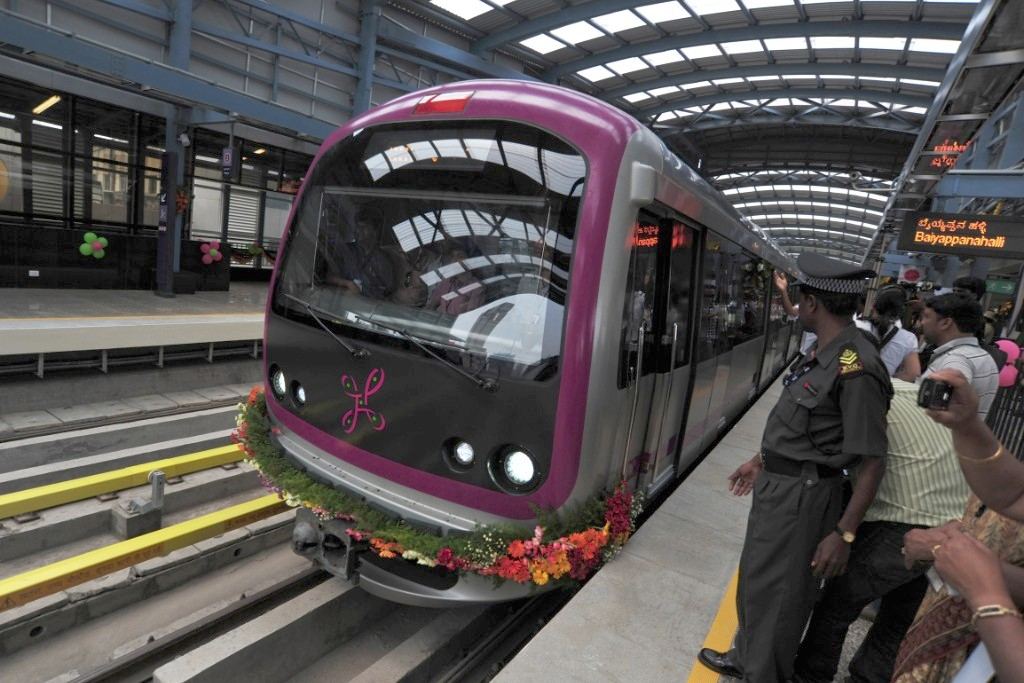
Bengaluru is a fast-growing city that is choked with traffic. 43-km metro network in phase-1 is currently being extended by 76 km by 2021 in phase-2, at a cost of Rs 26,405 crore. State has asked Centre for funding another 181km in phase-3 for Rs 30,700cr. "A 181km new metro extension and a 162-km new suburban rail service will ease pressure on building more roads, highways and flyovers. It will also reduce migration from town and villages, thereby reducing the burden on civic amenities."

"All-weather connectivity to the local population, facilitate the movement of armed forces and boost tourism," says DM Rajnath Singh. Work on 3 strategic railway line, a tunnel at Sela Pass to Tawang, Hollongi airport near Itanagar and operationalisation of Pasighat airport are some of the steps taken to improve connectivity in Arunachal. 

These lines are 378km Missamari-Tenga-Tawang227km Pasighat-Tezu-Rupai and 249km North Lakhimpur-Bame-SilapatharTawang line is the most treacherous of the three, as it crosses 14,000ft at Sela Pass & has 80% tunnels. It will cost around Rs 35,000 crore link. NB. Construction for 498km Bilaspur-Manali-Leh line btw Himachal & Ladakh is underway.

Tuesday, November 5, 2019

Finance minister hints at significant reforms

Background Analysis

Piyush Goyal, trade minister commented that exports must necessarily grow to $ 1 trillion if India aspires to reach a $ 5 trillion economy by 2024. Export growth of this magnitude would appear difficult if India can't get better access to foreign markets. Recent opting out of RCEP can be viewed as a set-back, but in reality, it is not so damaging as India has FTAs with ASEAN, Korea, Japan and Singapore. On the other hand, a step-up in trade with the United States and a deal with European Union incl UK -- if a good deal is possible -- could be more than enough.

RCEP poses a threat from lesser market access to the East Asian block, and from the stronger competition that will brew up in the future. Clearly, India too must raise the competences of agriculture, industry and services. In other words, India must significantly enhance domestic competitiveness to match foreign rivals, and this can't really happen unless it is fully exposed to the competition. India still has time to gear itself up, suo moto, to meet the challenges and then join the RCEP trading block as a competent partner. It is possible - though quite difficult. 

Take a look at India's lowly rankings in Global Competitiveness Index and Global Innovation Index. This is partly because India has not tried to lead the global product development, tried to reduce logistic costs, improve labour productivity, manufacture in large scale or have farmers become self-sufficient through various means. 

A start has been made in reducing the costs of doing business and allowing industry to keep more of their retained profitsIndustry on its own must apply its mind to successfully gain in global competitiveness. Costs of doing business reforms have a very broad scope, that includes legal and procedural changes, on-the-ground operational changes, fees and tax changes, sectoral reforms, macroeconomic improvements, investment in infrastructure, and social changes that increase the economic engagement of people. Thus, very many reforms are needed and this is what Finance Minster, Nirmala Sitharaman is perhaps talking about. 


Finance Ministry's statement at Indian Express Adda

We will not miss the bus again, will next wave of reforms soon


Other aspects of a globally successful economy

An internally competitive economy, which reduces the costs of doing business, is just one aspect of a globally successful economy. Government and industry have a symbiotic role in creating goods and services that can be traded with other countries.

-- large supply of low-cost capital in hands of entrepreneurs
-- adoption of cutting-edge technologies
-- competence of workers in all walks of life
-- good labour mobility, and strong work-ethic & enterprising attitude of workers
-- marketable innovations (ie. intellectual property rights)
-- depth of competitive value chains within the country
-- strong institutions to support businesses
-- efficient trading systems for conducting business, low levels of corruption and a good system of governance
-- cache for attracting people and businesses to the country for tourism, conferences, services like education, health, financial services (ie good living conditions, infrastructure, high-quality public services, skilled workers and good image)
-- infrastructure capacity additions and upgradation of facilities, in line with economic growth
-- connectivity with neighbours, within the region and internationally
-- internal security, competence in defence and diplomatic wherewithals

Govt's $1.5 trillion infrastructure spending plan over 5 years, may just be enough to create infrastructure that provides good internal connectivity, efficient business processes, adoption of cutting edge technologies, good agricultural capacity and value additions, satisfactory tourism activity, improvement in quality of life parameters, etc. However, skills development, innovation and school education are not being vigorously targeted, and this will make it difficult for India to lead on marketable innovations, provide competently run systems, or establish depth of value chains

Make in India will be sub-optimal, particularly as IPR will be with foreign companies. Good response though is already seen in sectors like electronics, and this can extend to other sectors like medical devices. Strong growth, backed by indigenous IPR, can come in sectors where India has competences like engineering goods, chemicals and pharmaceuticals. Indigenous R&D in defence is showing good successes, and large orders of indigenous products are in the offing.

Internal security has improved, although policing and judiciary remain hard to reform. With respect to internal security, there are many positive initiatives like emphasis on Aadhaar ID & fingerprint recognition, face recognition (emerging), widespread use of CCTV & artificial intelligence (both emerging); interception of threats and action against preceived threats, cybersecurity & strong, in-country data security (emerging); highly trained commandos to protect cities, improved border security, automonous electronic surveillance at the border; stronger legal & actual stance on terrorism & transnational crimes, co-ordinated action by Centre & States against national crimes like illegal drugs trade, child trafficking, etc (emerging). Action against black money, money laundering, foreign NGOs, etc, which is ongoing, will reduce the scope for mischief -- but political malpractice will most probably continue to be overlooked in the interest of political expediency!!