Wednesday, March 20, 2019

ANDAMAN and NICOBAR Island
Regarded as a strategic goldmine positioned at the mouth of the Strait of Malacca, it is an isolated chain of islands over 800 miles from India’s mainland. The decision to establish a tri-service military command was made in 2001. What followed was a wanton disregard for building up the military infrastructure. For example, night flights from Port Blair, the capital of A&N, started only in 2015. Permission for a new long-range, ballistic missile test facility on Rutland Island was granted this year after a long delay.
China's growing military footprints in IOA
Anti-piracy patrols by naval ships were followed by nuclear and conventional submarine patrols in 2013 and 2014. Conspicuous port calls were made to Karachi and Colombo. In 2015, China set up its first ‘military logistics supply facility’ in Djibouti. Later, China unlocked its strategic tilt with Pakistan by gaining control of Gwadar Port, agreeing to sell 8 Yuan-class submarines and announcing the $46 billion China-Pakistan Economic Corridor. Chinese vessels had made 3 unsuccessful attempts to intrude into A&N’s EEZ despite being warned off. Later a Chinese think-tank espoused Chinese claim for, and disputed India's sovereignty over A&N islands!!
Full blown upgrade of A&N under PM Modi
PM Modi in 2014 started "Neighborhood First” initiative to buttress India's strategic position in the Indian Ocean Region. It was followed logically, by a military build-up of A&N. These included the following:
In 2015-2016:
◙ $1.5 B, 10-yr plan to build A&N infra, incl. doubling naval patrol craft to 32 and army personnel to 6,000.
◙ Deployment of P8-I Poseidon MPA and Israeli-origin unmanned drones
◙ New landing craft and interceptor boats for the Indian Coast Guard
◙ Permanent deployment of guided-missile corvette—INS Karmuk
◙ Installation of sea wall of hydrophones (to detect foreign subs crossings), done jointly by India and Japan.
In 2017:
◙ Deployment of India-origin floating dock
◙ Expansion of a 3,500-meter runway at the Campbell Bay military base in Great Nicobar.
Campbell Bay
Campbell Bay is 300 miles closer to the mouth of Strait of Malaca, so air assets there can better monitor the crucial naval choke-point. The proposed expansion to 6,000-10,000 meter runway would permit large-bodied aircraft like P8-I Poseidon to be hosted at CB. Further upgrade possibilities exist for A&N, namely: to establish major shipping hub, a naval command for hosting aircraft carriers & nuclear submarines, and air-command for hosting Sukhoi-30MKI fighters.
PM Modi has played India's ace card by developing A&N as a military command. A&N is a strategic goldmine but can it stand up to China's military might?
Regarded as a strategic goldmine positioned at the mouth of the Strait of Malacca, it is an isolated chain of islands over 800 miles from India’s mainland. The decision to establish a tri-service military command was made in 2001. What followed was a wanton disregard for building up the military infrastructure. For example, night flights from Port Blair, the capital of A&N, started only in 2015. Permission for a new long-range, ballistic missile test facility on Rutland Island was granted this year after a long delay.
China's growing military footprints in IOA
Anti-piracy patrols by naval ships were followed by nuclear and conventional submarine patrols in 2013 and 2014. Conspicuous port calls were made to Karachi and Colombo. In 2015, China set up its first ‘military logistics supply facility’ in Djibouti. Later, China unlocked its strategic tilt with Pakistan by gaining control of Gwadar Port, agreeing to sell 8 Yuan-class submarines and announcing the $46 billion China-Pakistan Economic Corridor. Chinese vessels had made 3 unsuccessful attempts to intrude into A&N’s EEZ despite being warned off. Later a Chinese think-tank espoused Chinese claim for, and disputed India's sovereignty over A&N islands!!
Full blown upgrade of A&N under PM Modi
PM Modi in 2014 started "Neighborhood First” initiative to buttress India's strategic position in the Indian Ocean Region. It was followed logically, by a military build-up of A&N. These included the following:
In 2015-2016:
◙ $1.5 B, 10-yr plan to build A&N infra, incl. doubling naval patrol craft to 32 and army personnel to 6,000.
◙ Deployment of P8-I Poseidon MPA and Israeli-origin unmanned drones
◙ New landing craft and interceptor boats for the Indian Coast Guard
◙ Permanent deployment of guided-missile corvette—INS Karmuk
◙ Installation of sea wall of hydrophones (to detect foreign subs crossings), done jointly by India and Japan.
In 2017:
◙ Deployment of India-origin floating dock
◙ Expansion of a 3,500-meter runway at the Campbell Bay military base in Great Nicobar.
Campbell Bay
Campbell Bay is 300 miles closer to the mouth of Strait of Malaca, so air assets there can better monitor the crucial naval choke-point. The proposed expansion to 6,000-10,000 meter runway would permit large-bodied aircraft like P8-I Poseidon to be hosted at CB. Further upgrade possibilities exist for A&N, namely: to establish major shipping hub, a naval command for hosting aircraft carriers & nuclear submarines, and air-command for hosting Sukhoi-30MKI fighters.
PM Modi has played India's ace card by developing A&N as a military command. A&N is a strategic goldmine but can it stand up to China's military might?
Inspired by Gujarat model: Manohar Lal Khattar after 1,000 days as CM
Even as the 1,000 days tenure of Manohar Lal Khattar Government was replete with controversies over the BJP wanting to toe the RSS line in major decisions, the Chief Minister, while expressing satisfaction with the work his Government undertook, said, “There was no regional bias in development and the Government worked with the motto of Sabka Saath Sabka Vikas.”
Releasing a booklet “Gazab Asar Tez Raftaar”, highlighting achievements of his Government, the Chief Minister used the occasion to take a dig at previous Government for the lack of development in Haryana.
“Everyone knows what had happened during the previous Congress Government. land scams, ClU, Babu-Beta company etc... But the current Government is trying to bring more transparency and accountability in the system,” said Manohar Lal while taking a jibe at former Chief Minister Bhupinder Singh Hooda and his son, Rohtak MP Deepender Singh Hooda.
Continuing his tirade against the previous Hooda led Congress Government in the State, Manohar Lal blamed it for farmers’ woes, land scams, State’s huge debt liability, losses besides high debt in power utilities, biases in development works, delaying the contentious Sutlej Yamuna link (SYl) canal among other things.
Patting own back on SYl issue, the Chief Minister said the SYl canal matter lying pending in the Supreme Court had been expedited by his government. There was not a single incident where a matter remained pending for about 12 for the outcome of the Presidential Reference, said he.
When asked how his Government would ensure completion of SYl amid the protest by neighbouring Punjab Government, he said the SC had given its verdict on SYl issue in Haryana’s favour. We were hopeful that the SC would issue an executive order in next hearing to set a time-frame for SYl canal construction, added he.
Refuting charges of not fulfilling the poll promises, he claimed most of the poll promises made by his party had been fulfilled.
Speaking on BJP’s poll promise of implementation of Swaminathan report, Manohar Lal chose to criticise former CM and said that Hooda could not get the report implemented despite being the member of central’s committee constituted by the then UPA Government in this regard.
However, the BJP Government was implementing the report in a step-wise manner. The current Government had also set a target to double the income of farmers by 2022, added he.
More than halfway through its tenure, the BJP Government has attracted severe criticism from its own MLAs, MPs and as well as opposition parties for the sluggish pace of implementation of CM ’s announcements and other development works and violent Jat agitation last year.
Responding to a question on more than a dozen rebel MLAs, who have aired their grievances at public platforms, the Chief Minister said some MLAs had grievances related to development works in their constituencies but their grievances will be resolved as development works would be expedited.
Out of about 3,700 announcements made by him at various rallies in 90 constituencies of the State, work on more than 700 was completed and work on over 1,100 was in progress, he added.
Known for the promotion of Gita, Saraswati and the cow, the Haryana Government has also remained under fire from the opposition for pursuing the RSS agenda in education — manifested in the introduction of Gita “shlokas”, moral science booklets, introduction of yoga in schools besides imposing beef ban and launching multi-crore project for reviving ancient Saraswati river.
The gruesome crime incidents against women and Dalit in the State have also made national headlines during BJP’s tenure and drew criticism from the opposition and social organizations.
The Chief Minister, however, expressing satisfaction with his Government’s work said, “My Government will undertake more development works in five years than ten years tenure of Congress Government in Haryana.”
“The State Government is making efforts to curb corruption, ensure more transparency in Government recruitments, end regional bias and improve the grievance redressal mechanism,” concluded the 63 years old Manohar Lal, a first-time legislator, who took over the top post in Haryana on October 26, 2014.
The Roadmap Ahead
Spelling out Government’s road-map for the remaining half of its tenure, the Chief Minister said providing employment opportunities to the youth would be the given priority.
Keen on imparting quality education and making youth employable, Haryana Government has fixed a target to achieve 80 per cent grade level competency of students by the end of 2018. At present, the competency level was 60 per cent, he said.
Under Saksham Yuva Scheme, about 18,000 youth got themselves registered out of which more than 12,000 have been given employment, he added.
Manohar Lal announced the Government would implement a new scheme namely “Sawarnjyanti Khand Uthan Yojna” for the development of intensive backward blocks in the state. Initially, 20 such blocks would be developed in the first phase of the scheme.
The Chief Minister also announced to set up a vegetable price stability fund in the state to address seasonal fluctuations in the prices of key perishable and non-perishable vegetable produce. He also announced to launch a medical insurance scheme for people of Haryana and said that a survey will be conducted in this regard. Not complete
Manohar Lal back himself lists out his achievements
Even as the 1,000 days tenure of Manohar Lal Khattar Government was replete with controversies over the BJP wanting to toe the RSS line in major decisions, the Chief Minister, while expressing satisfaction with the work his Government undertook, said, “There was no regional bias in development and the Government worked with the motto of Sabka Saath Sabka Vikas.”
Releasing a booklet “Gazab Asar Tez Raftaar”, highlighting achievements of his Government, the Chief Minister used the occasion to take a dig at previous Government for the lack of development in Haryana.
“Everyone knows what had happened during the previous Congress Government. land scams, ClU, Babu-Beta company etc... But the current Government is trying to bring more transparency and accountability in the system,” said Manohar Lal while taking a jibe at former Chief Minister Bhupinder Singh Hooda and his son, Rohtak MP Deepender Singh Hooda.
Continuing his tirade against the previous Hooda led Congress Government in the State, Manohar Lal blamed it for farmers’ woes, land scams, State’s huge debt liability, losses besides high debt in power utilities, biases in development works, delaying the contentious Sutlej Yamuna link (SYl) canal among other things.
Patting own back on SYl issue, the Chief Minister said the SYl canal matter lying pending in the Supreme Court had been expedited by his government. There was not a single incident where a matter remained pending for about 12 for the outcome of the Presidential Reference, said he.
When asked how his Government would ensure completion of SYl amid the protest by neighbouring Punjab Government, he said the SC had given its verdict on SYl issue in Haryana’s favour. We were hopeful that the SC would issue an executive order in next hearing to set a time-frame for SYl canal construction, added he.
Refuting charges of not fulfilling the poll promises, he claimed most of the poll promises made by his party had been fulfilled.
Speaking on BJP’s poll promise of implementation of Swaminathan report, Manohar Lal chose to criticise former CM and said that Hooda could not get the report implemented despite being the member of central’s committee constituted by the then UPA Government in this regard.
However, the BJP Government was implementing the report in a step-wise manner. The current Government had also set a target to double the income of farmers by 2022, added he.
More than halfway through its tenure, the BJP Government has attracted severe criticism from its own MLAs, MPs and as well as opposition parties for the sluggish pace of implementation of CM ’s announcements and other development works and violent Jat agitation last year.
Responding to a question on more than a dozen rebel MLAs, who have aired their grievances at public platforms, the Chief Minister said some MLAs had grievances related to development works in their constituencies but their grievances will be resolved as development works would be expedited.
Out of about 3,700 announcements made by him at various rallies in 90 constituencies of the State, work on more than 700 was completed and work on over 1,100 was in progress, he added.
Known for the promotion of Gita, Saraswati and the cow, the Haryana Government has also remained under fire from the opposition for pursuing the RSS agenda in education — manifested in the introduction of Gita “shlokas”, moral science booklets, introduction of yoga in schools besides imposing beef ban and launching multi-crore project for reviving ancient Saraswati river.
The gruesome crime incidents against women and Dalit in the State have also made national headlines during BJP’s tenure and drew criticism from the opposition and social organizations.
The Chief Minister, however, expressing satisfaction with his Government’s work said, “My Government will undertake more development works in five years than ten years tenure of Congress Government in Haryana.”
“The State Government is making efforts to curb corruption, ensure more transparency in Government recruitments, end regional bias and improve the grievance redressal mechanism,” concluded the 63 years old Manohar Lal, a first-time legislator, who took over the top post in Haryana on October 26, 2014.
The Roadmap Ahead
Spelling out Government’s road-map for the remaining half of its tenure, the Chief Minister said providing employment opportunities to the youth would be the given priority.
Keen on imparting quality education and making youth employable, Haryana Government has fixed a target to achieve 80 per cent grade level competency of students by the end of 2018. At present, the competency level was 60 per cent, he said.
Under Saksham Yuva Scheme, about 18,000 youth got themselves registered out of which more than 12,000 have been given employment, he added.
Manohar Lal announced the Government would implement a new scheme namely “Sawarnjyanti Khand Uthan Yojna” for the development of intensive backward blocks in the state. Initially, 20 such blocks would be developed in the first phase of the scheme.
The Chief Minister also announced to set up a vegetable price stability fund in the state to address seasonal fluctuations in the prices of key perishable and non-perishable vegetable produce. He also announced to launch a medical insurance scheme for people of Haryana and said that a survey will be conducted in this regard. Not complete
Manohar Lal back himself lists out his achievements

Haryana's finance minister Captain Abhimanyu Sindhu
After coming to power in 2014, we released a white paper and found:
1. Tax to GDP ratio was declining
2. Capital expenditure had steadily fallen to just 7% of budget!!
3. Wasteful subsidies & PSUs losses were mounting
4. Industrial growth was slipping
5. Budget forecasts were inaccurate
6. Not enough use made of IT in record keeping and governance
—✽Course correction✽—
1. Our revenue has grown and we doubled capital expenditure to Rs 14,000cr
2. Subsidies were linked with Aadhaar (2L fake pensions; 5L fake students)
3. PSU losses have fallen from Rs 3800cr to just Rs 800cr
4. We improved our EoDB ranking to 5th from 14th
5. Fiscal policy institute is being established (to do economic modeling)
6. Asset management registry will identify illegally held, or improperly managed govt property:
▬ We are compiling information incl. condition, value & use profile
▬ We are deciding whether to sell, leverage, lease or redevelop assets
▬ A renovation fund was created.
Power Sector
Professional management of discoms helps govt and customers. More will be done, but future is bright. Efforts are on to improve last-mile connectivity like replacing and upgrading transformers. Under Jagmag Haryana scheme, villages get 24x7 power. 10% villages are on board. There is a sense of community responsibility that bodes well. We are saving Rs 3800 cr in interest costs, AT&C losses are down by 4.5% and tariffs by Rs1/unit!!
Beyond mega cities of NCR
We would like to see development spread beyond NCR— to reduce regional disparities and improve sentiments across Haryana. Much of Haryana's income is locked in big NCR cities like Gurugram and Faridabad. Unfortunately their potential and effects beyond are limited—for example, incomes fall by as much as x8 in areas bordering them. We have an enterprise promotion policy that provides incentives to set up industry in backward areas. As far as developing Hisar and Rohtak into metropolis, this depends on intrinsic factors for the city. These cities already have good road links. Our aim is to establish an international airport at Hisar to attract growth in the Delhi-Hisar belt.
Agriculture
We would like to make farming more profitable and reduce the 50% of total population employed in agriculture. We have ensured fast compensation for natural calamities. We have reduced farming loan (KCC) interest from 4% to zero!! To consolidate farms and improve profitability, we have enacted land leasing and contract farming. We now have robust title records which we have put online. Further we are guaranteeing title deeds—not merely recording title. This will help banks to lend more freely.
Global summit, MOU & investment
We organised Haryana's 1st Global summit. Commitments of Rs 700kcr were signed and Rs 140kcr has come. A sizeable amount will not be realized and part will be phased in.
Tourism
Though tourism is getting its fair share, I agree there is great potential. We are seized on the importance of Rakhisgarhi which is the oldest human settlement of the Indus-Saraswati civilisation. This will get a museum and further exploration of mounds will be done. We are developing tourism circuits and are looking for opportunities at historic cities of Kurukshetra and Panipat.
Human capital
We register every birth with an Aadhaar card. Child health is provided and health is monitored—for which we are establishing a State Resident Database. There are education and skill development programs at school & colleges, and these are also monitored. We hope to do much more in the future.
State Of Haryana: An Exclusive Interview With Finance Minister Captain Abhimanyu
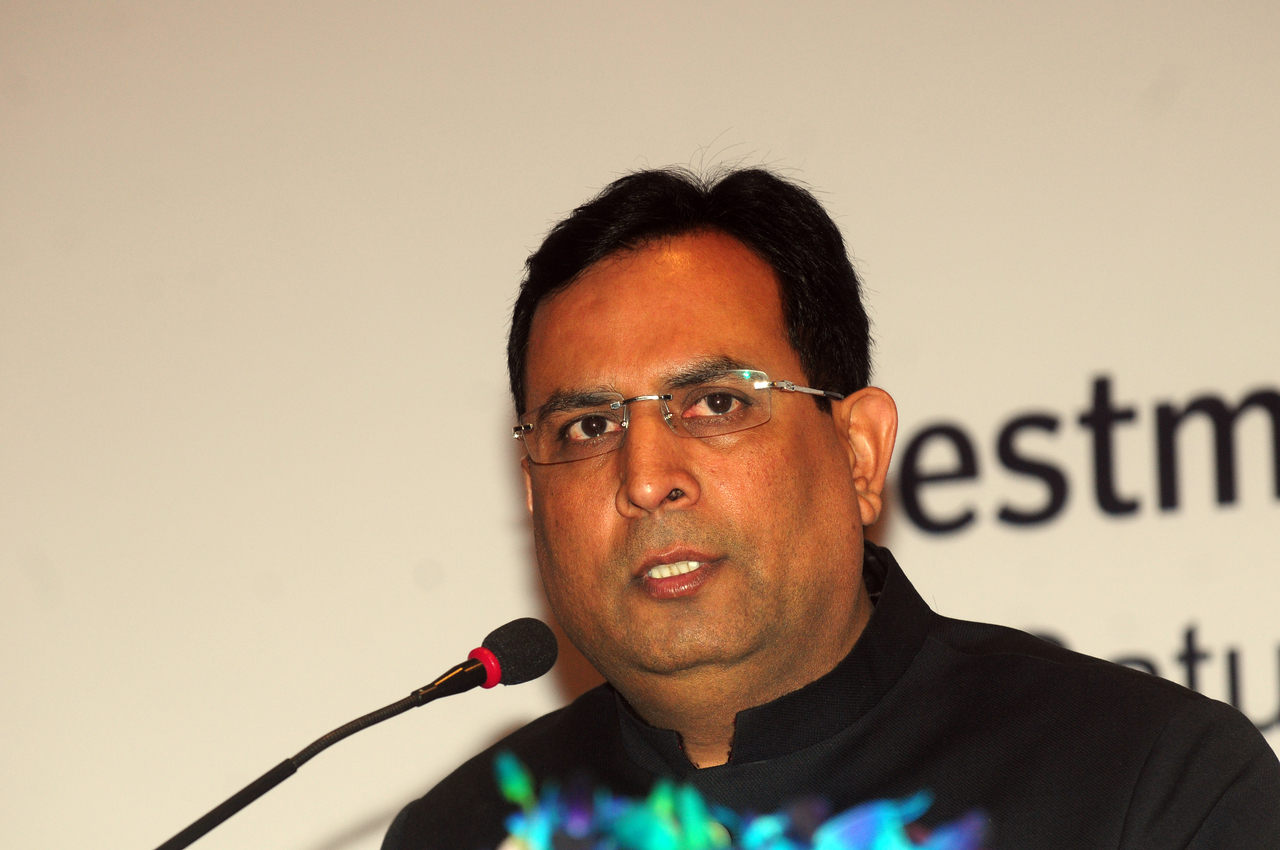
After coming to power in 2014, we released a white paper and found:
1. Tax to GDP ratio was declining
2. Capital expenditure had steadily fallen to just 7% of budget!!
3. Wasteful subsidies & PSUs losses were mounting
4. Industrial growth was slipping
5. Budget forecasts were inaccurate
6. Not enough use made of IT in record keeping and governance
—✽Course correction✽—
1. Our revenue has grown and we doubled capital expenditure to Rs 14,000cr
2. Subsidies were linked with Aadhaar (2L fake pensions; 5L fake students)
3. PSU losses have fallen from Rs 3800cr to just Rs 800cr
4. We improved our EoDB ranking to 5th from 14th
5. Fiscal policy institute is being established (to do economic modeling)
6. Asset management registry will identify illegally held, or improperly managed govt property:
▬ We are compiling information incl. condition, value & use profile
▬ We are deciding whether to sell, leverage, lease or redevelop assets
▬ A renovation fund was created.
Power Sector
Professional management of discoms helps govt and customers. More will be done, but future is bright. Efforts are on to improve last-mile connectivity like replacing and upgrading transformers. Under Jagmag Haryana scheme, villages get 24x7 power. 10% villages are on board. There is a sense of community responsibility that bodes well. We are saving Rs 3800 cr in interest costs, AT&C losses are down by 4.5% and tariffs by Rs1/unit!!
Beyond mega cities of NCR
We would like to see development spread beyond NCR— to reduce regional disparities and improve sentiments across Haryana. Much of Haryana's income is locked in big NCR cities like Gurugram and Faridabad. Unfortunately their potential and effects beyond are limited—for example, incomes fall by as much as x8 in areas bordering them. We have an enterprise promotion policy that provides incentives to set up industry in backward areas. As far as developing Hisar and Rohtak into metropolis, this depends on intrinsic factors for the city. These cities already have good road links. Our aim is to establish an international airport at Hisar to attract growth in the Delhi-Hisar belt.
Agriculture
We would like to make farming more profitable and reduce the 50% of total population employed in agriculture. We have ensured fast compensation for natural calamities. We have reduced farming loan (KCC) interest from 4% to zero!! To consolidate farms and improve profitability, we have enacted land leasing and contract farming. We now have robust title records which we have put online. Further we are guaranteeing title deeds—not merely recording title. This will help banks to lend more freely.
Global summit, MOU & investment
We organised Haryana's 1st Global summit. Commitments of Rs 700kcr were signed and Rs 140kcr has come. A sizeable amount will not be realized and part will be phased in.
Tourism
Though tourism is getting its fair share, I agree there is great potential. We are seized on the importance of Rakhisgarhi which is the oldest human settlement of the Indus-Saraswati civilisation. This will get a museum and further exploration of mounds will be done. We are developing tourism circuits and are looking for opportunities at historic cities of Kurukshetra and Panipat.
Human capital
We register every birth with an Aadhaar card. Child health is provided and health is monitored—for which we are establishing a State Resident Database. There are education and skill development programs at school & colleges, and these are also monitored. We hope to do much more in the future.
State Of Haryana: An Exclusive Interview With Finance Minister Captain Abhimanyu
CM Naidu has modalities ready for a new state capital at Amaravati. The design will be modelled on Singapore and land will be procured through land pooling. Centre's funding for Polavaram irrigation & dam project will realise the dream of making AP drought-proof. “My weekly focus is on Polavaram—to make interlinking happen by 2018. Water in the Krishna river will not only strengthen irrigation downstream, but it can also provide drinking water to Visakhapatnam. I'm hoping the project is finished by 2019 (in time for state elections),” says AP CM Nara Chandrababu Naidu.
There is optimism and self-belief aplenty to overcome legacy issues of a difficult partition. Naidu likes to embrace disruptions: “I've steered the 3rd industrial revolution that is IT, and now we have the 4th industrial revolution, which is IT combined with the Internet of Things. It's a very powerful thing,” he says.
Aadhaar-inspired disruption is an unprecedented opportunity to scale up, for targeting and delivering benefits to 50 million people. Making citizens central to the transformation makes great political sense too! Naidu speaks about it regularly. “In my last stint, I'd put economic reforms ahead of the people. Now I balance reforms and welfare. We are hand-holding weaker sections. We will be using systems to reach the common man, to satisfy them and make them stay invested in the changes we are undertaking.”
SUNRISE AP - Vision 2029
The Sunrise plan is for AP to emerge as a top 3 state by 2022, and a developed state by 2029. This ambitious transformation is to be achieved through sustained double-digit growth in the state’s economy, which in turn will need a thorough structural transformation.
The vision document has set what it defines as 12 basic needs for all:
♠ Water ♠ Housing
♠ Power ♠ Sanitation
♠ Gas ♠ Health care
♠ Roads ♠ Education
♠ Fibre optics ♠ Food and nutrition
♠ Financial inclusion
♠ Social safety nets
Reaching the people
Aadhaar helps individuals to access grids and govt platforms, that supply power, water, gas, internet, govt services, telehealth & tele-education. State govt will also undertake detailed population survey to gather microcosmic information at the grassroots level, to help customize development programs.
Leveraging geography
New look AP retains 974 km-long coastline which can be leveraged for state's benefit. Eastern seaboard overlooks a vibrant economic region but infrastructure on the Indian side is not so good. Visakhapatnam, a major port, 14 state ports and 3 railway lines already exist. Plans are afoot to develop 7 airports and 2 industrial corridors. Chennai—Bengaluru corridor passes through AP. Another IC will connect Visakhapatnam to Chennai. Inland waterways—incl Buckingham canal will also get developed.
Industrial strength through hubs
"AP can be a logistics and manufacturing hub. Companies are already setting up plants and GST is expected to give a further boost to business. Sricity has 3 hubs, which should be for automobiles; Rayalaseema will have hubs for aerospace and defence, and Visakhapatnam has one hub."
Naidu wants AP to be a leading supplier and exporter of horticulture. He is betting big on solar energy & battery storage and will supplement this with R&D centre for battery research. These sunrise industries face stiff competition from global players but India itself is a big market. Let's see !!
Inside Chandrababu Naidu’s plan to make Andhra Pradesh a sunrise state


There is optimism and self-belief aplenty to overcome legacy issues of a difficult partition. Naidu likes to embrace disruptions: “I've steered the 3rd industrial revolution that is IT, and now we have the 4th industrial revolution, which is IT combined with the Internet of Things. It's a very powerful thing,” he says.
Aadhaar-inspired disruption is an unprecedented opportunity to scale up, for targeting and delivering benefits to 50 million people. Making citizens central to the transformation makes great political sense too! Naidu speaks about it regularly. “In my last stint, I'd put economic reforms ahead of the people. Now I balance reforms and welfare. We are hand-holding weaker sections. We will be using systems to reach the common man, to satisfy them and make them stay invested in the changes we are undertaking.”
SUNRISE AP - Vision 2029
The Sunrise plan is for AP to emerge as a top 3 state by 2022, and a developed state by 2029. This ambitious transformation is to be achieved through sustained double-digit growth in the state’s economy, which in turn will need a thorough structural transformation.
The vision document has set what it defines as 12 basic needs for all:
♠ Water ♠ Housing
♠ Power ♠ Sanitation
♠ Gas ♠ Health care
♠ Roads ♠ Education
♠ Fibre optics ♠ Food and nutrition
♠ Financial inclusion
♠ Social safety nets
Reaching the people
Aadhaar helps individuals to access grids and govt platforms, that supply power, water, gas, internet, govt services, telehealth & tele-education. State govt will also undertake detailed population survey to gather microcosmic information at the grassroots level, to help customize development programs.
Leveraging geography
New look AP retains 974 km-long coastline which can be leveraged for state's benefit. Eastern seaboard overlooks a vibrant economic region but infrastructure on the Indian side is not so good. Visakhapatnam, a major port, 14 state ports and 3 railway lines already exist. Plans are afoot to develop 7 airports and 2 industrial corridors. Chennai—Bengaluru corridor passes through AP. Another IC will connect Visakhapatnam to Chennai. Inland waterways—incl Buckingham canal will also get developed.
Industrial strength through hubs
"AP can be a logistics and manufacturing hub. Companies are already setting up plants and GST is expected to give a further boost to business. Sricity has 3 hubs, which should be for automobiles; Rayalaseema will have hubs for aerospace and defence, and Visakhapatnam has one hub."
Naidu wants AP to be a leading supplier and exporter of horticulture. He is betting big on solar energy & battery storage and will supplement this with R&D centre for battery research. These sunrise industries face stiff competition from global players but India itself is a big market. Let's see !!
Inside Chandrababu Naidu’s plan to make Andhra Pradesh a sunrise state
ISRAEL VISIT
❡ This visit will deepen cooperation in a wide range of fields— defence, cyber-security, agriculture, water, energy, innovation—basically in almost every field that Israel is involved in ❡, says PM Netanyahu.
❡ We will also have the chance to discuss major common challenges. It's an opportunity for me to engage with a cross-section of Israeli society ❡, says PM Modi.
Both countries have pledged to go beyond defence. For example, India wants to acquire water conservation technologies through the Indo-Israel Agriculture project. Under this, Israel has set up Centres of Excellence to bring benefits of its practices and know-how to India. My Link
First is an Israeli drone that detects localised water shortage on farms. Second is a mobile desalination buggy that revives and extracts drinking water from saltwater logged land & water bodies. Separately UP will sign a water management agreement with Israel.
Narendra Modi’s Israel visit to explore ‘full spectrum’ of bilateral ties
How India-Israel ties go beyond defence, security
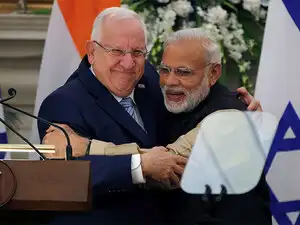
❡ This visit will deepen cooperation in a wide range of fields— defence, cyber-security, agriculture, water, energy, innovation—basically in almost every field that Israel is involved in ❡, says PM Netanyahu.
❡ We will also have the chance to discuss major common challenges. It's an opportunity for me to engage with a cross-section of Israeli society ❡, says PM Modi.
Both countries have pledged to go beyond defence. For example, India wants to acquire water conservation technologies through the Indo-Israel Agriculture project. Under this, Israel has set up Centres of Excellence to bring benefits of its practices and know-how to India. My Link
First is an Israeli drone that detects localised water shortage on farms. Second is a mobile desalination buggy that revives and extracts drinking water from saltwater logged land & water bodies. Separately UP will sign a water management agreement with Israel.
Narendra Modi’s Israel visit to explore ‘full spectrum’ of bilateral ties
How India-Israel ties go beyond defence, security
Cleansing the mining sector
Meagre penalties (like Rs 50,000) have encouraged wanton destruction of the environment, and mining operations have often started even before "green clearances" were issued. Centre has taken a tough stance on the environment—it argued in court that operating without valid green permits (incl those with valid mining leases) was tantamount to illegal mining. The penalty for illegal mining is very severe.
Supreme Court agreed and followed it by imposing a hefty Rs 25,000 crore penalty on mining companies. It directed monies be put aside for welfare for those affected, esp tribal people. It said lessees had, "apparently destroyed the environment and forests, and perhaps caused untold misery to tribals in the area.” In turn, state govts should address legitimate concerns of the mining sector.
Polluter pays
Recent devastating Supreme Court ruling has imposed severe costs on polluters—but not on any owner that fits arbitrary criteria. It's not like the failed Delhi govt's odd-even scheme, where all cars were penalized but not owners of polluting trucks or diesel generators. If actual emission is the issue than banning a 10 yr old car is both illogical and creates unnecessary distress.
At last, India gets serious about companies flouting mining and environment laws

Meagre penalties (like Rs 50,000) have encouraged wanton destruction of the environment, and mining operations have often started even before "green clearances" were issued. Centre has taken a tough stance on the environment—it argued in court that operating without valid green permits (incl those with valid mining leases) was tantamount to illegal mining. The penalty for illegal mining is very severe.
Supreme Court agreed and followed it by imposing a hefty Rs 25,000 crore penalty on mining companies. It directed monies be put aside for welfare for those affected, esp tribal people. It said lessees had, "apparently destroyed the environment and forests, and perhaps caused untold misery to tribals in the area.” In turn, state govts should address legitimate concerns of the mining sector.
Polluter pays
Recent devastating Supreme Court ruling has imposed severe costs on polluters—but not on any owner that fits arbitrary criteria. It's not like the failed Delhi govt's odd-even scheme, where all cars were penalized but not owners of polluting trucks or diesel generators. If actual emission is the issue than banning a 10 yr old car is both illogical and creates unnecessary distress.
At last, India gets serious about companies flouting mining and environment laws
Interesting—amnesty scheme has unearthed 10 million formal employees!! Firms will still hide workers at lower pay scales, to avoid paying minimum wages & social security. Govt can enact stricter measures like 1) tax deduction only for digital wages 2) data mining 3) whistle-blowing 4) undercover investigations.
"It has surpassed our estimation—our amnesty scheme has turned out to be a huge hit."
"Job creation is at least 15 to 20% more."
Formal jobs in India may be more than estimated

"It has surpassed our estimation—our amnesty scheme has turned out to be a huge hit."
"Job creation is at least 15 to 20% more."
Formal jobs in India may be more than estimated
India's External Account
CAD has shrunk from 4.8% to 0.7% in FY17. FDI & foreign exchange reserves have surged. As a result, FDI now fully covers the current account deficit. FDI also brings prospects of more growth, jobs & know-how.
A few threats to CAD loom. Oil demand is growing at a fast clip and will push up net imports in the coming years. Restrictions on migrant workers will reduce worker's remittances, and these comprise 60% of total remittances. US & Europe's trade policies are creating vulnerabilities in many sectors, e.g. pharma, agriculture & IT. Protectionism is affecting exports of telecom, computer and information services, which contribute about 48% to services exports.
Summary
❡ India’s balance of payments account is expected to remain healthy with CAD at moderate levels and adequately financed. While external risks can push up CAD mildly, the high capital inflows, particularly FDI inflows is a source of comfort. India will not be so vulnerable to hot money or portfolio investments. ❡

CAD has shrunk from 4.8% to 0.7% in FY17. FDI & foreign exchange reserves have surged. As a result, FDI now fully covers the current account deficit. FDI also brings prospects of more growth, jobs & know-how.
A few threats to CAD loom. Oil demand is growing at a fast clip and will push up net imports in the coming years. Restrictions on migrant workers will reduce worker's remittances, and these comprise 60% of total remittances. US & Europe's trade policies are creating vulnerabilities in many sectors, e.g. pharma, agriculture & IT. Protectionism is affecting exports of telecom, computer and information services, which contribute about 48% to services exports.
Summary
❡ India’s balance of payments account is expected to remain healthy with CAD at moderate levels and adequately financed. While external risks can push up CAD mildly, the high capital inflows, particularly FDI inflows is a source of comfort. India will not be so vulnerable to hot money or portfolio investments. ❡
3 lakh cos found suspect while probing demonetisation data using data mining techniques. No tax raids or officer visits were conducted: PM Modi
Registration of 1 lakh cos cancelled, 37,000 shell firms under scanner: PM Modi HERE
Further stern measures will be taken in the coming days against companies which are violating the law: PM Modi
32 lakh Indians have declared over Rs 10 lakh income, despite 100s of lakhs being in high-end professions: PM Modi
Further stern measures will be taken in the coming days against companies which are violating the law: PM Modi
32 lakh Indians have declared over Rs 10 lakh income, despite 100s of lakhs being in high-end professions: PM Modi
GST works at so many levels. If exports, production and transport are benefited, so will GDP. Much lower stock in warehouses and transit saves huge sums (100s $ billions), so prices should fall. Multiple slabs should not be the reason to slam GST. All Govts try to maximise taxes where people can afford it. Petrol, cigarettes, alcohol always have higher taxes, while basic food, clothing, education and health services attract little or no taxes. In India cars, air conditioners, home appliances, etc are considered a luxury, which is not really the case. Any case, 28% tax is too much, counter-productive & hurts the middle class. IMO, the standard tax should be one rate between 12% and 18% (say 15%) and price bands, e.g. hotel rooms should be done away with.
Talk that GST would boost GDP growth by 1-1.5% rubbish: Bibek Debroy
Talk that GST would boost GDP growth by 1-1.5% rubbish: Bibek Debroy
Last year's major overhaul in policies & procedures made virtually no difference to WB's EoDB rankings. India which is ranked 185th in obtaining construction permits is set for a remarkable turnaround. "We are hoping to do extremely well this year in five categories: construction permits, starting a business, paying taxes, trading across borders, and resolving insolvency. We are already in the top 50 in three parameters out of 10. We are facing challenges in two criteria: enforcing contracts and registering property because of the complexity involved,” he said.
Sub-standard WB rankings were in: Obtaining construction permits (185), Enforcing contracts (178), Paying taxes (172), Starting a business (155), Trading across borders (143), Registering property (138) and Resolving insolvency (136).
Delhi 17 OECD 17 Delhi - 18?
Construction permits --------------------------------------------------
No. of procedures 29 12 || 8
Days to finalise 213 152 || 60
Cost as % of total 27% 1.6% || 3.8%
Building Control index 11 11.3 || N/A
Govt is determined to show its efforts have percolated to businesses on the ground. This includes improvements in paying taxes, insolvency and starting a business (link 1). Enforcing contracts will need further reforms to fast-track local commercial courts, speed up disposal of cases and establish e-courts. Commercial Courts and Arbitration laws are expected to speedily and effectively deal with complicated cases. Registration of property is a complex task best performed by States (link 2 & 3).
Mumbai 17 OECD 17 Mumbai - 18?
Starting a business -------------------------------------------------------
No. of procedures 14 5 || 5
Days to start 26 8.3 || 4
Cost as % of total 11.4%. 3.1% || ▼down
Enforcing contracts
India needs to set up fast-track commercial courts, dispose of cases quickly with minimum adjournments and establish e-courts for electronic filing of complaints, summons and payments, a government official said on condition of anonymity. State governments, local bodies, as well as the Supreme Court and high courts, also need to proactively pursue necessary reforms.
GST, digitalisation & Aadhar linking, Benami properties act, banking reforms, etc will reduce corruption and improve the business climate. Burdensome regulations, like the inflexible labour laws, have stunted labour-intensive sectors like textiles. Relaxation would bring economies of scale, competitiveness, jobs creation and formalisation of small suppliers (below).

Sub-standard WB rankings were in: Obtaining construction permits (185), Enforcing contracts (178), Paying taxes (172), Starting a business (155), Trading across borders (143), Registering property (138) and Resolving insolvency (136).
Delhi 17 OECD 17 Delhi - 18?
Construction permits --------------------------------------------------
No. of procedures 29 12 || 8
Days to finalise 213 152 || 60
Cost as % of total 27% 1.6% || 3.8%
Building Control index 11 11.3 || N/A
Govt is determined to show its efforts have percolated to businesses on the ground. This includes improvements in paying taxes, insolvency and starting a business (link 1). Enforcing contracts will need further reforms to fast-track local commercial courts, speed up disposal of cases and establish e-courts. Commercial Courts and Arbitration laws are expected to speedily and effectively deal with complicated cases. Registration of property is a complex task best performed by States (link 2 & 3).
Mumbai 17 OECD 17 Mumbai - 18?
Starting a business -------------------------------------------------------
No. of procedures 14 5 || 5
Days to start 26 8.3 || 4
Cost as % of total 11.4%. 3.1% || ▼down
Enforcing contracts
India needs to set up fast-track commercial courts, dispose of cases quickly with minimum adjournments and establish e-courts for electronic filing of complaints, summons and payments, a government official said on condition of anonymity. State governments, local bodies, as well as the Supreme Court and high courts, also need to proactively pursue necessary reforms.
❡ What is more, in the Indian case in particular, a large body of research clearly shows that productivity growth, the ultimate driver of economic growth, has been held back by burdensome regulation, especially labour regulation, which has choked off the growth of firms in India.
Firms in India are smaller and less productive than they should be, and burdensome regulation is one important culprit. Is it not, after all, bizarre that a labour- abundant economy such as India is not a major producer and exporter of labour-abundant manufacturing goods and features some of the most capital-intensive production techniques in the world?
In the apparel sector, bulk of firms have less than 10 workers. In China, most firms have 100 and even 1000 workers or more. It is impossible to be reap economies of scale nor make a mark as an exporter in an industry dominated by a mass of micro-enterprises.
The fragmented nature of Indian industry is not the natural result of market forces, but rather due to burdensome regulation which punishes firms that attempt to grow and need the flexibility to hire and fire workers as market conditions warrant. ❡ HERE
MAKE IN INDIA -- by Bibek Debroy
===========
Earlier policy
Make in India deserves a proper assessment—not a mala fide attack based on unreliable IIP data. National Manufacturing Policy (2011) of UPA govt has proven to be a dud: Neither has manufacturing's share in GDP risen nor has its growth rate reached double digits in the medium term.
FY17 IIP (revised, manufacturing component) 4.9%
FY17 GVA (manufacturing growth rates) 7.9%
FY16 & FY15 GVA rates were 10.8% & 5.5%
KEY POINTS ✒
❡ 2014 Make in India has every ingredient of work in progress, unlike the 2011 NMP, which was work in promise ❡
NDA govt is tackling all the core issues identified by the National Strategy for Manufacturing in 2006:
✜ Infrastructure constraints ✅
✜ Taxation —both direct and indirect ✅
✜ Credit problems—both cost and availability ✅
✜ Labour laws
✜ Lack of skills
✜ Administrative laws and complicated procedures ✅
✜ Investment—both entry and exit problems ✅
✜ Deterrents against urbanisation
✜ Deterrents against formalisation ✅
Make in India — an assessment
❡ What are constraints to increasing manufacturing’s share to around 20% of GDP? The constraints themselves suggest solutions. Some constraints are generic, they cut across all manufacturing sectors. Others are more specific and pertain to specific sectors. I will focus on the generic and therefore also ignore several sector-specific initiatives under Make in India.
Apart from National Strategy, several studies exist on what determines, or constraints, investments in States and these too, endorse this list, with law and order thrown in. On infrastructure, the strategy document stated, “Power supply remains the main physical infrastructure bottleneck to industrial growth on account of chronic shortages, high cost and unreliability. The average manufacturer in India loses 8.4 per cent a year in sales on account of power outages as opposed to less than 2 per cent in China and Brazil. The adverse impact on similar units in the unorganized sector could be higher. It is estimated that the power shortage alone contributed to a production loss of at least one per cent of GDP.”
With this lens, consider what’s happened since 2014. There have been public investments in highways, railways, inland water transport, port and airports. There have been power sector (including renewable) reforms and discoms are in better shape. Bad infrastructure increases logistics costs. World Bank has a Logistics Performance Index, also disaggregated into international shipments, timelines, customs, logistics competence, infrastructure and tracking and tracing. In the 2016 report, across segments, and in the aggregate, scores have improved since 2014 and therefore, so has India’s cross-country rank. GST has begun the process of unifying indirect taxes.
Incidentally, this makes CVD (countervailing duty) determination easier and probably levels the playing field for domestic manufacturers. Small saving rates have been reduced, facilitating lower deposit and lending rates. For MSMEs, there is MUDRA and the Stand-up India window. Labour laws are being unified under four codes (wages, safety, social security, industrial relations). There is a Skill India programme. Many instances of inverted duty structure have been addressed. In addition to the World Bank’s “Doing Business” indicators, DIPP has triggered improvements in ease of doing business in States. Both entry (such as FDI) and exit (such as Insolvency and Bankruptcy Code) have been simplified. A public procurement policy has been announced. ❡
2011 National Manufacturing Policy was Work in Promise

===========
Earlier policy
Make in India deserves a proper assessment—not a mala fide attack based on unreliable IIP data. National Manufacturing Policy (2011) of UPA govt has proven to be a dud: Neither has manufacturing's share in GDP risen nor has its growth rate reached double digits in the medium term.
FY17 IIP (revised, manufacturing component) 4.9%
FY17 GVA (manufacturing growth rates) 7.9%
FY16 & FY15 GVA rates were 10.8% & 5.5%
KEY POINTS ✒
❡ 2014 Make in India has every ingredient of work in progress, unlike the 2011 NMP, which was work in promise ❡
NDA govt is tackling all the core issues identified by the National Strategy for Manufacturing in 2006:
✜ Infrastructure constraints ✅
✜ Taxation —both direct and indirect ✅
✜ Credit problems—both cost and availability ✅
✜ Labour laws
✜ Lack of skills
✜ Administrative laws and complicated procedures ✅
✜ Investment—both entry and exit problems ✅
✜ Deterrents against urbanisation
✜ Deterrents against formalisation ✅
Make in India — an assessment
❡ What are constraints to increasing manufacturing’s share to around 20% of GDP? The constraints themselves suggest solutions. Some constraints are generic, they cut across all manufacturing sectors. Others are more specific and pertain to specific sectors. I will focus on the generic and therefore also ignore several sector-specific initiatives under Make in India.
Apart from National Strategy, several studies exist on what determines, or constraints, investments in States and these too, endorse this list, with law and order thrown in. On infrastructure, the strategy document stated, “Power supply remains the main physical infrastructure bottleneck to industrial growth on account of chronic shortages, high cost and unreliability. The average manufacturer in India loses 8.4 per cent a year in sales on account of power outages as opposed to less than 2 per cent in China and Brazil. The adverse impact on similar units in the unorganized sector could be higher. It is estimated that the power shortage alone contributed to a production loss of at least one per cent of GDP.”
With this lens, consider what’s happened since 2014. There have been public investments in highways, railways, inland water transport, port and airports. There have been power sector (including renewable) reforms and discoms are in better shape. Bad infrastructure increases logistics costs. World Bank has a Logistics Performance Index, also disaggregated into international shipments, timelines, customs, logistics competence, infrastructure and tracking and tracing. In the 2016 report, across segments, and in the aggregate, scores have improved since 2014 and therefore, so has India’s cross-country rank. GST has begun the process of unifying indirect taxes.
Incidentally, this makes CVD (countervailing duty) determination easier and probably levels the playing field for domestic manufacturers. Small saving rates have been reduced, facilitating lower deposit and lending rates. For MSMEs, there is MUDRA and the Stand-up India window. Labour laws are being unified under four codes (wages, safety, social security, industrial relations). There is a Skill India programme. Many instances of inverted duty structure have been addressed. In addition to the World Bank’s “Doing Business” indicators, DIPP has triggered improvements in ease of doing business in States. Both entry (such as FDI) and exit (such as Insolvency and Bankruptcy Code) have been simplified. A public procurement policy has been announced. ❡
2011 National Manufacturing Policy was Work in Promise
Subscribe to:
Comments (Atom)